• TalkBass has been independent since 1998. Add your voice.
    Create a free account to reply to discussions, view embedded media, and browse with fewer display ads.
    Join freeLog in
    Want zero display ads or expanded classifieds tools? Compare plans.

4 String Walnut Bass

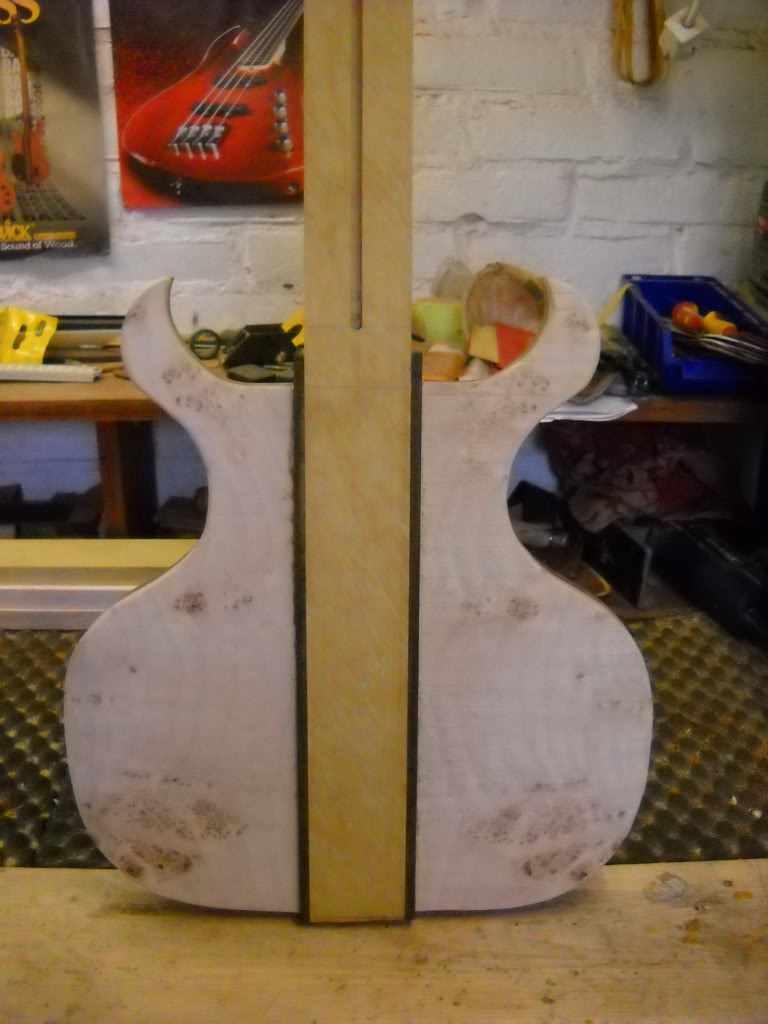
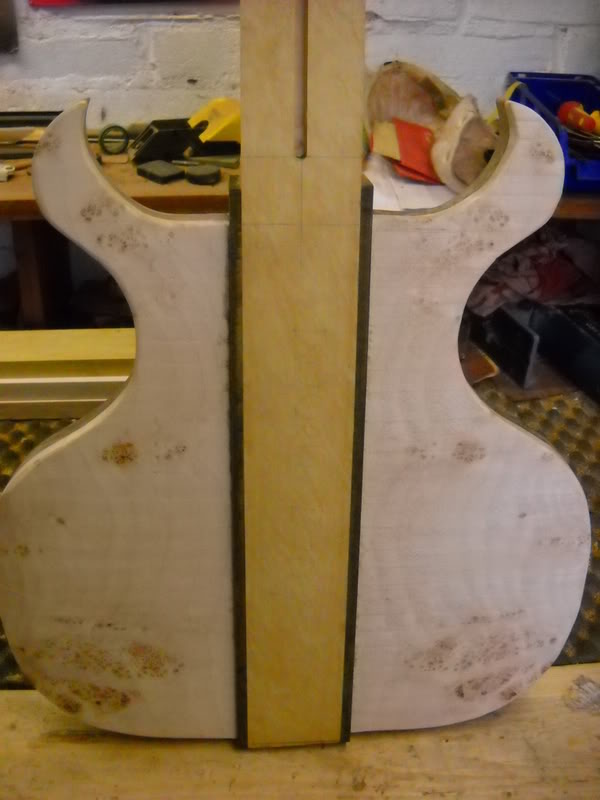
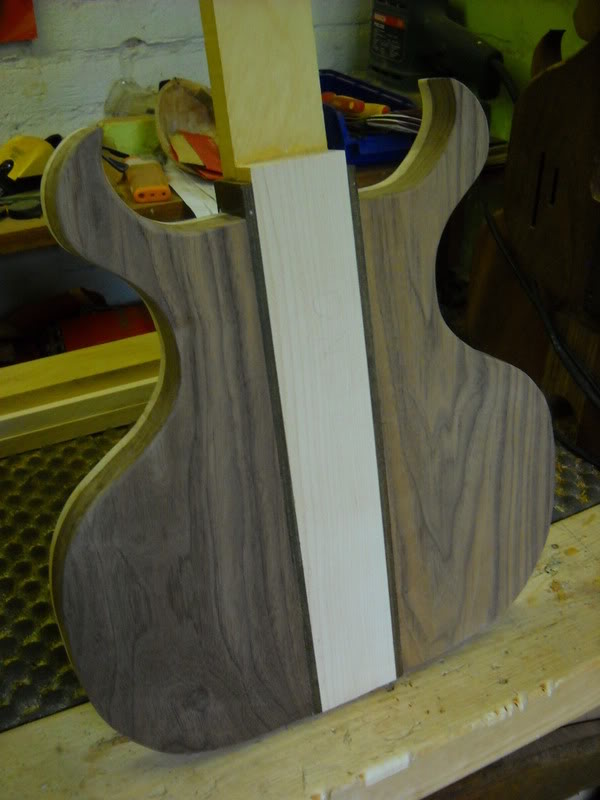
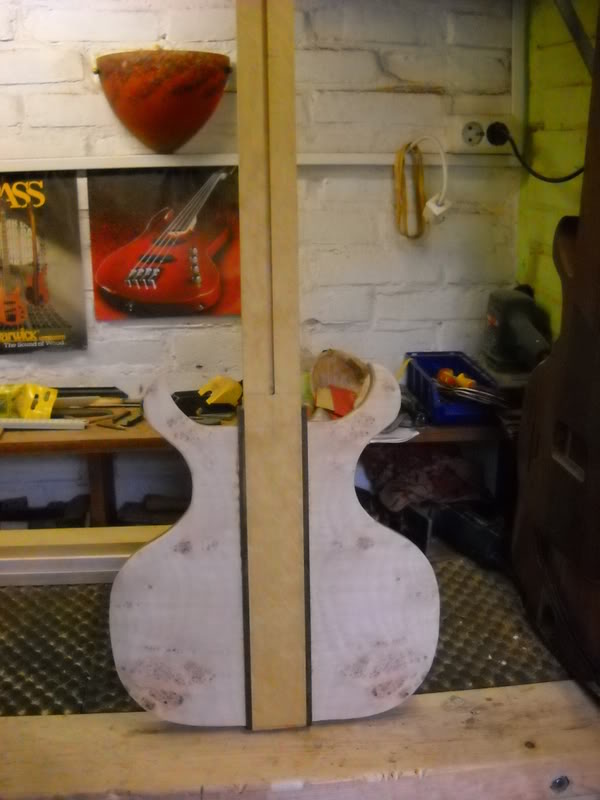
A new bass I'm working on.
It's gonna be a 4 string fretless.

Walnut body with a birdseye maple top.
Yellowheart neck.
Sapupira stringers.
DSCN1320.jpg


DSCN1319.jpg


DSCN1321.jpg


DSCN1322.jpg
.

More soon.

LMFAO.
 
It's looking good, but have you researched yellowheart before using it as a neck wood? I might be wrong, but I've heard it's not the stablest wood out there.

It might be worth to do a check up on this, and maybe add carbon stringers or something to help with neck stability if it seems necessary. Then again, I might be confusing it with some other yellowish wood, maybe canarywood or something.
 
You can get round ones at hoppy shops and places that sell to model airplane builders. If you search "graphite rod" on Googe much of what you will find are extruded cylindrical rods. A tight fit is important with graphite.

Sorry, but I asked the OP because I know he's from the same country, looking for a specific place where they sell them, because it's harder to get stuff like that over here (especifically the straight ones).
 
I've bought them at Fox Humana in Vlaardingen, here in Holland.
I was there at one day and bought a whole bunch of hardware, screws, carbon, tuners, etc...

They are round indeed.
I must admit it's hard to see how they would stiffen up things, they can move about,when there round, square would have been better, I think so too.
 
I've bought them at Fox Humana in Vlaardingen, here in Holland.
I was there at one day and bought a whole bunch of hardware, screws, carbon, tuners, etc...

They are round indeed.
I must admit it's hard to see how they would stiffen up things, they can move about,when there round, square would have been better, I think so too.

Thank you. I saw them in the webshop of Vox Humana too indeed, but I kind of hoped you found another supplier...

I've read that to install a carbon rod, you have to route the channel only slightly smaller (lengthwise) so the rod needs to be pressed in and will be glued in under pressure. This way it stiffens the neck, pushing it in a back bow, to counteract the pressure of the strings.
 
I've read that to install a carbon rod, you have to route the channel only slightly smaller (lengthwise) so the rod needs to be pressed in and will be glued in under pressure. This way it stiffens the neck, pushing it in a back bow, to counteract the pressure of the strings.

I should have googled it...

There not in yet....the fingerboard is not gleud on.
See what we can do, to make them work the way they should.
 
I should have googled it...

There not in yet....the fingerboard is not gleud on.
See what we can do, to make them work the way they should.

I've read it in Koch's book. Maybe you could place a small wooden block of hard rock maple in the end of the channels, to get the tight fit.

gap-fill the graphite rods in place with epoxy, then re-level surface for the fingerboard.

Would that be stronger? I think both wood and graphite are significantly harder and stiffer than some lump of glue, isn't it? Or is it just to make it sit in place without causing vibration?
 
gap-fill the graphite rods in place with epoxy, then re-level surface for the fingerboard.

Thanks, I'll do that, just glue them in with titebond, do not have epoxy, and plane the surface again for the fingerboard.

Do you just fill up the whole channel with glue, and lay in the rod ?

Have been eyeballing that neck the whole weekend, it's ready to glue for 4 day's now, everything taped off, glad I did not do that.
 
Thanks, I'll do that, just glue them in with titebond, do not have epoxy, and plane the surface again for the fingerboard.

Do you just fill up the whole channel with glue, and lay in the rod ?

Have been eyeballing that neck the whole weekend, it's ready to glue for 4 day's now, everything taped off, glad I did not do that.

Sorry, but that won't work! Titebond is a wood glue that needs to be used as a very thin layer between two parts of wood. You cannot glue in hardware with titebond!! Epoxy is a very different type of glue. If you don't have it, buy it, for it only sets you back 10 euros and if you use Titebond for this purpose, it wouldn't do your bass neck any good...
 
I googled it and came at stewmac's, there they say it's ok to use woodglue, I can see it's not the best solution for it, epoxy would be better, can I get epoxy at the Hornbach?
Never used it before.

Yes, you can use wood glue to glue in graphite, but then it would have to fit. You have a gap since your route is square and your graphite rod isn't. Epoxy is suitable for filling gaps, Titebond isn't. Titebond only creates a solid joint if pieces fit exactly. So if you would have had square rods, you could use Titebond, but it still isn't the ideal solution.

You can get different kinds of epoxy at the Hornbach. It's really a very common type of glue. Mind that you have different setting times. Quick epoxy sets in a minute, slow in about 30 minutes. You can also buy it at my favorite only guitar parts supplier in the Netherlands, Guitar Supplies: Epoxy slow setting 24ml
 
Yeah,.. it sounds a little bit weird , using woodglue as filler.
Epoxy is better for it, I would think.

A visit to the hornbach then.
Do we call it Epoxy aswell here in Holland?
I remember asking for it, at hornbach, but they didn't know what it was.
It was some girl... you know...they do not use epoxy for there make-up ( maybe they should try it ), so they don't know it.

Talking about knowing your job,... I once asked for veneer, and the dude came up with the plastic stuff, when I asked for real wood veneer, ...it didn't excist, he said.....
 

Latest posts