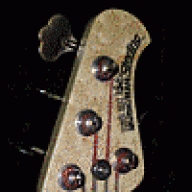
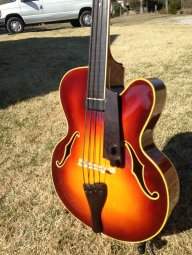
Check out "Tru-Oil" made by Birchwood Casey. It's marketed as a gunstock finish but works great for guitars/basses. Super easy to work with. Once you have your wood sanded to the level you want (more on this in a minute), all you need to do is wipe some oil on with a rag (I use cheesecloth), let it penetrate for anywhere from 30 seconds to 2 minutes or so, and then wipe off the excess. Note that you do NOT want oil finishes to penetrate deeply - wipe off the excess relatively quick. Repeat as often as you feel necessary to build the finish (yes you can "build" with this stuff) - Generally 3 to 6 coats is plenty. No dust issues, hardly any fumes, no major temp./humidity problems, easy to repair, no spray equipment - yep, I like it. No it ain't as bombproof a finish as a thick mirror coat of lacquer (it IS an oil finish after all), but on a well taken care of instrument it makes a fine durable finish.
As far as sanding, here is the other trick. Think in terms of wood polishing rather than sanding. The product that makes this possible is Micro-Mesh. GREAT "sandpaper" that lasts forever, is ultra high quality, and most importantly has grits as fine as 12000 (yes that's twelve thousand, not twelve hundred). With this stuff you can get most hardwoods buffed to a mirror shine without any finish on it! I do all my (unfinished) ebony and rosewood bits with this stuff and most folks can't believe that it's bare wood. So, back to the oil finish - what you do is polish the wood (after sanding to 320) with MicroMesh up to say 3600 or 4000 grit, then do your oil coats, let them dry thoroughly, and then "finish the finish" (again with MicroMesh) up through 12000 grit. If you prefer the more satin type finish of normal oil finishes, then simply stop polishing at a coarser grit.
No need for any beeswax applications (but you still could). A nice light wipe of lemon oil as a final step and then again every once in awhile keeps things fresh and minimizes fingerprinting.
MicroMesh and Tru-Oil : good stuff.

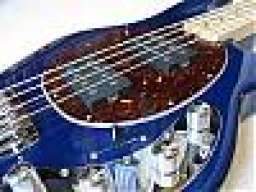


 I didnt use any thinners, polys or anything else in the mix. About 10 coats of the stuff, sanding 400 grit between each coat. After the last coat i went to 600, then finished it off with Mylands clear wax and gave it a nice buffing. It came out with a very nice satin/semi-gloss finish