• TalkBass has been independent since 1998. Add your voice.
    Create a free account to reply to discussions, view embedded media, and browse with fewer display ads.
    Join freeLog in
    Want zero display ads or expanded classifieds tools? Compare plans.

Any reason to play a 6, if I'm a Roots/Blues/Classic Rock kinda guy who doesn't solo much??

My take on this question:

  1. If you want, try it, you might like it (or not), but either way if you are intrigued by it it'd be fun.
  2. The wide neck thing and fatigue can be a real issue for some players - I have big hands and found that even 5 string basses were a problem for me if playing for long stretches of time.
  3. Anthony Jackson is a monster player who has obviously worked hard for years to master his instrument. My experience with most 6 stringers that I hear out there is they've just picked one up and spent a little time fiddling with it, and are not usually very tasteful in what they do with those all of extra notes.
  4. Alot of what I hear from 6-string players (including the incredible solo above from Mr Jackson) really sounds more like a deep guitar to me than bass. I'm still more of a "bass is a rythym instrument" kind of guy, and to my ear, some sixers lean more towards flourish-style playing at the expense of holding down the bottom. Not to say that a great player couldn't do both but that has not been my listening experience.
All just my 2 cents, of course.
 
  • Like
Reactions: Shardik
One of the best (if not the best) local Rock/Classic Rock bass players I know has always played a 6 and he rocks. The trick is to play it for it's obvious advantages (minimized left hand re-positioning, easier key changes, etc...) and not feel that you have to use every note available to you. Don't buy into "[insert name here] only played a 4...". Were that the case, everyone would still be driving Model T's....

If you play the 6, just don't let it play you.
 
  • Like
Reactions: Hobobob
I played a 6 for years in a straightforward rock band, and in our original music I genuinely never used the B or the C strings. What I did use them for was the occasional metal cover (B) and my own personal noodling with chords (C). So, while not *necessary* I thought it was nice to have.
 
I'm a 5er guy, but man, you should do whatever floats your boat. If you play the thing long enough and WANT to use that C string, you'll find ways to use it that make sense.

Music is best when there's as little formula applied as possible. It's a personal journey. Go be a 6-string playing blues bassist if you want. Life is too short.
 
Don't buy into "[insert name here] only played a 4...". Were that the case, everyone would still be driving Model T's....
+1

"[insert name here] only played a 4" may be the stupidest thing regularly posted on TB. Jaco played a Jazz, does that mean we should all play Jazz basses? Wait, Squire played a Ric, does that mean we should all play Rics? Wait, Pino plays a Precision, does that mean we should only play Precisions?
 
  • Like
Reactions: MobileHolmes
I bought a 6er but have since sold it. I spend a lot of time on the B, E and A strings so for me, the wide neck was pretty uncomfortable for my fretting (left) hand. 5s are perfect for me. :)
 
comping. Aside from that, in my opinion, no.
This, with some caveats.
-Emphasis on the first part, but yeah: the low B has its obvious (and less so) advantages, already mentioned in this thread (in which I personally wouldn't include its lowest couple notes because I usually don't like their sound, but having low Eb and D at hand can do wonders even in traditional settings); the C string, on the other hand, tends to sound a little too thin for normal bass work IMO, so I'd say there should be some plan for it beforehand - either soloing or chords.
-You asked. Necessary? Well, not in my opinion. Potentially a hoot? Definitely. I strongly encourage you to prove us wrong if you feel like heeding the call of the wide-ranger after all.

Oh, and one last thing:
I'm always wary of being tagged as "bassist who plays like a guitarist".
Do yourself a favour and don't be obsessed about it. Serving the song and fulfilling the core roles of the instrument (rhythm and harmony) is a matter between you and the band: ways to achieve the above, and any additional artistic cake-icings, shouldn't be dictated by guitarophobes and squarethinkers. Screw 'em. It's not like taking inspiration from every instrument out there is fair game but doing the same from electric bass's closest relative is not.
 
Last edited:
I have nothing against a 6-string, and the high C is lots of fun. But what is fun about it is chording, including accessing 10ths from the A string.

To my mind, if you're not going to do those things, why get a 6-string? Just to have to mute two more strings? I say get the 6-er, and then get a gig where you can use it, like some prog rock, psychedelic rock, or other more experimental genres. Another possibility- a small duo or trio with open-minded players who look forward to you filling a bit more space on occasion. This can be in the folk tradition, if the other players are amenable to it.

Keep using the 4-string at your blues and roots gigs.
 
  • Like
Reactions: Watchootognbout
(Not a troll thread...honestly! I'm genuinely curious of people's opinions)

Ok....so I've always been a wee bit intimidated by the 6 (and up) string bass......but kind of fascinated, too. I'm mostly a lay-it-down, rootsy music 4 string P and J player (blues, swing, classic rock and RnB, folk, country). I certainly CAN solo and do chordal stuff (I have a long-time professional guitar and multiple other instrument background), but I tend to avoid....1) because of the music I'm playing....2) I'm always wary of being tagged as "bassist who plays like a guitarist".

But.....I also like stretching my boundaries a bit and confronting things that maybe I'm not comfortable with. So, a friend lent me his Ibanez SR506. I like it. The tone and playability are nice, the string spacing is a little tight, but I can get around pretty well (muting needs work, but it's coming)......but I'm not sure what the heck to DO with it! LOL!

The B string makes some sense, and I find I'm working it in gradually, but the high C is a bit baffling to me. Does anyone find much use for it if they're not soloing extensively or playing chord/melodies??

I guess what I'm asking is.......do any less "progressive" type players find the 6 useful for their music, and if so, in what specific ways. I don't want to give up on this without exploring it thoroughly.

Thanks!

- jimView attachment 687904

The low B is a real plus for blues ... try a 5 instead of a 6 ...

But in the end play the bass that YOU like!!!
 
  • Like
Reactions: Watchootognbout
Then, you have to make it your main squeeze for a solid year or more. A few months of "sixer on the side" won't do it.

Big brain rewire going on. And you need to be into exploring how it will be your voice.

I'd say the same thing about a five. I had to have a reason to play it; when that reason (working in a "new country" act) went away, so did the five. I saw the possibilities--for a while there D became my favorite key--but in my opinion it takes constant, regular use to get the full benefit of the instrument. Call me lazy, I just wasn't willing to invest the time to make it my main axe.
 
I owned a very nice 5 string and played in regularly in a band that played music that required it from time to time. It was a great bass and fun to play but when that gig ended the bass went away too. On the occasion I need a lower than E note these days, I de tune to a D or a C on the ol'4 banger, it works just fine , not a problem whatsoever. As for a six string its fun to play chords on and compose but its not the primary role of the bass player in a group . I strung my 5 E-C for awhile but I found that when I was performing that C string was rarely employed, so I reasoned that it wasn't really necessary after all in my particular case, Fun once in awhile but not a must have at all.
 
I've done it all with the 6 string, pop, rock, country, blues, latin, gospel, worship and metal.

I use it for comfort as i have large hands and long slim fingers, the Low A (I tune two steps down) is thunderous. and you have two octaves without shifting too much.

I'm seriously debating switching to F#-G as i dont justify using the high C too much.
 
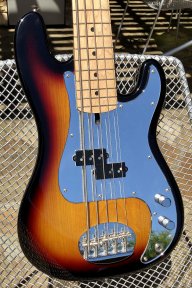
Obviously, you can get by just fine on a regular bass, even if you play complicated, busy lines and solo. To me, the extended range is less about the style of music or soloing, it's more about matching the range of the other instruments and whether or not you like to down or drop tune your 4 string. I was 4 string only until I had many situations requiring a low Eb D, Db and C, so I moved to a 5 that is really quite similar to a 4 (Lakland Skyline 55-64). It looks like a regular P bass but can go lower, and I can stay in standard tuning (and cover 2 octaves without changing position). That's really it. This is my main workhorse that gets used 90%+ of the time.

Regarding a 6, I had one as well, but I got it more as an experiment. I really didn't have a use for the C string, so I restrung it F#, B, E, A D, G with Circle K strings. It worked fine that way, but I didn't have much need to go that low, nor did I have an amp or PA situation that provided meaningful support to notes below low A (Bb and A worked fine, but that's about the physical limit of my gear).

Strangely, a lot of gear choices are dictated more by appearance than reality. For example, I had a Dingwall 5 string, but in most settings, it looked out of place next to Strats, Teles and Les Pauls (sounded and played great though). People were also always coming up and wanting to try a pretty expensive instrument at shows. With a 5 string P, I fly below the radar - just playing bass. There aren't too many 6 strings that look traditional, so based on the music you're playing, you will probably stick out with a 6 as well.
 
Last edited:
I play a 6. I'm not sure what to tell you. I take solos on mine and also play very basic stuff if I get basic sessions with it.

The biggest advantage is I can cover 3 octaves incredibly fast. No idea if that matters or not to you.