
Enjoy the benefits of a premium membership!
Upgrade Account
-
TalkBass has been independent since 1998. Add your voice.
Create a free account to reply to discussions, view embedded media, and browse with fewer display ads.
Join free Log in
Want zero display ads or expanded classifieds tools? Compare plans.
You are using an out of date browser. It may not display this or other websites correctly.
You should upgrade or use an alternative browser.
You should upgrade or use an alternative browser.
Double Bass Failing: A Very Difficult Piece for String Bass
- Thread starter FractalUniverse
- Start date
More options
Who Replied?
What a gas! I used to hear Gary Karr play that piece. Needless to say, it would be a collosal failure . . . .

That piece is a total hoot. I have a recording off the radio performed by a bassist from the BSO.
lol, i found this piece too funny, i tried to imagine myself doing that piece and i think i would have failed right at the start
"I later heard Burt Turetskt play it about 10x faster than Robert Black."
but this is insane man!
"I later heard Burt Turetskt play it about 10x faster than Robert Black."
but this is insane man!
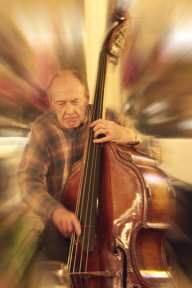
This brings back many great memories...of hearing many great bassists buy into this madness!
Thanks for posting!!
Thanks for posting!!
this is kind of stupid question maybe, but lets see:
i was wondering about how this score looks like
I thougt at first that it might be something like really free like the music and the text over it, and the musician put the speed of the text and so on, and everything at free will, except for the music...
but then i wondered if is it more complex than that, maybe the composer made the text and the music perfectly syncronized maybe like in a cantata.... in a manner that everything is like perfectly thought and fitted so it's easier to the player to achieve his goal of "fail to fail" and easier to study.
i mean the composer intended to make a critic view to those composers that made almost imposible things many years ago, so that might be possible.
ok that's it..this is just curiousity, there are some of you that has seen in it performed..so you know more than me.
i was wondering about how this score looks like
I thougt at first that it might be something like really free like the music and the text over it, and the musician put the speed of the text and so on, and everything at free will, except for the music...
but then i wondered if is it more complex than that, maybe the composer made the text and the music perfectly syncronized maybe like in a cantata.... in a manner that everything is like perfectly thought and fitted so it's easier to the player to achieve his goal of "fail to fail" and easier to study.
i mean the composer intended to make a critic view to those composers that made almost imposible things many years ago, so that might be possible.
ok that's it..this is just curiousity, there are some of you that has seen in it performed..so you know more than me.

An interesting piece - thanks for posting!
Your question as to what the music might look like I would have thought that it would not look too much out of the ordinary - it is a fairly conventional piece, after all - a melody line for the bass, and text to be spoken. I wonder what it would sound like if the text were to be sung, using the bass as an accompaniment (or vice versa ).
The scores of a lot of modern pieces look strange by conventional standards because many modern composers stretch the resources of their performer or orchestras to the limit, asking for sounds and effects which simply cannot be notated in an conventional way (I'm thinking particularly of Stockhausen) - so, the notation is evolving, much in the same way as does language.
Not wishing to wander too much off the topic here - check out the "Sequenzas" by Luciano Berio (there were 13 at the last count - he died in 2003) - Sequenza III is particularly brilliant. "Failing" reminds me of Sequenza V (trombone), which has the same sort of humour.
"Spanning virtually the whole of Berio's composing career, the Sequenzas constitute an innovative investigation into the virtuosic and dramatic possibilities of musical performance. Some of the early Sequenzas, such as those for flute (1958) and piano (1966), are classic examples of the abstract avant-garde language of mid-twentieth century music; others show a love of the theatrical which is more obviously Berio-esque, such as the instrumental buffoonery of Sequenza V for trombone (1965) or the vocal acrobatics of Sequenza III.
"
Your question as to what the music might look like I would have thought that it would not look too much out of the ordinary - it is a fairly conventional piece, after all - a melody line for the bass, and text to be spoken. I wonder what it would sound like if the text were to be sung, using the bass as an accompaniment (or vice versa ).
The scores of a lot of modern pieces look strange by conventional standards because many modern composers stretch the resources of their performer or orchestras to the limit, asking for sounds and effects which simply cannot be notated in an conventional way (I'm thinking particularly of Stockhausen) - so, the notation is evolving, much in the same way as does language.
Not wishing to wander too much off the topic here - check out the "Sequenzas" by Luciano Berio (there were 13 at the last count - he died in 2003) - Sequenza III is particularly brilliant. "Failing" reminds me of Sequenza V (trombone), which has the same sort of humour.
"Spanning virtually the whole of Berio's composing career, the Sequenzas constitute an innovative investigation into the virtuosic and dramatic possibilities of musical performance. Some of the early Sequenzas, such as those for flute (1958) and piano (1966), are classic examples of the abstract avant-garde language of mid-twentieth century music; others show a love of the theatrical which is more obviously Berio-esque, such as the instrumental buffoonery of Sequenza V for trombone (1965) or the vocal acrobatics of Sequenza III.
"
thanks for the info, 3 or 4 history classes ago i was talking with my teacher about this "new music", he told me something about berio but can't remember what.... uh... anyway i'm looking on the internet for the music of every composer that i have on my university texts.... i have made great discoverys.
do the experiment then!
"I wonder what it would sound like if the text were to be sung, using the bass as an accompaniment (or vice versa )."
do the experiment then!
This is so clever....it's kinda hard to hear eveything he's saying because of the sound level of the bass. What's happening is...he's saying to the audience: Since you've probably never heard this before, how do you know i'm not already failing? I could just be making up the verbal part of this and have already failed. Or, maybe, i've already blown the bass part and am improvising musically....or both?
I've confused you again Z.....I was just trying to give people who aren't familiar with the piece an overview of the basic concept.DZ said:Paul, i think that particular line of text must be scored; i;ve heard it in both of the live perfromances of this piece that i've seen.
That's all I need....DZ said:sorry great one. I will say 50 Hail Mary's tonight to make up fpr my transgression ;-)
Latest posts
-

-

-

-

-
Buying a vintage neck to pair with vintage body... risks/really bad idea?
- Latest: bass player 53