Hey Guys,
Here is my contribution to the Talk Bass community (kinda):
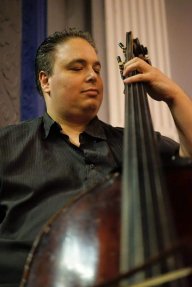
A couple weeks ago, I went to The Midwest Doublebass Symposium at Youngstown State University, where Max Dimoff (Principal Bassist for the Cleveland Orchestra) gave a wonderful master class. In the master class he was talking about his warm-up routine, and passed out some written warm-ups that he does daily.
I've been working with these warm-ups and I'm finding that they are very effective. Max told me that some of the warm-ups are his own creation, while others are warm-ups he got from Gary Karr.
I have scanned the sheets to PDF format and have put them on my website. I haven't had a chance to contact Max, but I'm assuming it's ok to post these sheets, as he handed them out at the masterclass.
You can download the PDF files here:
[Invalid or Expired Link Removed]
Also, if someone would be as so kind as to mirror the file on their website as well, (or maybe even an admin from TB can upload it to the TB site, its just a little to big for an attachment). I would greatly appricate it as my webserver is limited in bandwidth.
Thanks to Max Dimoff, and Gary Karr for the great warmups!
Here is my contribution to the Talk Bass community (kinda):
A couple weeks ago, I went to The Midwest Doublebass Symposium at Youngstown State University, where Max Dimoff (Principal Bassist for the Cleveland Orchestra) gave a wonderful master class. In the master class he was talking about his warm-up routine, and passed out some written warm-ups that he does daily.
I've been working with these warm-ups and I'm finding that they are very effective. Max told me that some of the warm-ups are his own creation, while others are warm-ups he got from Gary Karr.
I have scanned the sheets to PDF format and have put them on my website. I haven't had a chance to contact Max, but I'm assuming it's ok to post these sheets, as he handed them out at the masterclass.
You can download the PDF files here:
[Invalid or Expired Link Removed]
Also, if someone would be as so kind as to mirror the file on their website as well, (or maybe even an admin from TB can upload it to the TB site, its just a little to big for an attachment). I would greatly appricate it as my webserver is limited in bandwidth.
Thanks to Max Dimoff, and Gary Karr for the great warmups!