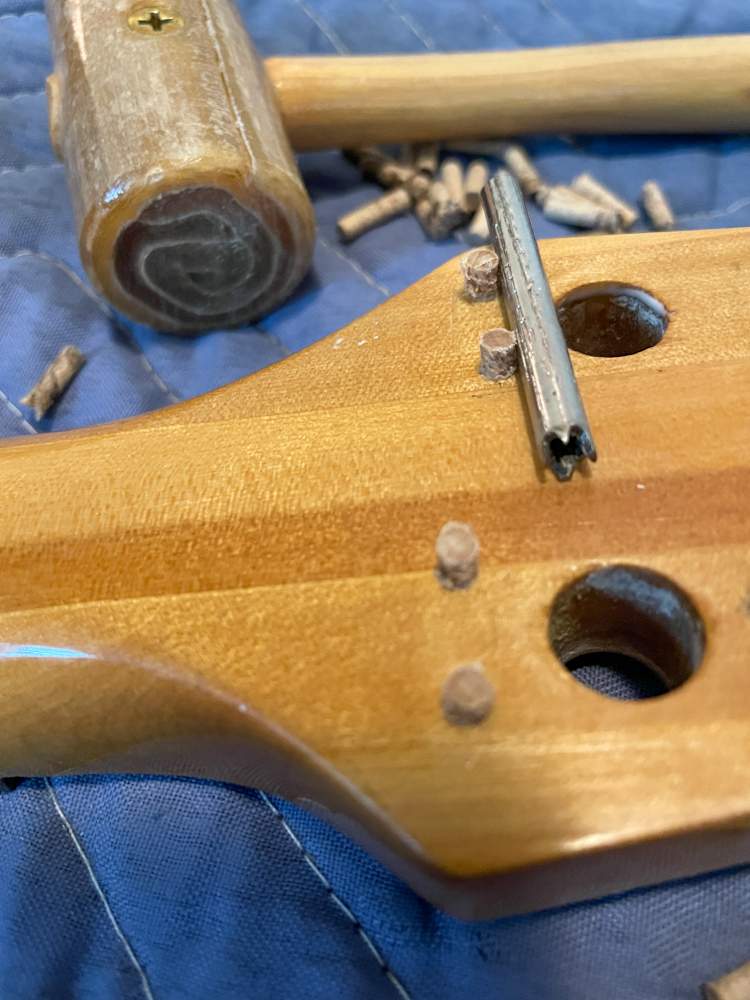
Many google searches for 1/8" maple dowels lead back to TB or other guitar forums where people ask about and then lament the lack of sources for small diameter maple dowels. But I did find an ancient post about making a plug cutter out of a short length of 1/8" ID tubing. Happy to report that it works relatively well. There's probably room for improvement, but I got what I needed.

Enjoy the benefits of a premium membership!
Upgrade Account
-
TalkBass has been independent since 1998. Add your voice.
Create a free account to reply to discussions, view embedded media, and browse with fewer display ads.
Join free Log in
Want zero display ads or expanded classifieds tools? Compare plans.
1/8" maple dowels
- Thread starter NNNN
- Start date
-
- Tags
- 1/8" maple dowel plug cutter


 Another option is to get a bigger dowel or even a square piece of wood and drill an 1/8” hole in a piece of steel and then you can use the hammer and tap the wood through the plate and presto! 1/8” dowel. Note: if the starting piece is significantly bigger then 1/8” start with larger holes and step down until you get to 1/8”.