

Enjoy the benefits of a premium membership!
Upgrade Account
-
TalkBass has been independent since 1998. Add your voice.
Create a free account to reply to discussions, view embedded media, and browse with fewer display ads.
Join free Log in
Want zero display ads or expanded classifieds tools? Compare plans.
You are using an out of date browser. It may not display this or other websites correctly.
You should upgrade or use an alternative browser.
You should upgrade or use an alternative browser.
#1 pet peeve with basses.
- Thread starter Cliff Bordwell
- Start date
More options
Who Replied?
Besides major playability issues, the one thing that ruins a perfectly good bass for me is when the strings make an angle from the nut to the tuning post.
It just looks horrible when the strings don't form a straight line all the way across....
It just looks horrible when the strings don't form a straight line all the way across....
My pet peeve - in addition to the aforementioned poor fretwork - is neck joints in bolt-on basses.
I keep wondering why even boutique bass manufacturers keep making neck joints like this...
Invalid Link Removed
...when they could be making something like this?!
Invalid Link Removed
Invalid Link Removed
^ Luthiers, take note: THIS IS HOW THE NECK JOINT ON A BOLT-ON BASS SHOULD BE DONE!
I keep wondering why even boutique bass manufacturers keep making neck joints like this...
Invalid Link Removed
...when they could be making something like this?!
Invalid Link Removed
Invalid Link Removed
^ Luthiers, take note: THIS IS HOW THE NECK JOINT ON A BOLT-ON BASS SHOULD BE DONE!

1) Narrow-string spacing...some manufacturers are catching on, but it's still pretty difficult to find a 19mm between strings @ bridge on a six string. I feel like the majority of us like 18-19mm, with super narrow being in the minority?
2) Necks that move too much with weather change...a little is ok, but come on, not every time I take it out of the bag.
3) Bodies that are too BIG (mainly 5- and 6-stringss).
4) I'll reiterate heavy basses...no good reason for this IMO.
2) Necks that move too much with weather change...a little is ok, but come on, not every time I take it out of the bag.
3) Bodies that are too BIG (mainly 5- and 6-stringss).
4) I'll reiterate heavy basses...no good reason for this IMO.

My only real pet peeve is a bass that sounds thin on the D and G strings, as if it's a completely different bass from the other two strings. Everything else I chalk up to personal preference on the tone, aesthetics, or feel, and those aren't really pet peeves. But when I really like the sound of two strings and hate the sound of the other two or three, it really bugs the snot out of me.


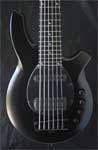
On a higher end or luthier made instrument, the unavoidable dot markers on the fretboard. I actually hate them on cheap basses too, but on an expensive bass they really get to me. If I can order a bass, pick the color and wood, I should be able to specify no inlays. IMO they make an otherwise elegant instrument look cheap.
+1
Companies that charge more for lefthanded instruments. I might be willing to accept that with a acoustic instrument, but solidbodies nope.
Companies that do not offer the same selection of hardware/electronics/color options as as righthanded instruments in the same model.
These two things are equal in their degree of "peeve" to me(and most other lefties I think).
Companies that do not offer the same selection of hardware/electronics/color options as as righthanded instruments in the same model.
These two things are equal in their degree of "peeve" to me(and most other lefties I think).

Alvaro Martín Gómez A.
TalkBass' resident Bongo + cowbell player
- Non-working truss rods
- Pickups that cannot be raised enough
- Most pickguard-less basses I've played have a big gap between the G string and the body at the end of the fingerboard (which cannot be shortened with proper setup)
- G string so close to the fingerboard edge
- Pickups that cannot be raised enough
- Most pickguard-less basses I've played have a big gap between the G string and the body at the end of the fingerboard (which cannot be shortened with proper setup)
- G string so close to the fingerboard edge

Lack of shielding or poor shielding- paying 1200 dollars for a bass and having to shield everything, for 5-10 bucks more it could have been done in a factory
My first peeve is the fact that Fender basses need an extra-thick shim to get the action anywhere near as low as I'd like.
Well, maybe not extra-thick, but IMO every bass should have the saddles adjustable low enough to practically put the strings on top of the frets. And Fender ain't that bass.
Not that it would matter anyway, because my second and third peeves are my Precision's twisted neck and too-high nut slots. Status Graphite replacement neck, here I come.
Well, maybe not extra-thick, but IMO every bass should have the saddles adjustable low enough to practically put the strings on top of the frets. And Fender ain't that bass.
Not that it would matter anyway, because my second and third peeves are my Precision's twisted neck and too-high nut slots. Status Graphite replacement neck, here I come.
My first peeve is the fact that Fender basses need an extra-thick shim to get the action anywhere near as low as I'd like.
Well, maybe not extra-thick, but IMO every bass should have the saddles adjustable low enough to practically put the strings on top of the frets. And Fender ain't that bass.
Not that it would matter anyway, because my second and third peeves are my Precision's twisted neck and too-high nut slots. Status Graphite replacement neck, here I come.
Regarding the low action issue with Fender basses...
Have you tried a Geddy Jazz yet?
Mine has super low action and almost zero fret buzz unless I really try to make it buzz.
Never played a Geddy Lee, and I certainly wouldn't have the chance to play one with a proper setup at the music stores in my area. Plus I don't like Jazzes. My action right now is just above 1mm G-string at the 17th fret, and ideally I'd like to have it a little under 1mm, plus a lot lower at the nut. And even if I did manage an action like that with a Fender, I'm still looking at a life of truss adjustments and a graphite neck seems the way for me to go right now.
Plus I really, really, really like Status and want their gear.
Plus I really, really, really like Status and want their gear.
The fact that so many companies still insist on using wooden necks. Get with the times, get with graphite!

What is your number one pet peeve with basses you've played?
I know I had a list of things I wanted to improve upon when
I started making basses. For example, I never understood
why you would pick up a bass and the edge of the
fingerboard would not have a comfortable radius.
Anything from intonation to bad customer service... let's hear it.
Hey Cliff,
I actually had a major problem with one of your basses. It wasn't a problem with construction by any means, the bass was absolutely beautiful in every way. For some reason, any time I played the bass for any length of time I would get a cold, burning feeling in the tendons of my left hand. It never went away and it got worse the longer I played. I'm not sure what caused it. I had the same problem with my Roscoe LG. So, I guess you could call it a pet peeve. I never know when I buy a bass if I'm going to have this issue again. The only thing I can think of is maybe a very flat fingerboard radius doesn't work for me.
The bass was the beautiful scroll bass with Darkstars you made by the way. I loved the bass soooo much and wanted to keep it really bad. I would still buy it back if I knew there was some way to get around my left hand issues with it.
Oh and another pet peeve of mine. Gibson doesn't route the pickup route deep enough to have anything even close to low action. Since they are set neck basses, you can't shim the neck. It was the major reason I sold my Les Paul bass.
Mike

Because this thread is about pet peeves, I won't discuss my issues with major setup, construction or design flaws.
My pet peeves are (in no particular order):
1. Side fret markers that are too small. I love my MTD Kingstons to death, but there is no way I can play one on a dark stage. Why? Because there are no fretmarkers on the fingerboard and the side dots are only 1 mm in diameter. For those without a metric ruler, this is about as big as a period on your screen. Sorry, this doesn't cut it with me on stage. I need fret markers that I can see and see quickly.
2. Poor quality electronics components. No, I don't mean cheap import preamps. I know what I'm getting in that segment of the market and I can mod the preamp and pickups to suit my taste. What irritates me are cheap pots, jacks and switches. Yes, these parts are relatively cheap and easy to replace, but on most basses I feel like its simply a way to cut costs without looking like you've cut corners. In the end, I feel that inferior electronics components can severely degrade your sound quality.
3. Poor Ergonomics. I'll lump all of my "feel" peeves into this category. This is about as subjective a quality as possible. Moreover, everyone is different and will feel differently about different designs. But for me, I can't play basses with necks that too are thick front to back, a body that's too heavy and won't balance, and basses the seem to put first position somewhere around my drummer's ride cymbal. I am a small guy with short arms and I simply cannot reach the extra 3,4,5, or 6 inches for first position all night. But I'm sure my ideal bass is someone else's worst nightmare.
4. 35" Scale. I list this one with the caveat that this is my opinion. I agree that there is a tonal difference, in general, between 34" and 35" basses. And I can understand a builder's desire to prefer one tone or the other for their instruments to possess. However, I feel that the 35"" scale is often used as copout to guarantee a taught feeling B string. I have played plenty of 34" fivers with incredible B strings. I am a firm believer that the quality of wood and quality of construction play as much a part (or even a bigger part) in the quality of B string as the scale length.
5. Recessed Jacks and Straplocks. I like to use right-angle cables and permanently affixed straps. Recessed jacks and straplocks cause me to look elsewhere when bass shopping.
Great question, CB!!! Thanks for listening.
My pet peeves are (in no particular order):
1. Side fret markers that are too small. I love my MTD Kingstons to death, but there is no way I can play one on a dark stage. Why? Because there are no fretmarkers on the fingerboard and the side dots are only 1 mm in diameter. For those without a metric ruler, this is about as big as a period on your screen. Sorry, this doesn't cut it with me on stage. I need fret markers that I can see and see quickly.
2. Poor quality electronics components. No, I don't mean cheap import preamps. I know what I'm getting in that segment of the market and I can mod the preamp and pickups to suit my taste. What irritates me are cheap pots, jacks and switches. Yes, these parts are relatively cheap and easy to replace, but on most basses I feel like its simply a way to cut costs without looking like you've cut corners. In the end, I feel that inferior electronics components can severely degrade your sound quality.
3. Poor Ergonomics. I'll lump all of my "feel" peeves into this category. This is about as subjective a quality as possible. Moreover, everyone is different and will feel differently about different designs. But for me, I can't play basses with necks that too are thick front to back, a body that's too heavy and won't balance, and basses the seem to put first position somewhere around my drummer's ride cymbal. I am a small guy with short arms and I simply cannot reach the extra 3,4,5, or 6 inches for first position all night. But I'm sure my ideal bass is someone else's worst nightmare.
4. 35" Scale. I list this one with the caveat that this is my opinion. I agree that there is a tonal difference, in general, between 34" and 35" basses. And I can understand a builder's desire to prefer one tone or the other for their instruments to possess. However, I feel that the 35"" scale is often used as copout to guarantee a taught feeling B string. I have played plenty of 34" fivers with incredible B strings. I am a firm believer that the quality of wood and quality of construction play as much a part (or even a bigger part) in the quality of B string as the scale length.
5. Recessed Jacks and Straplocks. I like to use right-angle cables and permanently affixed straps. Recessed jacks and straplocks cause me to look elsewhere when bass shopping.
Great question, CB!!! Thanks for listening.

1. Crappy action. I know there's the saying that you can get any bass to play great, but the fact is that certain basses can be set with phenominal action and some can't. I prefer my playing to be as effortless as possible.
2. Bad low B string. Again, people say you can get a good low B out of anything, but certain basses don't have the construction, rigidity, and/or scale length to get rid of the flop factor. I think part of why the ERB isn't popular is that many opinions of 6 string basses are based on entry level models.
3. Weight. Ya don't need it, so why play an anchor?
4. Ergonomics. If I gotta play it for extended periods of time, I need comfort.
2. Bad low B string. Again, people say you can get a good low B out of anything, but certain basses don't have the construction, rigidity, and/or scale length to get rid of the flop factor. I think part of why the ERB isn't popular is that many opinions of 6 string basses are based on entry level models.
3. Weight. Ya don't need it, so why play an anchor?
4. Ergonomics. If I gotta play it for extended periods of time, I need comfort.
neck dive...
input jacks on the top of a bass instead of on the side under the strap button...
fret markers...duh, I'm an idiot after 24 years of playing...duh...
input jacks on the top of a bass instead of on the side under the strap button...
fret markers...duh, I'm an idiot after 24 years of playing...duh...


