• TalkBass has been independent since 1998. Add your voice.
    Create a free account to reply to discussions, view embedded media, and browse with fewer display ads.
    Join freeLog in
    Want zero display ads or expanded classifieds tools? Compare plans.
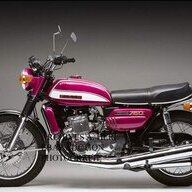
Acoustic bass guitar?

I think that you discovered exactly why acoustic bass guitars have not ever been very popular.

I would think that a fretless electric bass would be a more logical transition instrument... if you feel like a transition instrument is needed.
At least something is pretty similar in playability and sound, where as the ABG shares nothing, except the hollow wood thing, which doesn't really get you anywhere.
 
Last edited:
I spent years trying to make different abg's sound like an upright. I finally realized that they will never do so (without amplification). I then decided to go with what an acoustic bass guitar can do.

If you are going to be heard when playing an abg, you need mids, acoustically and plugged in.

I have been plying in a dou, acoustic guitar and acoustic bass. We use a small pa when playing out, but we rehearse/jam acoustically. The basses that I use are all solid wood and I set them up for agressive playing. I have found that nickel roundwounds work the best for me.

ABG's offer a unique sound.
Screenshot_20250920_185651_Studio.jpg
 
  • Like
Reactions: bholder
Several years ago we did a self-released duo album with a blues singer where I played mostly acoustic guitars but on several songs I also added my old fretless acoustic Eko bass: bluesalot.ch – it can be heard on "I'm Shakin'" and "Sailing Shoes" (the other two songs from the album that are currently online have no bass guitar). I recorded the Eko just acoustically with an AKG C3000 mic, but it also required quite some EQ and compression tinkering in Logic to make it sound as close to an upright as I could get then.
Later I bought an HX Stomp and played the Eko live via a piezo, using para-EQ, multiband compressor and – as a consequence – also noise gate blocks to get even closer to a DB sound. It worked quite well for what we did.

Suffice it to say, when I finally got me an upright bass a year ago, all of a sudden the Eko sounded to me like a cardboard shoebox…

(Oh, wait, what's that faint weeping sound that I'm hearing right now? That must be my sad old Eko hanging on the wall in the room next door… 😢)
 
Last edited:
  • Haha
  • Like
Reactions: bholder and joeLowB
:rollno: ...If the goal is to play upright, he should play upright. A full scale electric upright could serve as a proxy....
I respectfully suggest that if you want to play double-bass, the most efficient starting point is a double-bass. The stick bass isn't really that much smaller; it still has to be plugged in; and it won't teach you how to pull a tone from the upright. Plus, how closely they approximate the shape, size, action, etc. of a double-bass varies a lot. I think stick basses are a great tool for people who already know how to play a regular double-bass, but if your goal is to play double-bass, just start learning how to play that.
 
So, from both my experience and other people's:

So ya wanna play in no-electron locations, and ya wanna sound like an upright bass?

OK, here are your choices.

1) Electric bass guitar with magnetic pickups, small battery amp, and the bass setup to whatever specs you like. Small, loud enough, does NOT look "acousticky", can fulfill the same musical role as the upright, but can only approach the tone of the upright.

2) Acoustic bass guitar. Unplugged you may be able to keep up with a couple nylon string guitars. Yes, there are a few very expensive versions of this that are louder, but they're still not going to keep up with a bluegrass circle of two Martin dreadnoughts with heavy stings, two banjos, two mandolins, and a couple fiddle players. So you're going to plug in, carry your small batter amp, and it'll be much like a Precision with flats. Tone, yes, it's a bit different. Some people really use that tone for what it is. OP seems to be targeting bluegrass jam circle type settings where the boingy boingy roundwound might, or might not, work out. It does LOOK more "acousticky" - I suppose, unless of course you notice the amplifier sitting there...

3) Stick bass - you've still got to amp up, it's not really all that much smaller than the real upright; you don't have the shoulders to hold it with, so most of them end up fixed in place on a tripod. Does NOT look "acousticky". Frankly, of all the alternatives here, this one strikes me as the least worth it.

4) The real thing, the thing all these expensive and not really the same sound as upright alternatives are trying to be - the double-bass. If this is what you want to use, why not just do that?
 
I think that you discovered exactly why acoustic bass guitars have not ever been very popular.

I would think that a fretless electric bass would be a more logical transition instrument... if you feel like a transition instrument is needed.
At least something is pretty similar in playability and sound, where as the ABG shares nothing, except the hollow wood thing, which doesn't really get you anywhere.
Forget what they sound like or how loud they aren't, ergonomically they just suck. They stick out too far from your body, and the top presents a shelf that your plucking arm wants to rest on, making the thing impossibly heavy if you play standing with a strap.

There's a movie about a busker over in the UK who used to play with a large ginger cat sitting on his acoustic guitar while he played standing. I think it was "My Cat Called Andre," or something like that. The cat was always there. Not sure how he could stand that weight? My right arm might weigh less than that cat, and it bugs the hell out of me when I play my Ovation.
 
  • Like
Reactions: Wasnex
IM an upright and solidbody player for decades. My son has done well on bass guitar, and im working him up to upright, so I got an older Epiphone Capistan acoustic bass as a transition. It has good electronics, 34"scale. We can't get enough volume unplugged even for a small acoustic jam, and plugged in, sounds more like a solidbody than an upright. Is that the consensus? We have a small battery op Cube Bass that works well for unplugged acoustic gigs. But other than the imagery, im not getting the point of these? What am I getting wrong?
You are getting nothing wrong. Because you play upright, you know the body has to be that large to get enough volume to be heard by those not actually playing the instrument. Other than image, there is nothing special about them. I own two. Both are Breedloves. One is a large body 34" fretless and the other is a smaller body fretted. I put bronze strings on the smaller one and play it through a Fender Rumble 40 for a gospel acoustic guitar group. It looks and sounds like it belongs.
 
  • Like
Reactions: Wasnex and Bander
In some styles they are used for a specific sound. Violent Femmes etc. aside, see also these examples.


(slapped ABG alternating with sousaphone)


(plenty of slap but also used more like a giant guitar with a lot of chords)

But those are specific niches (or perhaps even Nietzsches), definitely not a "transitioning to DB sound". For transitioning to DB, a decently bowable EUB would be what I'd do. FWIW I did recently bring my Atelier Z archtop hollowbody to an unamplified rehearsal with one guitar, three singers, sometimes cajon and flute, and that was audible enough as long as I stayed off the bottom string. Audible enough for the flute player to suggest I should approach something differently, haha.
 
  • Like
Reactions: loukash and Bander
In some styles they are used for a specific sound. Violent Femmes etc. aside, see also these examples.


(slapped ABG alternating with sousaphone)


(plenty of slap but also used more like a giant guitar with a lot of chords)

But those are specific niches (or perhaps even Nietzsches), definitely not a "transitioning to DB sound". For transitioning to DB, a decently bowable EUB would be what I'd do. FWIW I did recently bring my Atelier Z archtop hollowbody to an unamplified rehearsal with one guitar, three singers, sometimes cajon and flute, and that was audible enough as long as I stayed off the bottom string. Audible enough for the flute player to suggest I should approach something differently, haha.

We are having some fret slap on the E string, ill probably size that up when I change the 34" strings. Slap isnt pleasant on these with amplification in our setting!
 
Forget what they sound like or how loud they aren't, ergonomically they just suck. They stick out too far from your body, and the top presents a shelf that your plucking arm wants to rest on, making the thing impossibly heavy if you play standing with a strap.
...
Now that's not an issue I ever have had with mine. But I"ve got long arms. I will say you need an extra long strap. And mine is a Dean, which is one of the larger bodied ABGs. I bought it for tough-load-in sessions, hoping it would be loud enough with just a couple guitars in someone's living room - it wasn't, not really, and for the tough load ins I ended up caving in and buying a cheap Precision and a set of flat wound strings.
 
:rollno: ...


I believe a fretless ABG with tape wounds will sound more like an upright. I believe the tone will be darker and the volume will be lower.

Not sure how well intonation will be on a fretted bass with tape wounds.

I mean, that's a GOOD sound, for some things, but I don't hear "upright bass" in that. I hear "Big-Ass Guitar".
 
My handmade acoustic basses by g.w guitars with db strings are pretty loud and sound like upright. But they not cheap.


Well in the first video, I can barely hear the bass over two steel string guitars.

Put an upright in there with someone who knows how to pull tone from an upright and it'll be very different.

I'm sorry, but people have been trying to duplicate the double-bass for a long time. If you're looking for loud and no electrons, you've got three choices - all of them big, heavy, and hard to play:

- Double bass
- Bass saxophone
- Tuba

Now if you can accept electrons, you can fill the same musical role by what you play and how you play it, even though the TONE isn't exactly the same.
 
I guess it sounds like I"m just slagging on ABGs, which I am, sort of, but the point I'm trying (very inefficiently) to make is that while the ABG can have use, and its own distinct sound, the OP is talking about violin, guitar, bass trio, mentioning applications like "all the way across the park by the swingset" and "want to get as close as possible to the sound of an upright" - FOR THIS, I'd respectfully suggest that a plain ol' electric bass with a battery powered amp, or an actual double-bass, are your two most practical solutions. All this about interim things and "working up to" the double bass seems to me like just deferring the inevitable and possibly creating bad habits that have to be unlearned later on.

So let's not confuse the actual places where the ABG is a viable musical tool, with the places where it isn't really a viable stand-in for an upright unless you plug it in, at which point it's just another form of electric bass.
 
  • Like
Reactions: Wasnex
Heh, I remember recording a multiinstrumentalist who got all excited that I also had recorded an ophicleide for this project. He was like "I learned about that in school but never have seen or heard one!"

Still have never recorded a bass helicon, though I did play at one gig where the other band had one. The guy actually had found it abandoned on a roof and fixed it up to get it into playable shape. Definitely the best bass instrument to play on horseback, which isn't relevant to this thread, but...