Just bought a new Guild B-240EF Concert Acoustic Fretless Bass. It came with round wound strings that have a lot of neck buzz, pick noise, and screeching finger side noise typical of stock round wound strings. Looking for the best acoustic strings that provide great sound volume and low unwanted pick & slide noise. I have flatwound strings on my electric fretted Bass that I love. The forums seemed to be split on tape wound and flat wound strings. I don't play slap bass and spend a lot of my time around the octave or 12th fret of D&G strings and low end E&A strings.

Enjoy the benefits of a premium membership!
Upgrade Account
-
TalkBass has been independent since 1998. Add your voice.
Create a free account to reply to discussions, view embedded media, and browse with fewer display ads.
Join free Log in
Want zero display ads or expanded classifieds tools? Compare plans.
You are using an out of date browser. It may not display this or other websites correctly.
You should upgrade or use an alternative browser.
You should upgrade or use an alternative browser.
Acoustic Electric Fretless Bass Strings
- Thread starter Babomshi
- Start date
More options
Who Replied?
Great sound volume as in unamplified? Then phosphor bronze or 80/20 bronze acoustic bass strings are the way to go. I'd suggest the Elixir 80/20 Bronze Acoustic Bass w/ Nanoweb coating or the GHS Pressurewound Bronze.Just bought a new Guild B-240EF Concert Acoustic Fretless Bass. It came with round wound strings that have a lot of neck buzz, pick noise, and screeching finger side noise typical of stock round wound strings. Looking for the best acoustic strings that provide great sound volume and low unwanted pick & slide noise. I have flatwound strings on my electric fretted Bass that I love. The forums seemed to be split on tape wound and flat wound strings. I don't play slap bass and spend a lot of my time around the octave or 12th fret of D&G strings and low end E&A strings.
The Nanoweb coating on the Elixirs makes the string surface silky despite round wounds, thus reduces the screeching finger slide noise, although not entirely gone like flat wound or tape wound.
The Pressurewound has the strings outer round wound pressurized so they are more oval-shaped, which also has an effect of smoother feeling surface and reduces the screeching finger noise. Again, not entirely eliminates the finger noise, only reduces.
If amplification is often used with that acoustic bass of yours, then you can get any strings you like.


These:
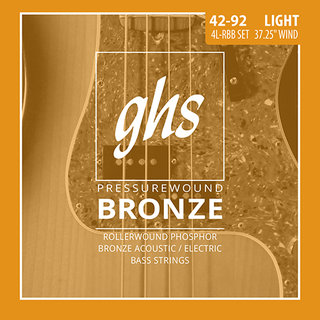
Products - PRESSUREWOUND™ BRONZE - GHS Strings
Best strings I've ever played for ABG, especially fretless - all of the volume of bronze rounds, 98% of the tone you want, virtually no finger noise or screeching.
Products - PRESSUREWOUND™ BRONZE - GHS Strings
Best strings I've ever played for ABG, especially fretless - all of the volume of bronze rounds, 98% of the tone you want, virtually no finger noise or screeching.


- Sep 9, 2007
- 5,309
- 4,977
- Disclosures
- Endorsing Artist: Eventide, GHS Strings, G&L Guitars, NS Design, Tsunami Cables
@bholder , what is your experience with fretboard wear, using the Pressurewound strings over time? I'm trying them on my Fretless bass, and I'm liking them. Just hope they won't eat my fretboard.
Fretboard wear on a fretless has been grossly over-exaggerated. Over time, even flatwounds will put superficial marks on your fingerboard. So many variables come into play that will determine whether "over time" is a matter of years or decades.
That said, the Pressurewound Bronze will have much less affect than your typical roundwound, because of the rollerwound construction.
@bholder , what is your experience with fretboard wear, using the Pressurewound strings over time? I'm trying them on my Fretless bass, and I'm liking them. Just hope they won't eat my fretboard.
Fretboard wear on a fretless has been grossly over-exaggerated. Over time, even flatwounds will put superficial marks on your fingerboard. So many variables come into play that will determine whether "over time" is a matter of years or decades.
That said, the Pressurewound Bronze will have much less affect than your typical roundwound, because of the rollerwound construction.
Yup, what Jon said. I've played stainless rounds on ebony boards long enough (2 decades was sufficient in my case) to experience real wear, not just superficial scratches, but still, fretboard wear just isn't a major problem, because it takes so long, and repairing it isn't that big a deal. As for the pressurewound bronze, I haven't noticed them causing much wear at all, though I bet if I look hard there will be some superficial scratches. I'm not worried in the least about string wear with those strings on - I'll be gone before the wear becomes a problem...
I am thankful you guys are helping with this. I say this because I'm somewhat new to bass, and definitely new to fretless basses. The reason I ask, is I have a Michael Kelly fretless acoustic bass that I have owned about a year-and-a-half. I only play it a couple of times a month for maybe 30 minutes to an hour. When I recently decided to change the strings to the ghs pressurewound, from the D'Addario EXP which came on it, I was shocked to see what I think is reasonably deep scratches and grooves in the fretboard. I will try and take a quality photo and show you guys what I call scratches that seemed fairly deep. Regardless, I was shocked that such light playing could do such damage as quickly as it did. I realized if I played this bass on a daily basis, the fretboard would be screwed up by now. So far, it seems the pressure wound strings are causing no noticeable new damage. But that's hard to tell since I didn't sand the old fretboard flat.
ah now if it's one of the Michael Kelleys with the vine inlays up and down the board - yeah, beautiful to look at, but way easier to scratch up. I have one, and yeah, I keep flats or tapes on that one. Hate to tear up those pretty inlays.
@bholder. Thank you for replying with that great information. I wouldn't have known, and now I do. I thought that was some pretty soft ebony. Maybe those strings are extra rough on it. I will keep an eye on these pressure wound and make sure they don't dig in any worse. I sure like the way they sound.
They are my absolute favorite ABG strings, especially for fretless, and I haven't seen much if any wear from them, but again, inlays scratch more easily. Anyway, I hope they work out for you.@bholder. Thank you for replying with that great information. I wouldn't have known, and now I do. I thought that was some pretty soft ebony. Maybe those strings are extra rough on it. I will keep an eye on these pressure wound and make sure they don't dig in any worse. I sure like the way they sound.


