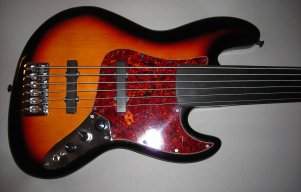
Just stumbled upon this.. Anyone have any experience with it ??
http://www.bassmute.com/bassmute/bm_mainframe.html
TalkBass has been independent since 1998. Add your voice.
Create a free account to reply to discussions, view embedded media, and browse with fewer display ads.
Join free Log in
Want zero display ads or expanded classifieds tools? Compare plans.
Had one for awhile, not a panacea, sold it on TB a few years ago.
I don't think the OP cares about your pancreas - at least not enough for you to need to post it twice. I was under the impression that the bass-mute had gone the way of the dinosaur, and all that is left of that company is a few web pages. I am not certain about that, though.
When I said that the bassmute had gone the was of the dinosaur, I meant the product the OP was asking about and not the concept itself. Muting has gone nowhere - for myself, I use foam or fleece near the bridge. I have a Precision bass with a Jaguar mute installed as well.Well maybe I'm a dinosaur too, but I do find a use for muted bass strings. But not for any of the commercial mutes. In order to make my semi-hollow body Carvin AC50 sound more like an upright, I just jam a triangular piece of foam under the strings at the bridge. What you find is low strings need more damping than high strings hence the triangular shape. Plus, you can adjust damping both by how far it is from the bridge and how far you jam it under the strings. Also you can adjust damping by placing the foam at an angle to the bridge. The further the foam is from the bridge the greater the damping. This is so simple and works so well, I can't see where some mechanical contraption without any real range of adjustment and has to match the number of strings on the bass would be better. OK, maybe the flip on an off feature is better than yanking foam, but I've never really found a need to flip my mute either on or off during a song.
I don't think the OP cares about your pancreas - at least not enough for you to need to it twice. I was under the impression that the bass-mute had gone the way of the dinosaur, and all that is left of that company is a few web pagepost s. I am not certain about that, though.
Well maybe I'm a dinosaur too, but I do find a use for muted bass strings. But not for any of the commercial mutes. In order to make my semi-hollow body Carvin AC50 sound more like an upright, I just jam a triangular piece of foam under the strings at the bridge. What you find is low strings need more damping than high strings hence the triangular shape. Plus, you can adjust damping both by how far it is from the bridge and how far you jam it under the strings. Also you can adjust damping by placing the foam at an angle to the bridge. The further the foam is from the bridge the greater the damping. This is so simple and works so well, I can't see where some mechanical contraption without any real range of adjustment and has to match the number of strings on the bass would be better. OK, maybe the flip on an off feature is better than yanking foam, but I've never really found a need to flip my mute either on or off during a song.