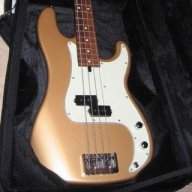
I was offered a very nice used Fender precision bass the other day that had an ash body. Now I do not have much experience with ash, so I was wondering is there a difference between ash and alder bodies?

Enjoy the benefits of a premium membership!
Upgrade Account
-
TalkBass has been independent since 1998. Add your voice.
Create a free account to reply to discussions, view embedded media, and browse with fewer display ads.
Join free Log in
Want zero display ads or expanded classifieds tools? Compare plans.
You are using an out of date browser. It may not display this or other websites correctly.
You should upgrade or use an alternative browser.
You should upgrade or use an alternative browser.
Alder and Ash bodies: Is there a difference?
- Thread starter MOTORHEADBANGER
- Start date
More options
Who Replied?
Quadzilla
Supporting Member

I don't think ash resonates as well as alder. I've had several ash basses but none of them sounded that good to me.

I don't think ash resonates as well as alder. I've had several ash basses but none of them sounded that good to me.
 Wow, that's not my experience at all.
 Anyway, to the OP, do a search on this forum with the key words ash, alder, and tonewoods. You'll get lots of hits and plenty of info.
Check out this info on the Warmoth site on woods:
Invalid Link Removed
IMO, the differences in various woods are pretty subtle.
Either wood can sound great or bad and be heavy or light. I've had basses with both woods that sounded horrible and right now have basses that have one or the other and they sound amazing and are quite lightweight (7.25 - 8.5 lbs).
I don't think the differences are subtle in most cases, but I agree they can sometimes be. Each piece of wood is unique and the best way to know if it's the right bass for you is to hear what it sounds like while you're playing it.
I don't think the differences are subtle in most cases, but I agree they can sometimes be. Each piece of wood is unique and the best way to know if it's the right bass for you is to hear what it sounds like while you're playing it.
I don't think ash resonates as well as alder. I've had several ash basses but none of them sounded that good to me.
I wouldn't say ash resonates better, just differently.
Also, as a general rule of thumb, ash IMO has a brighter tone with more highs and tighter bass. Alder seems to have a warmer tone. These differences can be quite subtle.
Your mileage may vary but that's what my odometer says.

I've owned several ash basses and each seemed ever so slightly deficient in the lower mids as compared to alder which sounds a bit more neutral to my ears. As has been stated already each piece of wood sounds unique. The above observations are based on my own personal experiences. YMMV 
Essentially what you'll find nowadays is that tonewoods can almost exclusively be classified as irrelevant. modern pickups, bridges, measures, chambering techniques, glues, materials, string design, amplification, speaker designs, emulation and effects have almost single handedly eradicated the necessity of choosing choice wood types/grades. however depending on the age of the instrument and your personal style this may be essential if you have a more distinguished taste. personally ive found that in most solid body electrics that the harder grained wood tends to provide better tone and resonance. hardened swamp ash is one of my personal favourites. the thing to consider is the overall build of the instrument and the way it sounds to you and how it fits in with your routine and style. i would research the manner in which fender has manufactured the wood itself and therein you will find the effect that the particular wood will have on your sound. the manufacturing and selection process used by a company is the best way to distinguish the who's who of tonewoods. because in this design era almost any material can be made to sound like another.

Both of my U.S. laklands use swamp ash. they are both very resonant, and articulate.
my 3 skyline series laklands all use ash as well, and sound great.
my 3 skyline series laklands all use ash as well, and sound great.
I did a tour of a small shop that builds violins and cellos of reputation. Als the warwick tour, where you can look at raw bodies before shaping. Knocking on the raw blocks of wood opens up the whole spectrum of sounds... so , every wood body sound different to start out with. Ash sounds completely different from alder or maple. the lighter the wood the more air is inclosed, thus the tone stands longer, other woods have more harmonics, and so on... electronics, laquer, etc. will change the tone again, but the original character remains.
Essentially what you'll find nowadays is that tonewoods can almost exclusively be classified as irrelevant. modern pickups, bridges, measures, chambering techniques, glues, materials, string design, amplification, speaker designs, emulation and effects have almost single handedly eradicated the necessity of choosing choice wood types/grades.
Man you just took the words right out of my mouth..... I'm one of those weird tonewood agnostics also and can't agree more.
It's really true - it's not the type of wood used (unless you do something really extreme like build it out of balsa wood or something) but the manner of construction and electronics primarily.
Michael Tobias always says that even a solid electric bass is foremost an acoustic instrument. The acoustics are primarily determined by the construction and only to a minor degree by the type of wood used. There may be a little bit of difference between say hard rock maple and, like, mahogany, but the lions share of the tone is determined by construction and electronics.
I.e. the typical bolt-on Fender-like design (the Fender, MM, G&L) has a kind of organic sound to it no matter what it's built out of. Tap the back of any Fender or G&L and you get a nice acousticey "tonk" out of it. And that's how they sound through the amp - a kind of organic acoustic like tone. My G&L's are maple neck/ash bodies and sound a lot like a typical Fender when tapped on the back of the body no matter what the Fender may be made out of.
Tap the back of a rick, similar kind of acoustic sound from the wood. Sure enough, there's an acoustic like quality to its sound through the amp, but with a lot of clank added due to the electronics.
Tap the back of my (gibson) tobias and you get a very flat "whack" with hardly any acoustic like resonance. It's neck through and built like a Sherman tank where even the open B hardly causes any vibration in it. It's got a pair of Barts in it, lo and behold you plug it in and you get a very smooth but powerful boutique-sounding pop to the tone with lots of "whack" to it. Nothing organic about it and very hi-fi.
In fact, my rick and tobias are made of virtually the same woods - maple on the neck in neck-through construction - but the sounds of each couldn't be more different. The construction and electronics, tho, are very different on each.
So look for the type of construction you like to get your tone. Then look at electronics and hardware, then look at woods.....
LS
Essentially what you'll find nowadays is that tonewoods can almost exclusively be classified as irrelevant. modern pickups, bridges, measures, chambering techniques, glues, materials, string design, amplification, speaker designs, emulation and effects have almost single handedly eradicated the necessity of choosing choice wood types/grades.
I partly agree, but not all the way.
I find every part of the instrument makes a difference and body-wood too.
It is part of the puzzle.


- Jun 25, 2007
- 4,531
- 135
- 63
- Disclosures
- Artist:TC Electronic RH450 bass system (original test-pilot)
I wouldn't say ash resonates better, just differently.
Also, as a general rule of thumb, ash IMO has a brighter tone with more highs and tighter bass. Alder seems to have a warmer tone. These differences can be quite subtle.
Your mileage may vary but that's what my odometer says.
Mine Too.

I'm going to suggest a pizza analogy. Insofar as the crust, sauce, cheese (or lack of) &
the toppings all add up to more than the sum of it's ingredients, as it were.
So, do you want thin crust, hand tossed or thick, pan-style?
Whole wheat, white, sourdough, pesto, garlic, cornmeal, basil, rosemary parmesan etc.
Lot's of variables in a pizza.
I like alder.
the toppings all add up to more than the sum of it's ingredients, as it were.
So, do you want thin crust, hand tossed or thick, pan-style?
Whole wheat, white, sourdough, pesto, garlic, cornmeal, basil, rosemary parmesan etc.
Lot's of variables in a pizza.
I like alder.


