
Enjoy the benefits of a premium membership!
Upgrade Account
-
TalkBass has been independent since 1998. Add your voice.
Create a free account to reply to discussions, view embedded media, and browse with fewer display ads.
Join free Log in
Want zero display ads or expanded classifieds tools? Compare plans.
You are using an out of date browser. It may not display this or other websites correctly.
You should upgrade or use an alternative browser.
You should upgrade or use an alternative browser.
Anyone else like guitar cabs and amps for bass?
- Thread starter Volume Not Withstanding
- Start date
More options
Who Replied?

I love recording bass with a di signal + marshall jubilee head/2x12 at a low volume. It adds a beautiful texture and 3d quality. I don’t particularly love it through just the guitar amp, but together with a bass di signal I really like it.A lack of punch at performance-volume not withstanding, it 'was the case (decades ago) that given the euphonic type of 'old-school' pre-distortion repertoire I was called upon to play, I've always preferred the sound of multiple 12" speakers (over any combination of 10's or 15'), as driven...and this is the kicker, specifically by guitar 'tube' amps (usually Marshall), for both practice and recording! Producers loved it too!
I'm returning to play after decades away, and am now looking at buying a guitar amp/cab as my 'hobbyist' bass rig. I have an extensive background in electronics and audio circuitry design specifically, so I know 'why' this combination, designed as it is to a 'seemingly' alternative purpose, is, when driven modestly, a far quicker path to tonal complexity and the balance I sought when I had no room to fill or guitarists to fight with.
Guitarist love the effect of plugging into bass rigs, but has anyone else plugged into a dedicated guitar rig, and experienced...initial delight!
P.S. I had no such similar experience when plugging into full range keyboard rigs or going DI into PA's.
Bass heads are more or less the same as guitar heads but for the voicing.A lack of punch at performance-volume not withstanding, it 'was the case (decades ago) that given the euphonic type of 'old-school' pre-distortion repertoire I was called upon to play, I've always preferred the sound of multiple 12" speakers (over any combination of 10's or 15'), as driven...and this is the kicker, specifically by guitar 'tube' amps (usually Marshall), for both practice and recording! Producers loved it too!
I'm returning to play after decades away, and am now looking at buying a guitar amp/cab as my 'hobbyist' bass rig. I have an extensive background in electronics and audio circuitry design specifically, so I know 'why' this combination, designed as it is to a 'seemingly' alternative purpose, is, when driven modestly, a far quicker path to tonal complexity and the balance I sought when I had no room to fill or guitarists to fight with.
Guitarist love the effect of plugging into bass rigs, but has anyone else plugged into a dedicated guitar rig, and experienced...initial delight!
P.S. I had no such similar experience when plugging into full range keyboard rigs or going DI into PA's.
Salud!
At home and at low volumes, I love to play bass through my Fender Junior III. Great tone.
At home and at low volumes, I love to play bass through my Fender Junior III. Great tone.
Nope. I have experienced immediate farting sounds that were impossible to avoid anywhere above bedroom practice levels. That's because guitar speakers are no made to reproduce the low frequencies that bass speakers are. AND it is critical to match the cabinet design to the speakers as Fender found out back in 1959 when they brought out the Bassman 410 open back cab. Playing bass through it blew the speakers apart in short order because they moved to far reproducing those low frequencies and if the voice coil didn't go first the cones of the speakers would rip. Open back has no pressure in the cab to keep the speaker from over extending.A lack of punch at performance-volume not withstanding, it 'was the case (decades ago) that given the euphonic type of 'old-school' pre-distortion repertoire I was called upon to play, I've always preferred the sound of multiple 12" speakers (over any combination of 10's or 15'), as driven...and this is the kicker, specifically by guitar 'tube' amps (usually Marshall), for both practice and recording! Producers loved it too!
I'm returning to play after decades away, and am now looking at buying a guitar amp/cab as my 'hobbyist' bass rig. I have an extensive background in electronics and audio circuitry design specifically, so I know 'why' this combination, designed as it is to a 'seemingly' alternative purpose, is, when driven modestly, a far quicker path to tonal complexity and the balance I sought when I had no room to fill or guitarists to fight with.
Guitarist love the effect of plugging into bass rigs, but has anyone else plugged into a dedicated guitar rig, and experienced...initial delight!
P.S. I had no such similar experience when plugging into full range keyboard rigs or going DI into PA's.
I had a 1966 Fender Bassman (last of the original blackface amps) that I bought new in 1966 with a 212 cab that used Jensen speakers. They worked great in the sealed cab that was used through 1965, but in '66 they made the cab much bigger while keeping the same speakers. I blew a speaker 3 timess out of that cab before I traded it in on a new Standel piggy-back amp with 4 times the power in a bass reflex 215 powered speaker cab. Thiele-Small parameters were fairly new in 1971 and there were not very many bass reflex ported cabs yet. The Fender cab was just "put it in a bigger cab because it looks more impressive than the earlier Bassman piggy-back amps" (it did look more impressive). But the speakers were a poor match for that cab size. In 1967 they put 15" speakers into a slightly larger cab and that worked. I think it was the same size as the Dual Showman cab, which had been used for years with two 15" speakers in it.
If you like 12" speakers, get an amp that will handle a 2Ω load and then buy four 112's. I primarily use a DNS-210 cab by DNA indoors and their DNS-410 for outdoors and music festivals. I do use an Eden EX-112 cab for small venues with tight stages. The first time I played one at a gig, I liked it so much i bought another one. I would use one for small brewpubs and similar venues and bring a second one along for medium-sized venues saving my 410 for large indoor venues, outdoor venues, and music festivals. I got a lot of compliments one my sound with an Eden 800-watt amp driving them If you get 8Ω cabs you can take as many as you need to depending upon the size of the venue.
I bought my 112's because small venues about had apoplexy when I'd roll in my DNS-410 cab and invariably make me use some small backline 112 combo. So if you play a lot of different sized venues, a modular system is a good choice. When I got my DNA Endorsement I bought the DNS-210 cab because no one looks cross-eyed at a bassist bringing in a 210 cab and running an 800-watt amp through it (it handles 700-watts rms) it will cover even a large indoor venue without getting close to the max power it will handle.
If you are only going to use a guitar cab for bedroom practice levels, go right ahead and buy one. Seems like a waste though buying a 212 or 412 cabinet that you know will blow the speakers out of it if you turn it up to gig levels. If you want something that sounds like a particular guitar amp, go ahead and get that, just get a real bass cabinet to go with it and be aware of the power limitation of a guitar cab and its ability to drive a bass cab to gig levels. 100-watts won't get you much volume in modern full-frequency bass cabs. Even driving a single 112 cab for small venues I use a 225-watt amp.


buldog5151bass
Kibble, milkbones, and P Basses. And redheads.
Modern bass gear is light-years ahead of prior generations. I might consider a tube guitar amp if I wanted an overdriven tone in the studio, but that's it. The fact that you are discussing driver size alone is discussing tone means you need to start checking to see what is out there.
I'm not a tone-chaser, I'll only play to music, preferably actual instruments live,
but I don't sit and solo noodle, nor think I'm I know more than the engineers who design bass rigs...
just give me a basic (preferably big-ass) bass rig and I'm a happy camper.
but I don't sit and solo noodle, nor think I'm I know more than the engineers who design bass rigs...
just give me a basic (preferably big-ass) bass rig and I'm a happy camper.

I liked my bass through vintage fender tube amps at home. You might find the "sharpness" you were against from such jangly amps though. That could also be having the string action low enough to contact either the pickup pole pieces or strike the fretboard with some force. Steve Harris of Iron Maiden has gigged through a guitar rig for years with plenty of musicians and non-musicians having no clue.
With a lot of modern rigs, you don't have to worry about a lack of "sonic complexity" or being geared towards being "trebly" since many of them have quite the range. If you don't want as much treble, there's usually a knob marked treble that you can adjust as I frequently do.
I was playing an old Carvin last week that a buddy had. Full graphic EQ, 3 switches for common boosts and cuts, and other options. Mesa gets a lot of love because it tends to be solid and versatile gear as well. AgedHorse on this forum is a wealth of knowledge regarding the engineering of that gear.
Is there any example of artists your trying to find the sound of? That might be more helpful.
With a lot of modern rigs, you don't have to worry about a lack of "sonic complexity" or being geared towards being "trebly" since many of them have quite the range. If you don't want as much treble, there's usually a knob marked treble that you can adjust as I frequently do.
I was playing an old Carvin last week that a buddy had. Full graphic EQ, 3 switches for common boosts and cuts, and other options. Mesa gets a lot of love because it tends to be solid and versatile gear as well. AgedHorse on this forum is a wealth of knowledge regarding the engineering of that gear.
Is there any example of artists your trying to find the sound of? That might be more helpful.
Last edited:
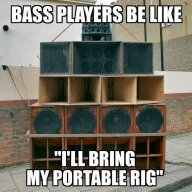
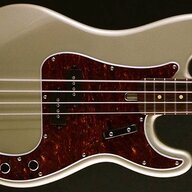
...I frequently find that the EQ centers are poorly chosen for that task....Guitar cabs on the other hand are consistently a poor choice.
This ^ (IMHO).

Alas, I am much befuddled by your wanton auditory predilections, as you at once bemoan "youth" as trying to mimic the omnipresent 6-string lutists, yet your redoubted quest is at the behest of using their equipage. I know not what emporiums you occasion, but pursue the audience of foresaid Mesa Boogie Subway bass assets.
You, sir, made my day.
Guitarist love the effect of plugging into bass rigs, but has anyone else plugged into a dedicated guitar rig, and experienced...initial delight!
Guitar tube amplifiers, yes. Guitar cabinets - no not at all.
I have nothing to do with treble.
If a modern sound equals a Dingwall with fresh strings played into a pile of Darkglass gear, with lots of content in the 2-3kHz area, then I'm oldschool.
I play BASS. There's lots going on for me in the range from 60-150 Hz, and your normal guitar speaker is still at around -9dB at 100Hz.
Hit that frequency range with a 9dB boost to even out the shortcomings of the speaker and find yourself right in the middle of fart city.

I recall Dug Pinnick's signature sound was a result of mixing guitar amps/cabs with bass amps/cabs for a bi-amped rig. There's a Tech 21 signature pedal for him that approximates the effect of his previous rig, and is reportedly used by Dug himself on gigs (according to Tech 21).
For studio work I bet it's awesome, but I don't want to belabor the volume difficulties which people far wiser than myself explained in better detail. I've thought about a very carefully tuned rig similar to Dug's. If the true magic is happening with the guitar amp, I could see a PA speaker setup (with well-configured crossovers) achieving similar results. I'd be interested to hear what a two-channel mix going to the board sounds like too. With a good sound engineer, I'm sure it would slay
For studio work I bet it's awesome, but I don't want to belabor the volume difficulties which people far wiser than myself explained in better detail. I've thought about a very carefully tuned rig similar to Dug's. If the true magic is happening with the guitar amp, I could see a PA speaker setup (with well-configured crossovers) achieving similar results. I'd be interested to hear what a two-channel mix going to the board sounds like too. With a good sound engineer, I'm sure it would slay

Honestly, if you can't get a tone you like from at least one of the current bass offerings, it's probably user error.

Plugged a Rockerverb III 50 watt head into a Neo Bassman 410
the most amazing tone! Makes me curious to try a Rockerverb 100 into a 2x15 wired at 16 ohms
the most amazing tone! Makes me curious to try a Rockerverb 100 into a 2x15 wired at 16 ohms

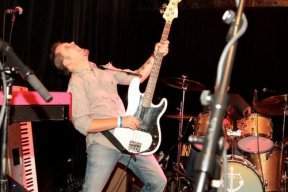
The best sound I ever got was right in-between Lemmy and Malcolm. Geddy Lee CIJ Jazz Bass JTM45 into a Peavey 4x12 with Sheffield speakers. Oh boy what a glorious tone.
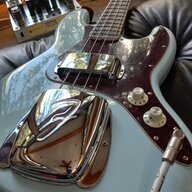
Conceptually, for being removed from it, I have failed to move with the musical times, because I have not suffered the obligation to perform contemporary music, whose modern tonal aggregation ranges to wider and more far flung musical landscapes, to venture horizons that I haven't yet invited or assimilated.
Realizing that more poignantly now, my miscalculation was in asking bass players who 'are' necessarily current, up-to-date, and gigging, for permission or encouragement to invest in a style of play that is...insufficient to modern applications. Thank-you for your patient and forthright advice. Now the search begins!
Realizing that more poignantly now, my miscalculation was in asking bass players who 'are' necessarily current, up-to-date, and gigging, for permission or encouragement to invest in a style of play that is...insufficient to modern applications. Thank-you for your patient and forthright advice. Now the search begins!

I played my bass through boutique 2x12 tube amp and was amazed at the sound
But I knew it would not hold up at volume.
The thing that wowed me was how responsive it was to my touch
Which led me on a quest for a more responsive rig
I posted about my pursuit of "responsiveness" here
But I knew it would not hold up at volume.
The thing that wowed me was how responsive it was to my touch
Which led me on a quest for a more responsive rig
I posted about my pursuit of "responsiveness" here


