It's not to different. It's basically a half step downtuning with a drop C#. As long as your guitarrist in your band tune similarily it shouldn't be an issue. Lots of people play songs in drop D and a lot of bands drop a half step for vocal reasons.

Enjoy the benefits of a premium membership!
Upgrade Account
-
TalkBass has been independent since 1998. Add your voice.
Create a free account to reply to discussions, view embedded media, and browse with fewer display ads.
Join free Log in
Want zero display ads or expanded classifieds tools? Compare plans.
You are using an out of date browser. It may not display this or other websites correctly.
You should upgrade or use an alternative browser.
You should upgrade or use an alternative browser.
Anyone else tune their basses as I do?
- Thread starter Cosmiceddie
- Start date
- Status
- Not open for further replies.
More options
Who Replied?
Lots of musicians use altered tunings; nothing strange about it at all! J.S. Bach was using altered tuning way back in the 1720's with his Cello Suites. You either put in the time and mental energy to learn the new fingerings, or you don't and stay in standard tuning. Both approaches are totally fine, it's a personal choice!
One of my favorite tunings, I have never heard anyone else using it so maybe I invented it, is CEADG (standard 5 string with the B tuned up a half step). A little confusing but the open low C sounds great!
I actually use that tuning for a couple of my friend's songs because 1.) It uses a lot of C, so an low C is easiest and 2.) It was easier for me to play the rest in standard because I didn't want to learn play it like the guitar parts since they're tuned in drop C. I also sometimes use AEADG on my 5 string, but less frequently than C or B.
As for the OP, I think it's pretty cool, but imo I'd swap it to some form of open tuning like CGCE, or BD#BF# etc.


That's going to make for some difficult runs. Why not just tune C# F# B E & keep the standard progression that allows you to use conventional shapes & patterns?
I know it's a challenge. Still, as I've said before, it's just a matter of practice. And I really like to explore a new world of shapes and patterns.

Really? Cuz I play a 35" 5 string and won't use anything under a .125 for my B string because it's too floppy.they have a little give but def dont sound floppy
Also, Tuning my 4 string to C with a set of .105 DR DDTs is floppy...there's no way that low A has enough tension with a .100 (that's standard E string territory).

- Apr 2, 2014
- 485
- 390
- 47
- Disclosures
- Endorsing Artist: Conklin Basses, Ashdown Amplifiers, Morley Pedals
Sometimes I tune standard BEADGCF, sometimes like a guitar, BEAGDBE. Sometimes drop AEADGCF. I also have one tuned F#BEADGC and sometimes GCCGCFB, the low B up to a C and the low E down to a C so they're in unison. Tune however you want, who cares?
I used to play in a band with ''my'' C# F# C# F# tuning while the guitar players used their half step down standard tuning, with no problems whatsoever.
Last edited:

At some point, most players hit a wall, and improvement stops. That's when learning by yourself ends, and lessons begin. It might only take a handful to put you on the right track again, and you back to off and running.Tune however you want, who cares?
The first thing any reputable teacher is going to do in this case, is force the OP back into traditional tunings. Basically, the OP will have to relearn how to play the instrument; properly this time.
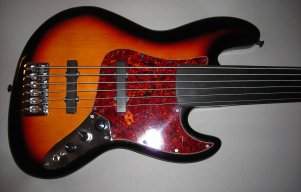
Have you ever tried to amplify a double bass? The feedback is a constant fight. Now transpose that issue to the 1950s with the technology available then. The 'Fender Bass' was the only real solution.
Amen. Been there. Done that. Even though I "invented" a bridge pickup which were NOT common back then (it was a piezo harmonica pickup I glued a piece of lead on the element to lower the frequency response with the whole thing wrapped in foam and stuffed in a hole in the bridge)... wasn't great but MUCH better than the pickups of the day that just were attached near an F hole. Still caused feedback like mad. Most bass cats of the day (including me sometimes) used a mic on a short stand opposite an F hole. It all sucked as bands got louder.
And THAT is why I bought a "Fender bass"! (Well, that and the mistaken idea that it would allow me carry less gear)
I actually use that tuning for a couple of my friend's songs because 1.) It uses a lot of C, so an low C is easiest and 2.) It was easier for me to play the rest in standard because I didn't want to learn play it like the guitar parts since they're tuned in drop C. I also sometimes use AEADG on my 5 string, but less frequently than C or B.
Glad I am not the only crazy one.

I have tuned bass in fifths on occasion - CGDA. Made some sense when I was doing more Stick playing, but really, fifths are hard for me to deal with on a 34" scale, so it's pretty much standard EADG all the time now.
I do some playing time on guitar in both fifths-based Crafty (CGDAEG) and standard EADGBE, to the point of having two identical P-90 Epiphones, one for each tuning. Even there, the fifths based is mostly just for parts with vertical lines or open chord voicing, and anything involving scale work seems best on standard.
Otto
I do some playing time on guitar in both fifths-based Crafty (CGDAEG) and standard EADGBE, to the point of having two identical P-90 Epiphones, one for each tuning. Even there, the fifths based is mostly just for parts with vertical lines or open chord voicing, and anything involving scale work seems best on standard.
Otto
At some point, most players hit a wall, and improvement stops. That's when learning by yourself ends, and lessons begin. It might only take a handful to put you on the right track again, and you back to off and running.
The first thing any reputable teacher is going to do in this case, is force the OP back into traditional tunings. Basically, the OP will have to relearn how to play the instrument; properly this time.
In my experience, it is the players over-reliant on familiar patterns and muscle memory that hit the wall first. Unfamiliar tunings force us to become active listeners and use our brains to find the next note in the scale. The best musicians I know are always picking up unfamiliar instruments and trying to figure them out, "how do I play a major scale on the trombone???" for example.
I'll list the phenomenal bass players who use standard tunings, and you list the same who use more bizarre intervals, and let's see who's finished first!In my experience, it is the players over-reliant on familiar patterns and muscle memory that hit the wall first. Unfamiliar tunings force us to become active listeners and use our brains to find the next note in the scale. The best musicians I know are always picking up unfamiliar instruments and trying to figure them out, "how do I play a major scale on the trombone???" for example.
If odd tunings worked, I'm confident that the Billy Sheehans, Geddy Lees, Victor Wootens, Paul Chambers, Charles Mingus, would have standardized them.
If odd tunings worked, I'm confident that the Billy Sheehans, Geddy Lees, Victor Wootens, Paul Chambers, Charles Mingus, would have standardized them.
Looking at the electric bassists on your list, Billy Sheehan's signature bass has a hipshot D tuner, Geddy Lee uses alternate tunings on songs like 2112, and Victor Wooten frequently plays in ADGC tenor tuning.

How does relearning the same thing you already know make you a better player? It's redundant. Major scale is still a major scale, even with different tunings.
In my experience, it is the players over-reliant on familiar patterns and muscle memory that hit the wall first. Unfamiliar tunings force us to become active listeners and use our brains to find the next note in the scale. The best musicians I know are always picking up unfamiliar instruments and trying to figure them out, "how do I play a major scale on the trombone???" for example.
Drop D is hardly unique.
Correct; alternate tunings are very common (as I have argued since the beginning).
I would think that alternate tunings but with standard intervals betwen strings are common, non-standard intervals not so much. The one exception being a down tuned E string.Correct; alternate tunings are very common (as I have argued since the beginning).
How does relearning the same thing you already know make you a better player? It's redundant.
I disagree. I am always looking for ways to play familiar material in new ways. Doing so is a fun mental challenge and helps me grow as a player. For example I will take a familiar song and practice it in various permutations like: transposed to a different key, moved around higher/lower on the neck or to different strings, switch from 4 string to 5 string (or vice versa), try to play using open strings vs. closed fingerings, play the bass line on the piano instead of the bass, simplify the rhythm (or add complexity/variation), alter the harmony, etc.
In fact I have observed that the top achievers in any field are constantly refining the fundamentals of their technique. YMMV.
I would think that alternate tunings but with standard intervals betwen strings are common, non-standard intervals not so much. The one exception being a down tuned E string.
The English language would be strange indeed if "standard" intervals were the "least common" and "non-standard" intervals were the "most common"!
Anyway, the OP's tuning is all 4ths and 5ths so I'd say those are "standard intervals" any way you slice it.

So down three half steps on the top strings and down a half step on the bottoms? I might be overly cautious but I would worry about uneven tension twisting the neck, and probably would get OCD over differences in tone and feel. That's just a prediction and I have no data to draw a conclusion from.
- Status
- Not open for further replies.


