• TalkBass has been independent since 1998. Add your voice.
    Create a free account to reply to discussions, view embedded media, and browse with fewer display ads.
    Join freeLog in
    Want zero display ads or expanded classifieds tools? Compare plans.

back up bass

I currently play in a covers band playing all styles from rock to pop and everyting in between, from all eras.
You can play those genres on all of the basses you mentioned, and indeed on most mainstream basses - sure they might sound different to your Stingray, or to each other, but they won't sound out of place. And realistically most of the audience won't know the difference (especially if you only play one bass at any given gig,). So I'd say just buy whichever one you like the most and can afford.
 
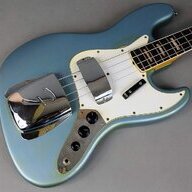
I have plenty of basses but this is this year's new backup. Strung with flats, sounds like a bass and totally gigable.
IMG_0021.jpg
 
  • Like
Reactions: Nunovsky
Carrying spare strings to gigs, and fixing nut or strap button failures with matchsticks are all well and good. But it's a lot quicker to simply switch to a second bass. Nobody wants to wait for you to faff around changing strings, or batteries, or fixing something - no matter how quickly you can do it. "dead air" kills the atmosphere. Bring a spare bass and switch to it in the event of failure and fix the problem in the break or when you get home.

Regarding getting a second bass. I agree with many of the other sentiments. Unless you're working in an environment where you have to match your existing tone exactly, have some fun with it. Get a bass that can also be used as your primary instrument - this way it should get played just as much. I would go for something that can cover similar ground to your existing bass, but also do something different. (such as my jazz bass can cover P bass ground, but also does typical jazz bass things). Or do the opposite and get something radically different. Just make sure it sits in the mix without excessive tweaking.
 
Hi all, my first post in a while. After many years of GAS and trying various basses I have ended up with a new Musicman Stingray special, 4 string, which I love. I have been gigging without a backup bass but everyone tells me I should get one. So my dilemma is what bass. I'm considering a Sandberg VM4 or VS4, Dingwall Combustion or the Modern Vintage MPV4. I am based in the uk. I currently play in a covers band playing all styles from rock to pop and everyting in between, from all eras. Any thoughts/advice would be most welcome, what do you use, if anything.
I've had problems with battery in StangRays dying on the gig. I'd recommend a good passive bass as a backup/secondary instrument.
 
  • Like
Reactions: Pete Nixon
Or a Stingray5, It does everything a 4 string can do and a lot more when needed.
That's a complementary bass and a back-up in one. :hyper:


Good answer!!! :thumbsup:
I've had problems with battery in StangRays dying on the gig. I'd recommend a good passive bass as a backup/secondary instrument.

If you can’t remember to pack extra batteries or change them out on a regularly scheduled basis, a passive Short Scale StingRay is a good option. The import Sterling version sounds 95% the same as the USA Ernie Ball version. They do have to be cherry picked for weight and intact knobs. ( The import version ) .
 
  • Like
Reactions: Pete Nixon
Nothing fails on a passive bass.
I beg to differ. It has happened to me and a match stick was not going to fix it. Granted it doesn't happen often but being prepared for such things is the difference between a pro and amateur hour.
In the real world it does not have to be expensive. An inexpensive Squier or Yamaha to get through the gig till repairs can be made is sufficient. You need to be able to finish the gig without delaying it to repair equipment. If you are playing for for a bigger act, you might want something better but then again, if you are playing for such an act you probably already have several basses in the collection to choose from.
 
Last edited:
I think a backup amp/head would be more useful. Nothing fails on a passive bass, active eq is usually a battery. If the nut fails it can be temporary fixed with a matchstick. But if you are gassing for something else, buy it. But just for a backup? Something inexpensive, it may sit in your vehicle in a bad parking lot.

I have had barrel output jacks cut out, tuning keys break and strap buttons shear off during a gig. Always carry a backup bass and head.
 
Get another bass that you love. Active, passive, same or different brand/style, whatever. Just make sure you love it as a #1. Your biggest problem should be deciding which bass you take to rehearsal because you love them both so much. If you get there, you did it right.
 
  • Like
Reactions: Pete Nixon
I would think in most circumstances that the odds of actually needing a backup bass are probably better than winning the lottery, but still extremely unlikely. If that's the case for you, I would either 1) get another bass that you really like but with a different sound that you could use on certain pieces, or 2) just get something used and really cheap that's good enough to get you through an emergency situation.

If you are striving to be a reliable band member, I would suggest:
1. you make your vehicle is in good working order and actually has air in the spare tire, the tools on board to change a tire in real life, and a set of jumper cables.
2. Extras of the high-wear items that all band member could use (cables, batteries, strings) and some common tools (pliers, screwdrivers, and the every handy duct tape). Note: Gorilla tape is way better.
3. If you have the money, I would think a back-up amp would be a better investment than a back up bass. Failures are rare, but getting an amp repaired always seems to take way longer than getting a guitar repaired in my experience. Guitar/bass fixes are usually simple and generally DIY. When I have an amp go pop or start to make funny noises, I don't even know where to begin in most cases.
 
  • Like
Reactions: Zooberwerx
I pretty much consider a back-up as a "spare-tire". In the event of a primary / #1 failure, the spare is intended to get you to the end of the gig and that's about it. If you want a second #1 "starter", that's a different story and a different price point. You can put yourself in a perfectly suitable used import for =/< 400 bucks. I have (4) basses ranging $400-700 in value and rotate each thru the starting quarterback position.

The key is redundancy and the ability to quickly swap-out gear without sacrificing the flow of the show..."two is one, one is none". This is true of everything on-stage including backline, instruments, PA / FOH, etc. If something fails, we don't always have the time or patience to ID, diagnose, and repair the culprit.

Riis
 
I think a backup amp/head would be more useful. Nothing fails on a passive bass, active eq is usually a battery. If the nut fails it can be temporary fixed with a matchstick. But if you are gassing for something else, buy it. But just for a backup? Something inexpensive, it may sit in your vehicle in a bad parking lot.
One should have both a backup amp and bass.
My main amp setup is a Fender Bassman 100T with 2 1x15 Fender neo cabs. For a backup amp I carry a Fender Rumble 500 head. It take up little space and weighs about 7 lbs, I think. So I'd have to have an amp and two cab failures to stop me.
I don't leave instruments in a car at all. They are always the last thing to put in the car and the first things out. Which ever bass I'm using as backup is on stage with a strap and cord ready to play. But none of my basses are specifically a backup. My primary is which ever bass I feel like playing at the time.
 
There are multiple valid concepts here:
1. the PURE backup bass. I have a Washburn Bantam from '84 which is a copy of the Steinberger XL-2.
It is tiny. It is light. It cost me 150 bucks. I can toss it in the car and leave it there for the gig.
What's important about this bass?
-just good enough to finish a gig, no bells and whistles needed.
-As small and as light as possible for ease of transport.
-Cheap.
This bass gets no love and I hope it gets as little play time as possible.

2. The second #1. You've been dreaming about two basses and then got one of them? Get the other, too.
An equally good bass that will cover all your needs in a pinch but brings something else to the table. Maybe the same bass in a 5 or 6 string version? Now you can spread your love between those two and if something happens to one, you still have the other

3. The backup backup.
If your main is a MiA Jazz, maybe even a vintage, your backup could be a MiM Jazz or a Squier.
If your main is a EBMM Stingray, your backup could be a Sub or a Ray34.
Something that is essentially a (slightly) cheaper version of your main.
I've seen people fall in love with theirs. A guitarist I worked with bought a Vintage (the brand) Strat for four hundred bucks, played it at home for a bit, then started bringing it to rehearsals, then used his MiA Strat as a backup then sold the MiA.
 
  • Like
Reactions: Pete Nixon
some folks like to back up their main player with something similar, and some folks prefer something different. but adding a second instrument (and more, and more :laugh: ) is fun, so have at it.

I had played out for only a couple years when I had that unfortunate night of a bass giving up on me. Never played another gig with only one bass. It's never happened again but that may have more to do with the fact that I "upped" my game on what I had.

And I'm one of those folks that likes my basses to be similar, 2 Mustangs and 2 Musicmasters, all with the same strings, all passive one pickup models. I just like to play the different ones even if they're similar.