Well the BTB is neck through and might have graphite reenforcement rods, no surprise it’s super stable. I have a neck thru BTB and it’s great, haven’t set it up in over a year now

TalkBass has been independent since 1998. Add your voice.
Create a free account to reply to discussions, view embedded media, and browse with fewer display ads.
Join free Log in
Want zero display ads or expanded classifieds tools? Compare plans.
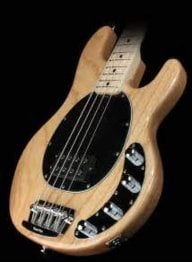


I now have 5 basses, but 3 generally in rotation. Two have rosewood fingerboards and one has maple. My home is temperature/humidity controlled. Right now the temp in my studio is 69°F and humidity is 40% which is about standard, sometimes going up to 45% in the warmer months. I have a regular Friday night gig where the conditions aren't unusual.
However, I know that I have to arrive early to allow my basses to acclimate. But I also know that I have to bring a light set of tools, particularly an allen key because inevitably my rosewood fingerboard basses will often need a neck relief adjustment. My Yamaha TRBX605 is the worst offender. At least the truss rod is easy to access at the bottom of the neck. My MIM Fender 5 isn't too bad and only occasionally needs on the spot adjustment. However my Ibanez BTB675 with maple neck is stable as heck at home or away.
May I simply assume that the differences between these basses is that the rosewood and the maple necks, with or without mahogany are expanding and contracting at different rates than a solid maple neck/fingerboard? I should probably state that I like the relief as low as I can get it, so a very small change is felt/heard.
What do y'all think?

Same here, I have several basses but my 96 Stingray (flamed maple, oil & wax neck finish) is the only one that moves regularly. Luckily the spoke wheel adjuster means it’s the easiest to tweak.I have two working basses - a 93 MM Stingray with a maple neck that was never quite stable (still isn't) and a cheap Rogue Precision copy with a maple neck and it's rock solid. Go figure.


One more thing... Other than cosmetics how does a "roasted" maple neck differ from un-roasted, mostly in terms of sound.

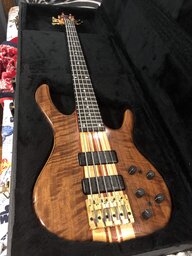

That is so contrary to most of the "knowledge " here. At least I'll admit to experience and not knowledge or book larnin'I’ve had many basses and there’s only one, which I still own, that’s been “temperamental”. It’s a mid 80s Pre-Gibson Tobias. I attribute it to the neck, which is a beautiful figured maple.
You couple that w the south Texas weather & humidity and it usually needs a neck adjustment 2-4 times a year! Despite the fact that it has dual truss rods!View attachment 4875921
That is so contrary to most of the "knowledge " here. At least I'll admit to experience and not knowledge or book larnin'
Dude.I'm just perplexed that my basses with RW fingerboards often need to be adjusted an hour or so after going from home to a gig. Again, I keep very tight tolerances and can feel the smallest change.

Dude.
You really should not, and should not need, to adjust a truss rod on a weekly basis.
This has nothing to do with the fingerboard material. One of the following is happening:
• You forgot that it can take up to 24 hours for a truss rod adjustment to fully settle in. E.g. you're making too big of an adjustment, then a week later it's off so you make another adjustment that's too big, etc.
• You need to suck it up and learn how to play with slightly higher action than you normally prefer.
• The neck is screwed.
I strongly recommend you bring the instrument to the best repair shop you can get to, and have a professional set it up. You shouldn't need to adjust it after that for another 6-12 months.
Or, you can just have the shop replace the unstable neck.