
Enjoy the benefits of a premium membership!
Upgrade Account
-
TalkBass has been independent since 1998. Add your voice.
Create a free account to reply to discussions, view embedded media, and browse with fewer display ads.
Join free Log in
Want zero display ads or expanded classifieds tools? Compare plans.
You are using an out of date browser. It may not display this or other websites correctly.
You should upgrade or use an alternative browser.
You should upgrade or use an alternative browser.
Double Bass Best preamp w/ HiZ input and HPF?
- Thread starter sumeursault
- Start date
More options
Who Replied?

I just played a gig last night with Lifeline-->Headway-->GR PureAmp-->Mesa 1x12. It was okay...but just okay. Still peaky at certain frequencies and on certain notes. The luthier who installed the pickup recommended trying a 90-degree rotation so that more of the surface area was making contact with the bridge (hard to explain without seeing it). Not sure that made any noticeable difference. The EQ on the Headway was still completely scooped in the mids. The problem with that kind of heavy-handed approach to EQ seems to be that it makes the bass sound a little anemic, like maybe a slightly more surgical approach would be better.@sumeursault What did you figure out regarding your pickup?
This is slightly off topic for this thread, but I also find intonation to be a colossal struggle in amplified live situations, because I'm not getting the same aural information from the instrument, especially in the midrange, which is where I feel a lot of the pitch recognition lies. Was extremely frustrated with my pitch last night and it makes me play much more conservatively and take less chances because I don't trust myself to play in tune in those situations. Ugh...
I should also say here, and maybe it's obvious by my questions/concerns -- I'm not primarily an upright player. But I'd love to do more of it, so I'm shedding a lot and trying to improve my amplified sound with every gig.
A suggestion made on TB recently really helped me in any situation involving amplified playing. It is to not turn the amp up louder than you hear your acoustic sound. This has worked for me in all but the loudest gigs(with an electric blues band), where I'm not going for an acoustic sound, anyway. It takes a little getting used to, but if I think of the way I could hear the bass back in the all-acoustic days, I realize I actually hear myself better but have the advantage of amplification from an audience perspective,

I make pitch definition a priority when setting up an amp sound. Ron Carter is on a lot of records with a piezo tone I don't care for - but there's no question about what he's playing. I don't attempt to emulate his sound, but I'll take a little of that nasal thing if it means my pitch is clear. Why use an amp that makes it harder to hear what you're doing? It'll sound different out front anyway.This is slightly off topic for this thread, but I also find intonation to be a colossal struggle in amplified live situations, because I'm not getting the same aural information from the instrument, especially in the midrange, which is where I feel a lot of the pitch recognition lies. Was extremely frustrated with my pitch last night and it makes me play much more conservatively and take less chances because I don't trust myself to play in tune in those situations. Ugh...
Intonation itself is a lifelong pursuit. It takes time and gigs to build up confidence. Keep shedding with the bow and playing out in different environments. Use other people's amps at jams. It'll start to come together. Your ear will improve and it'll get easier. Then your ear will improve some more and it'll get more frustrating!
@Bruce Calin has a good suggestion here - less amp sound might make the band play quieter and pay more attention, making the whole thing easier for everyone. This doesn't always work, but when it does, it's awesome.
I learned the value of "neck markers" from Dave Pomeroy. There is no crime in having cheater dots to help you with intonation. Another person showed me a trick using a hole punch and reflective tape; punch the little circles and install them where the F, G, A, B and octave are pitch-wise.
Regarding your runaway mids, ... I'd go as far as turning the speaker to face backwards and ricochet off the wall and hear those results. I'm not adverse to aiming straight at the floor either (with space, of course) and listen. I realize these do not address the cause, but may contribute to a positive affect.
Regarding your runaway mids, ... I'd go as far as turning the speaker to face backwards and ricochet off the wall and hear those results. I'm not adverse to aiming straight at the floor either (with space, of course) and listen. I realize these do not address the cause, but may contribute to a positive affect.
I hate to drop in and evangelize off-topic. Live amplification is difficult to get right and I'm always chasing that dragon as well. But, this is one of the reasons I've settled into Spirocores. As much as I love that chocolate-y wholesome bass tone that you get from orchestral strings or most Perlon core "hybrid" strings, in a noisy situation pitch jumps from the bass to my ear better with Spirocores than anything else.
They also tend to cut through, but not sound as bright out in the room, especially if you are keeping your amp volume down to support your acoustic volume rather than override it.
They also tend to cut through, but not sound as bright out in the room, especially if you are keeping your amp volume down to support your acoustic volume rather than override it.

I’ve been having good luck with just Spiros, Full circle, and an fdeck HPF into a smaller stage amp.
It’s fantastic. Up to a point.
Which was reached yesterday at our monthly jazz jam. I’m in the house band and we get all kinds of drummers. From tasteful to powerful.
We were pushing the volume a bit and I was getting the dreaded low end feedback on one particular song even with the HPF dialed way up.
That’s when you use the sharp knee technique. No, not the EQ shelving, your actual leg raised up and holding the back of the instrument so it doesn’t explode lol.
Kinda like Daniel-san and the crane kick stance. You know the one.
It’s fantastic. Up to a point.
Which was reached yesterday at our monthly jazz jam. I’m in the house band and we get all kinds of drummers. From tasteful to powerful.
We were pushing the volume a bit and I was getting the dreaded low end feedback on one particular song even with the HPF dialed way up.
That’s when you use the sharp knee technique. No, not the EQ shelving, your actual leg raised up and holding the back of the instrument so it doesn’t explode lol.
Kinda like Daniel-san and the crane kick stance. You know the one.

Earl
Supporting Member
I would have sharp-kneed the drummer!I’ve been having good luck with just Spiros, Full circle, and an fdeck HPF into a smaller stage amp.
It’s fantastic. Up to a point.
Which was reached yesterday at our monthly jazz jam. I’m in the house band and we get all kinds of drummers. From tasteful to powerful.
We were pushing the volume a bit and I was getting the dreaded low end feedback on one particular song even with the HPF dialed way up.
That’s when you use the sharp knee technique. No, not the EQ shelving, your actual leg raised up and holding the back of the instrument so it doesn’t explode lol.
Kinda like Daniel-san and the crane kick stance. You know the one.

Right now I've got Perpetuals with a dead Spiro E that I keep coming back to. I hear you though. I just hate practicing on Spiros...I hate to drop in and evangelize off-topic. Live amplification is difficult to get right and I'm always chasing that dragon as well. But, this is one of the reasons I've settled into Spirocores. As much as I love that chocolate-y wholesome bass tone that you get from orchestral strings or most Perlon core "hybrid" strings, in a noisy situation pitch jumps from the bass to my ear better with Spirocores than anything else.
They also tend to cut through, but not sound as bright out in the room, especially if you are keeping your amp volume down to support your acoustic volume rather than override it.
Right now I've got Perpetuals with a dead Spiro E that I keep coming back to. I hear you though. I just hate practicing on Spiros...
Yep, if I could practice with Flex '92s and gig with Spirocores, I would. Reductive EQ can work to tame any offensive frequencies live, though, but you can't EQ in frequency that isn't there as effectively.
Even practicing at home, though, if I don't like the sound I'm getting, rotating so that I'm facing a different corner of the room sometimes completely "fixes" that. In a bar, the room almost always handles Spirocores better.
Perpetuals are good too, though. I never didn't like how they sounded or felt. They didn't last as long for me as Spirocores and they didn't put out as much perceived volume, so I'm those tough rooms, they needed more amplification.
My setup got a real test last weekend at a senior prom featuring a "Gatsby" theme. Our jazz quartet was set in a large,open space with all hard surfaces. There was a DJ in the room behind us with low frequencies frequently pounding through the wall. I was determined to keep my volume under control and EQ so that I could be heard as well as possible without feedback or excessive boom. It seemed to work out. The drummer and some kids I talked to said I could be heard well enough and the DJ didn't cause too much low end problem. I had my Tempera Hybrids on which helped me to remember not to overplay. If I can be satisfied with my results in a room full of excited teenagers and a DJ next door I'm happy. I have a feeling that if I was using Spiro-type strings like I used to use, the temptation would have been to force things, which wouldn't have helped. The combination of not forcing and judicious amp use made for a good, relaxed gig under less than ideal conditions.
Last edited:
In terms of the mid-scoop, I've yet to find a pickup where I *don't* basically kill all mids. Having said that, I think there's something to be said for just accepting that your sound "in the mix" is different to the ideal warm, well-balanced bass sound that we all have in our heads. To this end, I tend to turn up the mids a bit (as in, not entirely off) in gigs just to help cut through a bit and (leading on to the second point) I find that this also helps with hearing intonation.
I also have some small nail-polish dots on the side of the fingerboard at the 3rd, 5th and 7th "fret" positions to help with not being able to hear myself at gigs. I don't use them much, but they can be a good sanity check for a part-timer like myself who doesn't gig that often and doesn't shed as much as he should...
I also have some small nail-polish dots on the side of the fingerboard at the 3rd, 5th and 7th "fret" positions to help with not being able to hear myself at gigs. I don't use them much, but they can be a good sanity check for a part-timer like myself who doesn't gig that often and doesn't shed as much as he should...
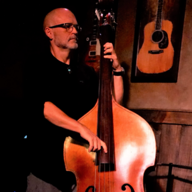
I use a k&k bass max pickup and an ear trumpet Nadine on my 3/4 bass. I’m gigging regularly in a bluegrass/americana band with a percussionist, banjo, fiddle, flat top geetar, and a couple of vocalists. I’ve had great success with this preamp. EBS Stanley Clarke Signature Acoustic Preamp
I send a DI signal to the FOH and use the preamp output into a QSC K8.2 so the percussionist and I can here my big ol’ fiddle.
I send a DI signal to the FOH and use the preamp output into a QSC K8.2 so the percussionist and I can here my big ol’ fiddle.
Last edited:
i was going to say you still have the eq controls on your amp you can use in addition, but i see that amp doesnt have any. try with an amp that has additional eq, or put some sort of eq pedal after the headway. even the cheap boss one can be great, especially if you already have the high impedance input and hpf coveredI just played a gig last night with Lifeline-->Headway-->GR PureAmp-->Mesa 1x12. It was okay...but just okay. Still peaky at certain frequencies and on certain notes. The luthier who installed the pickup recommended trying a 90-degree rotation so that more of the surface area was making contact with the bridge (hard to explain without seeing it). Not sure that made any noticeable difference. The EQ on the Headway was still completely scooped in the mids. The problem with that kind of heavy-handed approach to EQ seems to be that it makes the bass sound a little anemic, like maybe a slightly more surgical approach would be better.
This is slightly off topic for this thread, but I also find intonation to be a colossal struggle in amplified live situations, because I'm not getting the same aural information from the instrument, especially in the midrange, which is where I feel a lot of the pitch recognition lies. Was extremely frustrated with my pitch last night and it makes me play much more conservatively and take less chances because I don't trust myself to play in tune in those situations. Ugh...
I should also say here, and maybe it's obvious by my questions/concerns -- I'm not primarily an upright player. But I'd love to do more of it, so I'm shedding a lot and trying to improve my amplified sound with every gig.

Ron has stated many times that he intentionally plays some notes "sharp" while that may woak for him it doesn't work for me. So, to each their own.I make pitch definition a priority when setting up an amp sound. Ron Carter is on a lot of records with a piezo tone I don't care for - but there's no question about what he's playing. I don't attempt to emulate his sound, but I'll take a little of that nasal thing if it means my pitch is clear. Why use an amp that makes it harder to hear what you're doing? It'll sound different out front anyway.
Intonation itself is a lifelong pursuit. It takes time and gigs to build up confidence. Keep shedding with the bow and playing out in different environments. Use other people's amps at jams. It'll start to come together. Your ear will improve and it'll get easier. Then your ear will improve some more and it'll get more frustrating!
@Bruce Calin has a good suggestion here - less amp sound might make the band play quieter and pay more attention, making the whole thing easier for everyone. This doesn't always work, but when it does, it's awesome.
The Bow is the ultimate judge for intonation so I recommend practicing jazz bass lines at a variety of tempos using the bow. It has the side benefit of strengthening your left hand. So you get two for one. While it may sound wierd, I also recommend playing with play alongs in total darkness. You can hear every squeak, skwalk, and pitch hiccup.


