• TalkBass has been independent since 1998. Add your voice.
    Create a free account to reply to discussions, view embedded media, and browse with fewer display ads.
    Join freeLog in
    Want zero display ads or expanded classifieds tools? Compare plans.

Bi-amping on an ampless rig

That makes sense, so then might I ask why I did a bit of research and found out I can bi-amp with an HX stomp. Basically i understand that I need 1 "hi" path and 1 "lo" path. So even with that I still need bass amps?
The HX Stomp has a 1/4 line level that you plug into the PA. So you can be amp-less. This video shows how to bi-amp starting at 5:30
 
  • Like
Reactions: Zbysek
I'll try and figure it out, if you know of anyone else who does it and/or can explain how please let me know!!
The most accepted definition for biamping is when the signal is split into two frequencies bands and each band is sent to a different amplifier and speaker. For example I used to biamp a GK 800RB into a Bag End S15D and Ramsa WS-A200. The 800RB has a built in crossover than can split the signal to a 300W amp and a 100W amp. I set the crossover somewhere between 150hz and 200hz. The lows went to the 300W amp and the Bag End S15D. The highs went to the 100W amp and the Ramsa WS-A200.

People sometimes use the term "biamp" to mean other things. For example:
  1. Some people use the term to describe any situation where they use two amps. For example they might use a pair of Ampeg SVTs pushing a pair of Ampeg 810s. Or they may use parallel processing to send a clean signal to one amp and OD to the second amp. I prefer the term multi-amping if the signal is not passing through an active crossover and split into two frequency ranges.
  2. Some people use the term when a crossover is used to split the signal to separate effects and then combined before being sent to an amp or mixer. I prefer the term parallel processing for this. Sure a crossover is used, but the signal is mixed back down to mono before it's sent to the speakers.
If you are not going to use an amp on stage, you will not be biamping or multi-amping. That doesn't mean the PA doesn't use biamping or multi-amping, but that is beyond your purview.

If you are not going to use an amp on stage, you may still benefit from parallel processing, which may or may not involve some sort of crossover.
 
The HX Stomp has a 1/4 line level that you plug into the PA. So you can be amp-less. This video shows how to bi-amp starting at 5:30

Thank you🙏 I looked into an HX stomp but I dont have easy access to that kind of money, meaning I’d have to save for a long with my current situation (I have a job but it’s very low paying) any similar suggestions? I looked into preamps that can split split the signals/crossover. I’m guessing I’d still need 2 amps for that?
 
The Church's PA is already doing it for you.

Highs to the horn or tweeter,
mids are going to the mid drivers,
lows are going to the subs.

Plug into the DI Box and done.
Do you know how I can do this in my own rig? I play both in church and soon in a Christian band. as I said before I want to bi-amp to get the clarity and all that comes with bi-amping, so I’m trying to absorb as much about it as possible. Including the pros cons, how it works, different ways to accomplish it. All that stuff
 
Thank you🙏 I looked into an HX stomp but I dont have easy access to that kind of money, meaning I'd have to save for a long with my current situation (I have a job but it's very low paying) any similar suggestions? I looked into preamps that can split split the signals/crossover. I'm guessing I'd still need 2 amps for that?
There are several variations of what people consider bi-amp. All of them cost money if you do not already own the equipment. To answer your question, if plugging into a PA, going ampless, then you do not need an amp. You need a channel, typically clean and dirty, for each preamp (two channels total) and the sound engineer needs to mix them. Not all engineers are willing to deal with it. Depends on the person.

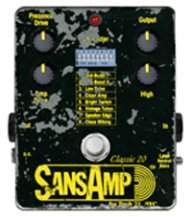
A more streamlined option to get started is to buy one premamp that has bi-amp built in such as the Orange Bass Butler or SansAmp DI-2112. Both of these have two XLR outputs, one for each channel. You can mix the channels to your liking on the pedal. The sound guy can also further mix the levels through the PA. So with these solutions, your are buying one preamp and now have a form of bi-amp. (both of these preamps do have a 1/4 out that mixed the signal as well)

A more involved and costly method could be to use a BOSS LS-2 and run separate preamps into each of its two channels, then output to a DI box (all on your pedal board) with a single XLR out to the PA.

A preamp does not provide power to the speaker. So if you are not plugging into a PA system, then yes you need two amplifiers to power two separate cabinets to bi-amp. You can do it with one amp that has two channels such as a Crown XLS1002.
 
Last edited:
Get a Boss LS-2 and place your bass preamp/cab emulator/simulator in one effect loop, a guitar preamp/cab emulator/simulator of your choice in the other effect loop, and mix them in parallel, there you got your amp-less old fashioned bi-amping rig.

You could also run a crossover, or a LPF on the bass side, and a HPF on the guitar part, for a more modern bi-amping kind of rig.
 
Although technically not bi-amping as @WayneP defined, the key is having a crossover to separate low frequencies from mid/high frequencies.
The Tech-21 GED-2112 or DI-2112 are dual preamp units with crossover that allow you to send a separate deep and drive output to a mixer. This would meet the goal.
But worthiness really depends on your belief as to what benefits bi-amping offers. It's never been of interest to me.
There is no crossover in the GED product line. The Deep channel is a secondary channel voiced to Geddy's specs. If you want Bi-amp and crossover functionality, the XB Driver is the better choice.