• TalkBass has been independent since 1998. Add your voice.
    Create a free account to reply to discussions, view embedded media, and browse with fewer display ads.
    Join freeLog in
    Want zero display ads or expanded classifieds tools? Compare plans.

Double Bass C extension history

Does anyone know when the first fully chromatic extensions began to appear? When I was coming up through high school and college in the '80s, the only ones I encountered were machines and the fingered variety, but when Edgar Meyer's Work in Progress came out in the early '90s I noticed his 4- capo extension. I'm interested in the history and evolution of the concept of extending the low string via instrument modification, not scordatura.
Chris
 
Good question! In his series of books from the 1960's, Raymond Elgar gives a short history of the extension. Specifically, "More About the Double Bass" 1963, chapter one.
This is an overlooked area of research.
Tom

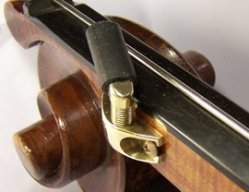
Does the Elgar book show any gated extensions? I would be surprised. The first time I saw one was in around 1990 when a Harlem luthier named Gino Biondo showed me a "D" capo he had made. At about the same time my teacher, Homer Mensch, had David Gage build him a fully gated B-extension with ebony closures. I never actually got to play on it, but it put a bee in my bonnet, leading to my product. I know that a few orchestral players around the U.S. had already done this (chromatic latches), but I think the idea was still very new at this time.

I believe that the extension itself dates to late 19thC. Leipzig, but I know of no examples of chromatic gates before about 1990. There must be some out there!
 
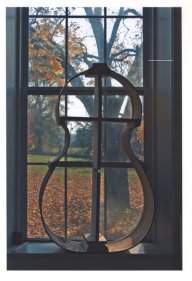
Right. I love that picture. Sad though, as every one of those basses likely had its scroll butchered to do the installation. Fortunately we don't do that any more. I have an email somewhere from former NY Phil bassist Bill Blossom, who made a lot of non-invasive fingered extensions. He described when his colleagues started switching away from machines and why. I will have to look it up, but I think it began in the early '70s. (Note: I am not suggesting that a machine is necessarily invasive!)
 
Last edited:
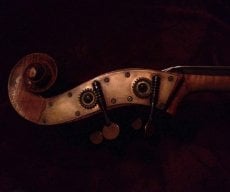
When Gage put an extension on my Olde Tyrolean, we decided to cut the scroll, as it was a pre-carved (but very good quality) scroll on top of a replaced neck during a rebuild. The old beechwood neck and scroll were too beaten up to support the extra stress of the extension. I don't have the bass any more, but I still have the neck, and would make the same decision today as a simple matter of practicality. The posted pic is from another era and a different aesthetic regarding alterations. Kinda like mid 70s mods on early 60s Fender basses.......
 
The ill-advised mods to early CBS era and earlier Fenders, back when they cost less than a kidney, may have improved their function but wrecked their value.

You don’t buy basses with function. You buy them with money.

I feel the same way about extensions that cut the scroll. Re-neck a flawed shop bass by all means, but do something mechanically dumb like seat my oil pan bolt with an air wrench and I’ll punch you.
 
How about the unplayable (by modern standards) basses that were cut down or had their mensure shortened through the ages? Are they better off unmodified and rotting away in a museum like the "Dragonetti" bass in the Royal Ontario Museum?
 
"Re-neck a flawed shop bass by all means......"

My olde Tyrolean (not a shop bass) was re-necked to keep it alive and playable. If the original neck had been useable after the "blockless wonder" repair, it would have been retained and been subject to the small hole for the C string that is standard practice today.