
Enjoy the benefits of a premium membership!
Upgrade Account
-
TalkBass has been independent since 1998. Add your voice.
Create a free account to reply to discussions, view embedded media, and browse with fewer display ads.
Join free Log in
Want zero display ads or expanded classifieds tools? Compare plans.
You are using an out of date browser. It may not display this or other websites correctly.
You should upgrade or use an alternative browser.
You should upgrade or use an alternative browser.
Double Bass Cab Mic-ing upright
- Thread starter flatback
- Start date
More options
Who Replied?


I have had that experience many years ago, but I don't remember it being a good experience. That's not to say it can't be done well, studio's used to do that all the time.
I'd bet that a lot of the sound quality you heard and liked was due to the really even frequency response of Mikes designs, I can't see that being the case for a lot of other
cabinets that I've owned. A little off the subject, I decided to weigh my two different MAS 1/8 cabinets and the v2 weighs at least 5 lbs more than my v1. 30 lbs vs 25.
So, for what it's worth my 1/8 v2 is almost as heavy as my 4x5.5. Since all my cabinets are powered, the 1/8 v2 is probably the cabinet I use the least. The switch from
a all Okume cabinet really impacted the portability of the powered 1/8. Just my take. It sounds great.
I'd bet that a lot of the sound quality you heard and liked was due to the really even frequency response of Mikes designs, I can't see that being the case for a lot of other
cabinets that I've owned. A little off the subject, I decided to weigh my two different MAS 1/8 cabinets and the v2 weighs at least 5 lbs more than my v1. 30 lbs vs 25.
So, for what it's worth my 1/8 v2 is almost as heavy as my 4x5.5. Since all my cabinets are powered, the 1/8 v2 is probably the cabinet I use the least. The switch from
a all Okume cabinet really impacted the portability of the powered 1/8. Just my take. It sounds great.
yeah my MAS18P is a beast. I am still looking for a power amp so that I can go back to using my MAS46 which feels lighter then the 18 and puts out a whole other kind of sound. I would love a Jule but would settle for an old 1st gen Ai (I love the flat top amps he first made)

- Dec 13, 1999
- 11,736
- 8,941
- 70
- Disclosures
- Chuck Sher publishes my book, WALKING BASSICS:The Fundamentals of Jazz Bass Playing.
I guess for me the question is - if you're going to mic something, why not mic the actual instrument?
I am not tryin to get all Ed Fuqua on the subject (although he was using your mic) but just to say this is what happened and how it sounded.
I will say since we ARE getting all Ed Fuqua about it, I have also been doing a regular trio gig that I am playing acoustic (that is: with a bass that is not plugged into ANYTHING except my hands) and I am really really loving that. The Drummer is dope and knows just how to stay underneath the bass and the pianist (an old dude who can still play his ass off) turns around with a Cheshire grin every few choruses.
I will say since we ARE getting all Ed Fuqua about it, I have also been doing a regular trio gig that I am playing acoustic (that is: with a bass that is not plugged into ANYTHING except my hands) and I am really really loving that. The Drummer is dope and knows just how to stay underneath the bass and the pianist (an old dude who can still play his ass off) turns around with a Cheshire grin every few choruses.

Probably the studio technicians need to mic the cab (if they don‘t want to use DI) on any electric instruments and the cab sound might be closer to the desired sound than the DI.
So it might simply that they are used to that way. They don‘t have to check the best mic position and don‘t need to know the sound the player likes as it comes out of the cab.
It doesn’t mean it might not be changes with EQ later when mixing, but it might be easier to get a basic sound with the recording than do a lot of experiments with a mic at the instrument.
It‘s quicker and therefor cheaper which might be important for a lot of their (other) work.
So it might simply that they are used to that way. They don‘t have to check the best mic position and don‘t need to know the sound the player likes as it comes out of the cab.
It doesn’t mean it might not be changes with EQ later when mixing, but it might be easier to get a basic sound with the recording than do a lot of experiments with a mic at the instrument.
It‘s quicker and therefor cheaper which might be important for a lot of their (other) work.

I wouldn't read to much into it until the approach provides excellent results on multiple gigs. Some time serendipity occurs and you get great sound by accident. Keep in mind the sound can be great in one location and awful somewhere else. So maybe it sounded great on stage and awful at various places in the audience.
I do see a potential advantage of mic'ing a cab over mic'ing an upright. Upright bass is not loud enough to work well with a mic in many live settings. The mic will pick up all sound present at the capsule. In order to get good results, the sound of the bass needs to be the loudest source at the capsule by a significant margin.
If you are playing with a drummer, the cymbal sound bounces off the face of the instrument back into the mic and is often the the loudest sound at the capsule. When this occurs the mic will pickup more cymbals than bass.
In my experience the sound of the cymbals can be rather harsh and phasey. I believe this is partly because the sound is bouncing back into the mic off the curved face of the bass. So the cymbals are taking multiple paths to the mic. Each path has a slightly different arrival time, thus it creates phasing/flanging. Another part of the problem could be related to reflective qualities of the wood and finish. Some frequencies will be reflected better than others, so the frequency response will not be flat.
Pickups tend to have much better rejection characteristics than an air mic. So the signal coming from your pickup will have some bleed from other sound sources, but it will typically be way below the signal level of the bass.
If you are sending a pickup to an amp, usually the sound from the speaker will be significantly louder than the acoustic volume of your bass. So mic'ing the cab will produce a signal with a higher ratio of bass vs bleed from other sound sources.
The pickup, amp, and speaker are going to color the tone of the bass somewhat, so mic'ing the cab is probably not the best way to achieve MBOL. But it could be the best approach in some situations. Specifically when the amp and speaker color the sound in a desirable way.
IMHO a using DI designed for piezo pickups would probably be a better approach. Radial makes two DIs that offer a suitably high input impedance to buffer a piezo. If you are curious, the models are PZDI and StageBug SB-4. These DIs provide a buffered Thru output, so the amp does not load the piezo down.
Most DIs connect the Thru in parallel to the Input, so the input impedance of the amp will appear in parallel with the input impedance of the DI. Example if the DI has 10Meg input impedance and your amp has 1Meg input impedance, the pickup sees 909K (slightly less the 1Meg).
I do see a potential advantage of mic'ing a cab over mic'ing an upright. Upright bass is not loud enough to work well with a mic in many live settings. The mic will pick up all sound present at the capsule. In order to get good results, the sound of the bass needs to be the loudest source at the capsule by a significant margin.
If you are playing with a drummer, the cymbal sound bounces off the face of the instrument back into the mic and is often the the loudest sound at the capsule. When this occurs the mic will pickup more cymbals than bass.
In my experience the sound of the cymbals can be rather harsh and phasey. I believe this is partly because the sound is bouncing back into the mic off the curved face of the bass. So the cymbals are taking multiple paths to the mic. Each path has a slightly different arrival time, thus it creates phasing/flanging. Another part of the problem could be related to reflective qualities of the wood and finish. Some frequencies will be reflected better than others, so the frequency response will not be flat.
Pickups tend to have much better rejection characteristics than an air mic. So the signal coming from your pickup will have some bleed from other sound sources, but it will typically be way below the signal level of the bass.
If you are sending a pickup to an amp, usually the sound from the speaker will be significantly louder than the acoustic volume of your bass. So mic'ing the cab will produce a signal with a higher ratio of bass vs bleed from other sound sources.
The pickup, amp, and speaker are going to color the tone of the bass somewhat, so mic'ing the cab is probably not the best way to achieve MBOL. But it could be the best approach in some situations. Specifically when the amp and speaker color the sound in a desirable way.
IMHO a using DI designed for piezo pickups would probably be a better approach. Radial makes two DIs that offer a suitably high input impedance to buffer a piezo. If you are curious, the models are PZDI and StageBug SB-4. These DIs provide a buffered Thru output, so the amp does not load the piezo down.
Most DIs connect the Thru in parallel to the Input, so the input impedance of the amp will appear in parallel with the input impedance of the DI. Example if the DI has 10Meg input impedance and your amp has 1Meg input impedance, the pickup sees 909K (slightly less the 1Meg).
I'm pretty sure a lot of my amp sound ends up in the mic on my bass in live situations. It seems to work great. It's kind of a composite of my acoustic and amp sound. Here is an example of what I'm talking about.
I'm sure it works to mic a cabinet but if there is a sound engineer around that seems to be competent I insist on a mic FOH. A good live sound engineer knows how to make bleed work to advantage. I disagree that a double bass isn't loud enough to use a mic for FOH. Mic to amp is a fools errand but mic to FOH is no big deal.
For years I was cool with whatever a sound guy wanted to do but the older I get the more insistent I get. I always bring the Nadine to use if they don't already have a mic set up they would prefer.
Also, how do you know what micing your speaker really sounds like out front if there isn't a recording of some sort?
edited: wrote is (?) when I meant isn't. Where is my mind...
I'm sure it works to mic a cabinet but if there is a sound engineer around that seems to be competent I insist on a mic FOH. A good live sound engineer knows how to make bleed work to advantage. I disagree that a double bass isn't loud enough to use a mic for FOH. Mic to amp is a fools errand but mic to FOH is no big deal.
For years I was cool with whatever a sound guy wanted to do but the older I get the more insistent I get. I always bring the Nadine to use if they don't already have a mic set up they would prefer.
Also, how do you know what micing your speaker really sounds like out front if there isn't a recording of some sort?
edited: wrote is (?) when I meant isn't. Where is my mind...
Last edited:
I can't see myself ever mic'ing a bass amp for DB. Seems a pretty odd choice to me.
I beg to differ. I typically blend the mic and pickup signal to my amp, but there are many low to medium volume situations, where 100% mic works just fine, especially drummer-less gigs.Mic to amp is a fools errand but mic to FOH is no big deal.
Last edited:
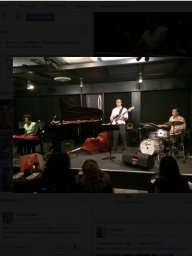
I'm pretty sure a lot of my amp sound ends up in the mic on my bass in live situations. It seems to work great. It's kind of a composite of my acoustic and amp sound. Here is an example of what I'm talking about.
I'm sure it works to mic a cabinet but if there is a sound engineer around that seems to be competent I insist on a mic FOH. A good live sound engineer knows how to make bleed work to advantage. I disagree that a double bass isn't loud enough to use a mic for FOH. Mic to amp is a fools errand but mic to FOH is no big deal.
For years I was cool with whatever a sound guy wanted to do but the older I get the more insistent I get. I always bring the Nadine to use if they don't already have a mic set up they would prefer.
Also, how do you know what micing your speaker really sounds like out front if there is a recording of some sort?
The recording sounds pretty decent...aside from the bass drum. My perception is the stage volume is fairly low, compared to what I usually dealt with. The efficacy of using a mic live increases as the stage volume is diminished.
Ultimately whether a mic will work live is situational. A mic would not work in most of the live situations I performed in, but obviously it will work in some. A pickup will work without a fuss in far more live situations.
I did not typically play featured jazz trio shows...Usually when I played jazz trio it was background music. I did play a lot feature big band shows. I also played various pop and jazz vocal features in concert bands. IMHO these concerts were too loud to effectively use a mic.
There is a feedback loop between the bass, pickup, amp, and cab. The louder the amp, the stronger the feedback loop, and the more impact it has on the sound and feel of the bass. This can be mitigated somewhat with corrective EQ. Essentially, as the feedback loop gets stronger, it will accentuate resonances. You can push back a bit on these resonances with notches, so the frequency response is less distorted. This strategy tends to be far less effective with a mic'ed upright.
Some here run mics through their amps and find it acceptable. I have experimented with it and did not find the results acceptable at the volume I had to run. I experimented a couple of time with various mics at different times.
The only live experience was with an AMT S25B. I did not perform with this mic, but I was involved in setup, sound check, and tech rehearsal. I probably ran monitors for this series. I played through the setup and tried to help the bassist get a good sound. I suggested sending the mic only to the PA, but this was rejected.
My impression, the sound of the bass was wonderful when it was played solo at lowish volume, but there was insufficient gain before feedback through the amp. The bassist tried to mitigate this by blending in a pickup. He was running a D-Tar Solstice preamp/blender. I don't remember what the pickup, amp, or speaker were.
When the band was playing, the mic sound from the amp had more cymbals than bass, and the cymbals sounded awful. This was a problem even with high rolled off the mic. The mic was used through the series, but I thought it actually degraded the overall sound.
The ratio of bass to bleed would be factor for the PA as well. I do agree that a proper PA will usually have a lot more gain before feedback than running the mic through a stage amp, but the bleed from other sound sources is still a concern to me. Also gain before feedback with the PA can sometimes be a problem as well.
There are various strategies to increase the ratio of bass to bleed: 1. play louder (bass), 2. play quieter (drums). 3. attention to stage layout, 4. use of gobos (acoustic baffles), 5. drum shields, 6. mic shields/reflexion filters, 7. choice of mic/directional characteristics and frequency response, 8. mic technique/positioning. There may be more.
The people who insist on a mic are generally in the MBOL crowd. In order to use the mic effectively in the PA without getting the nasty bleed from the cymbals, you can also use EQ or an LPF. But then it's not really MBOL.
The person who bought the AMT S25B tried rolling off the highs in his rig. My impression is this severely degraded the sound of the bass, so it was not really worth it...IMHO, the soloed pickup sounded better than the blended signal...and it was also closer to MBOL.
If the bass is in an isolation chamber, a mic can easily provide a much closer experience to MBOL than a pickup. In a live setting, a mic can be used to get a nice sound in the PA or possibly even in a recording. But IMHO, success requires effective frequency slotting. It may sound good in the mix, but I would not expect the soloed sound to be MBOL. I am more a fan of frequency slotting than MBOL anyway.
I could be wrong, but I do have quite a bit (decades) of professional experience as both a touring bassist and audio tech to draw on. As an audio tech, I did not have a chance to mix upright through a mic. I have mixed upright with various pickups and I was very pleased with the results we got using the Ehrlund EAP. When playing solo it was not quite as MBOL as a mic. But in the mix I think it was actually better/closer to MBOL, because there was no need to use aggressive EQ or an HPF to carve out all of the hash from the cymbals.
In order to be convinced that a mic is better live, I would need to hear a multi-track recording that tracks a good pickup and mic separately. The idea is you hear the overall mix and also have the ability to solo the individual tracks so you can actually understand what has been done to make the bass work well in the mix. Often bass tracks sound awful when soloed, while sounding very natural and balanced in the mix.
Not exactly sure this is the truth, but I’ve heard mic’ing the bass amp doesnt get the really low freq- the ones we often take out with hpf. My teacher once mentioned that he would rather mic the cab than take a line out bc it’s closer the sound he’s dialed in.

I had a bad experience with it once, so I'll document what happened. It was at a festival, with a 19 piece big-band. The sound tech decided to mic my amp, a GK MB150E combo at the time. I suggested that it wouldn't work very well, but he assured me that it was a really great mic, and even showed it to me. Uh-oh. 
The band was fully mic'd, with monitors, including a giant monitor speaker right in front of me. Uh-oh.
Because of the huge monitor, and limited time in between bands to get everything working, and the roaring monitor mix, I couldn't hear myself, and I was feeding back, at the same time. It was a dreadful time. And it was an indoor venue where the band could have been more than loud enough just acoustically.
Everything about amplifying an acoustic instrument is a series of compromises, including mic'ing the bass directly. The bass mic will pick up the surrounding instruments, probably including the drums. Being close to the front of the bass changes the directional pattern of the mic in unpredictable ways.
I figure that feeding a DI from the amp to the PA system involves the smallest number of potential pitfalls, if you've already got a setup that works for smaller gigs. It's the thing that involves the smallest number of unpredictable variables. I carry a decent quality DI box when I think there's going to be PA, just in case.
The band was fully mic'd, with monitors, including a giant monitor speaker right in front of me. Uh-oh.
Because of the huge monitor, and limited time in between bands to get everything working, and the roaring monitor mix, I couldn't hear myself, and I was feeding back, at the same time. It was a dreadful time. And it was an indoor venue where the band could have been more than loud enough just acoustically.
Everything about amplifying an acoustic instrument is a series of compromises, including mic'ing the bass directly. The bass mic will pick up the surrounding instruments, probably including the drums. Being close to the front of the bass changes the directional pattern of the mic in unpredictable ways.
I figure that feeding a DI from the amp to the PA system involves the smallest number of potential pitfalls, if you've already got a setup that works for smaller gigs. It's the thing that involves the smallest number of unpredictable variables. I carry a decent quality DI box when I think there's going to be PA, just in case.
I think a lot of us have encountered that same sound guy!I had a bad experience with it once, so I'll document what happened. It was at a festival, with a 19 piece big-band. The sound tech decided to mic my amp, a GK MB150E combo at the time. I suggested that it wouldn't work very well, but he assured me that it was a really great mic, and even showed it to me. Uh-oh.
The band was fully mic'd, with monitors, including a giant monitor speaker right in front of me. Uh-oh.
Because of the huge monitor, and limited time in between bands to get everything working, and the roaring monitor mix, I couldn't hear myself, and I was feeding back, at the same time. It was a dreadful time. And it was an indoor venue where the band could have been more than loud enough just acoustically.
Everything about amplifying an acoustic instrument is a series of compromises, including mic'ing the bass directly. The bass mic will pick up the surrounding instruments, probably including the drums. Being close to the front of the bass changes the directional pattern of the mic in unpredictable ways.
I figure that feeding a DI from the amp to the PA system involves the smallest number of potential pitfalls, if you've already got a setup that works for smaller gigs. It's the thing that involves the smallest number of unpredictable variables. I carry a decent quality DI box when I think there's going to be PA, just in case.

A competent pro sound engineer who has the time, the channels, the inclination and the gear will often take three feeds from a upright bass to the house in a "concert" situation; the instrument w/ a mic, the pickup (via DI) and a mic on the speaker cab. Then s/he can use whichever combination of these that sounds best.

... there are many low to medium volume situations, where 100% mic works just fine, especially drummer-less gigs.
This is my experience too; I have to use an impedance matching transformer with my mounted low impedance dynamic mic and my combo amp, but otherwise the combination works very well. But I'm not playing with a drummer and it is a medium volume acoustic combo. And of course mic'ing to an FOH is ideal and simple.
Re: mic'ing the amp, I've semi-accidentally done so when playing through an amp (as a personal monitor) behind one of our singers, where the amp bled into the singer's mic. The FOH guy handled it just fine.
Last edited:
- Dec 13, 1999
- 11,736
- 8,941
- 70
- Disclosures
- Chuck Sher publishes my book, WALKING BASSICS:The Fundamentals of Jazz Bass Playing.
I use the 409, not the 609…I am not tryin to get all Ed Fuqua on the subject (although he was using your mic) but just to say this is what happened and how it sounded.
I will say since we ARE getting all Ed Fuqua about it, I have also been doing a regular trio gig that I am playing acoustic (that is: with a bass that is not plugged into ANYTHING except my hands) and I am really really loving that. The Drummer is dope and knows just how to stay underneath the bass and the pianist (an old dude who can still play his ass off) turns around with a Cheshire grin every few choruses.
I hate this sound. I don't know if it's just sound engineers seeing electric bass players usually like a miked cab better and not knowing any better, but it just sounds awful to me. Ron Carter apparently prefers this. For me, either put a mic on the bass or take a DI. The cabinet is just a monitor when there is a PA and if I can rely on the sound tech to give me and the band good monitor mixes I'd actually prefer to just go without an amp.
A competent pro sound engineer who has the time, the channels, the inclination and the gear will often take three feeds from a upright bass to the house in a "concert" situation; the instrument w/ a mic, the pickup (via DI) and a mic on the speaker cab. Then s/he can use whichever combination of these that sounds best.
That all sounds nice on the internet. Perfect clarity & MBOL in a beautiful listening room is always the goal, but......On the job it is more like the singer or frontperson spends 3 hours dialing in "their" sound until the whole show is running late. As soon as the punk band "bassist" soundguy gets a wet signal for the bass the show starts and nothing ever gets fixed for my upright. Then they completely erase the entire bass from the mix as soon as a guitar feeds back. THAT is why I always bring good sized cabs and a powerful head- mainly for myself and the others on stage so we can cut through the soundguy's mess. If the band ain't bumping onstage, it ain't happening out in the audience mix....
I tried to be clear that "a concert situation" with "A competent pro sound engineer who has the time, the channels, the inclination and the gear..." is not the same scenario that most of us face in the workaday "Bar Wars®" lifestyle.


