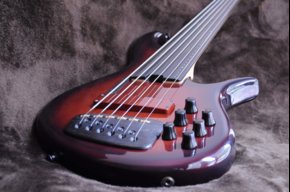
In our rehearsals, I don't use either. I tune with a clip-on tuner before we start rehearsals and occasionally check again during our breaks. I play an active bass plugged directly into the mixer.
We are talking about possibly having a gig in about 3 months at an office party. There will be a PA system but we don't know yet about it, so I am thinking whether I should get at least an entry-level DI box in case plugging directly into a mixer won't work as expected. At the same time, I think it might be useful to also have a floor tuner stompbox, in case I need adjustments during the gig.
I've asked about DI boxes before, and I think I know that either passive or active DI boxes would be fine with an active bass. I would then prefer passive over active, and if active I would prefer battery-operated over power-supplied, just to have less cables around. My understanding was that any DI box balances an unbalanced signal, but only an active DI box has a low impedance output which is usually what a mixer wants as an input. But with my Ibanez being an active bass, maybe I already have a low impedance output... at least I don't seem to need a DI box with our rehearsal room's mixer.
Reading around on the topic of stompbox tuners, it seems that a lot of people prefer true bypass in the tuner to preserve the instrument's tone. However, it is also said that the drawback of true bypass is losing signal if the output cable is very long (or if there's a lot of other stompboxes in the chain, which isn't my case). The most praised and popular stompbox seems to be the BOSS TU-3, which doesn't have true bypass. If I understand correctly, true bypass means high-impedance output, and 'buffered mode' means low-impedance output. Also in case of tuners, I prefer battery-operated, but I guess this is not directly related to whether they use true bypass or buffered mode.
Now my question is how do I combine these together?
Active Bass -> Tuner -> DI Box -> Mixer
The real question maybe is about if each item in the chain determines whether its own output signal is high or low impedance to the next item in the chain, or if anything up the chain still matters... If I put a true-bypass tuner after my active bass, does it change the low impedance signal of the bass into a high impedance bass, and does it mean the DI Box afterwards needs to be itself an active DI box instead of passive? Should I instead forget about true-bypass and in that case would a passive DI be ok after a tuner in buffered mode?
Edit: I also have a ZOOM B1four with built-in tuner, if I used this then would the output be high-impedance, negating the effect of the active bass? I suppose this pedal doesn't have a true bypass though.
We are talking about possibly having a gig in about 3 months at an office party. There will be a PA system but we don't know yet about it, so I am thinking whether I should get at least an entry-level DI box in case plugging directly into a mixer won't work as expected. At the same time, I think it might be useful to also have a floor tuner stompbox, in case I need adjustments during the gig.
I've asked about DI boxes before, and I think I know that either passive or active DI boxes would be fine with an active bass. I would then prefer passive over active, and if active I would prefer battery-operated over power-supplied, just to have less cables around. My understanding was that any DI box balances an unbalanced signal, but only an active DI box has a low impedance output which is usually what a mixer wants as an input. But with my Ibanez being an active bass, maybe I already have a low impedance output... at least I don't seem to need a DI box with our rehearsal room's mixer.
Reading around on the topic of stompbox tuners, it seems that a lot of people prefer true bypass in the tuner to preserve the instrument's tone. However, it is also said that the drawback of true bypass is losing signal if the output cable is very long (or if there's a lot of other stompboxes in the chain, which isn't my case). The most praised and popular stompbox seems to be the BOSS TU-3, which doesn't have true bypass. If I understand correctly, true bypass means high-impedance output, and 'buffered mode' means low-impedance output. Also in case of tuners, I prefer battery-operated, but I guess this is not directly related to whether they use true bypass or buffered mode.
Now my question is how do I combine these together?
Active Bass -> Tuner -> DI Box -> Mixer
The real question maybe is about if each item in the chain determines whether its own output signal is high or low impedance to the next item in the chain, or if anything up the chain still matters... If I put a true-bypass tuner after my active bass, does it change the low impedance signal of the bass into a high impedance bass, and does it mean the DI Box afterwards needs to be itself an active DI box instead of passive? Should I instead forget about true-bypass and in that case would a passive DI be ok after a tuner in buffered mode?
Edit: I also have a ZOOM B1four with built-in tuner, if I used this then would the output be high-impedance, negating the effect of the active bass? I suppose this pedal doesn't have a true bypass though.
Last edited:










 ).
).