• TalkBass has been independent since 1998. Add your voice.
    Create a free account to reply to discussions, view embedded media, and browse with fewer display ads.
    Join freeLog in
    Want zero display ads or expanded classifieds tools? Compare plans.

Changing the switch to a blend knob on L2000

Hey,

Made a post on another (awesome :cool:) forum about this and go tsome good info. Just wondering if anyone out there has tried this and potential pros and cons.

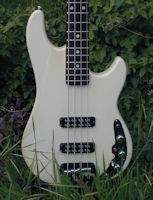
Basically I want to change the pickup selector on my L2000 trib. to a blend knob. I know the cavity is rather crampt but I think it could still be done.

What do you think the cost of getting somebody to do this would be? If he had to also route the cavity out more would that raise the price a lot?

Cheers.

 
Wondering about it myself. I've read that there are many gotchas to this. Some people believe that passive blend doesn't work at all. Others believe that there are some types of blend pots that work - so called "true blend pots."

Also, I would try to avoid removing pickup switch, if at all possible. That would give you pure bridge/neck pickup sound without the other pickup and pot section affecting the tone.
 
A regular blend pot is not exactly the same as switch. It's a bit like adding a volume control. It'll work, but you'll lose some of the tone, even with the volume all the way up, I think.

It's not hard to do, though.

I have a blend pot on a FrankenJazz bass, and I find that I pretty much just use it flat out neck, flat out both, or (very rarely) flat out bridge. I have thought about replacing it with a switch.

It's a lot of trouble to go though, unless you really know you want blended tone...

A less intrusive route might be to replace the pickup selector switch with a second volume pot. Wire so that bridge pup is on one and neck pup on the other. That way you can blend away and don't need a pickup selector switch.
 
A regular blend pot is not exactly the same as switch. It's a bit like adding a volume control. It'll work, but you'll lose some of the tone, even with the volume all the way up, I think.

It's not hard to do, though.

I have a blend pot on a FrankenJazz bass, and I find that I pretty much just use it flat out neck, flat out both, or (very rarely) flat out bridge. I have thought about replacing it with a switch.

It's a lot of trouble to go though, unless you really know you want blended tone...

A less intrusive route might be to replace the pickup selector switch with a second volume pot. Wire so that bridge pup is on one and neck pup on the other. That way you can blend away and don't need a pickup selector switch.


Better yet might be using a stacked volume control...blend away, can keep the original switch, none of the problems inherent with a traditional blend, no extra drilling, and not adding toooo much stuff intol the already-crowded control cavity.
 
Better yet might be using a stacked volume control...blend away, can keep the original switch, none of the problems inherent with a traditional blend, no extra drilling, and not adding toooo much stuff intol the already-crowded control cavity.

Agreed. This would, to me, be way preferable to a blend pot. No drilling or routing required.

As for a blend pot in place of the switch: The hole would need to be opened up a bit but there should be enough room for it without routing.

Ken...
 
My other concern about replacing the switch with a blend knob would be that, from an aesthetic and practical standpoint, it'd be...odd. The knobs would be a few mm away from each other, whereas all of the other knobs are a few cm apart. It might actually make it difficult to make adjustments on the fly without accidentally bumping the other knob.
 
Better yet might be using a stacked volume control...blend away, can keep the original switch, none of the problems inherent with a traditional blend, no extra drilling, and not adding toooo much stuff intol the already-crowded control cavity.

+1. This is what I have on my L2000, and had on my old L2500. I used 500Kohm pots for the volumes, so blending is not super easy- but it is more intuitive to me than a blend + volume situation. More often than not, I'm just using both pickups blended fairly equally, but turned down about 1/4 of a turn (sometimes with the bridge pickup dialed in a little higher)- this basically just adds resistance between the 2 pickups, reducing their load on each other as well as the overall volume (the same way I would generally set a Jazz bass). To me, it sounds better than the "both pickups" selections I was able to achieve with the stock L2000. If you do stacked volumes for the pickups, you don't have to worry about the extra loading that adding the 2nd volume control adds to the tone when you solo either pickup. I personally don't have the pickup selector on mine anymore, but rarely solo the pickups either...

Karl
 
+1. This is what I have on my L2000, and had on my old L2500. I used 500Kohm pots for the volumes, so blending is not super easy- but it is more intuitive to me than a blend + volume situation. More often than not, I'm just using both pickups blended fairly equally, but turned down about 1/4 of a turn (sometimes with the bridge pickup dialed in a little higher)- this basically just adds resistance between the 2 pickups, reducing their load on each other as well as the overall volume (the same way I would generally set a Jazz bass). To me, it sounds better than the "both pickups" selections I was able to achieve with the stock L2000. If you do stacked volumes for the pickups, you don't have to worry about the extra loading that adding the 2nd volume control adds to the tone when you solo either pickup. I personally don't have the pickup selector on mine anymore, but rarely solo the pickups either...

Karl

Wow, you answered most of my remaining questions in one fell swoop! Just as I was getting close to drilling a hole in the front of my bass for one more three way switch... (I wanted to be able to control the s/sc/p state of each pup separately...), I realized the wisdom of what you've done. A stacked volume would allow me to eliminate the pup selector switch, making it available...

...My two remaining questions are, (1) why 500k? Stock on the volume is 250K... and (2) Do you need a 2nd cap for the 2nd volume pot?
 
...My two remaining questions are, (1) why 500k? Stock on the volume is 250K... and (2) Do you need a 2nd cap for the 2nd volume pot?

1. 500K or 250K will work, though IIRC, 500K will brighten up the tone a bit (someone please correct me if I have it bass-ackwards). Dual-concentric in 250K isn't all that easy to come up with. They're out there somewhere... A dual 500K can be easily converted if you're crafty.

2. If you choose to stay true to the original circuit, then you should use the cap. I left it out when I completely re-did the wiring on my L-2500.

Ken...
 
1. 500K or 250K will work, though IIRC, 500K will brighten up the tone a bit (someone please correct me if I have it bass-ackwards). Dual-concentric in 250K isn't all that easy to come up with. They're out there somewhere... A dual 500K can be easily converted if you're crafty.

Well, I don't want mine any brighter! I have found dual-concentrics that are minis, but full size seem to be difficult to find. Not sure why. Is there any disadvantage to using the minis? Certainly would fit in the cavity more easily...

...hmm...easily converted, eh? I have heard about two ways of doing this...and I may experiment a bit. One is to add a resistor--but that is supposed to screw up the taper. The other is to take take the pot apart and swap out the 500K wafer for a 250k wafer from another pot. I'd love to see how to do this later if anyone has done it... Is that what you are suggesting, Ken?

2. If you choose to stay true to the original circuit, then you should use the cap. I left it out when I completely re-did the wiring on my L-2500.

One on each volume control, right?
 
Well, I don't want mine any brighter! I have found dual-concentrics that are minis, but full size seem to be difficult to find. Not sure why. Is there any disadvantage to using the minis? Certainly would fit in the cavity more easily...

Either would work, so use whatever works for you. The mini pots usually have 6mm shafts and CTS posts usually have 1/4" shafts. Use what your knobs need.

...hmm...easily converted, eh? I have heard about two ways of doing this...and I may experiment a bit. One is to add a resistor--but that is supposed to screw up the taper. The other is to take take the pot apart and swap out the 500K wafer for a 250k wafer from another pot. I'd love to see how to do this later if anyone has done it... Is that what you are suggesting, Ken?

When I did the tone pot mod to my SB-2, all I could find in an audio taper dual concentric was a dual 500K that Stew-Mac sold (they no longer offer it). I soldered a pair of 1M 1/4W resistors across the outer lugs of each pot, which rendered 250K. Yes, the curve was no longer pure audio (log) taper, more a mix of log & linear, but it worked just fine.

If you look carefully at the lower pot here, you can pick out the pair of resistors. There is a pair on both top and bottom.

dualpot1.jpg

Click here if the image doesn't display.

One on each volume control, right?

Yes, one cap per pot.

Ken...
 
Either would work, so use whatever works for you. The mini pots usually have 6mm shafts and CTS posts usually have 1/4" shafts. Use what your knobs need.


When I did the tone pot mod to my SB-2, all I could find in an audio taper dual concentric was a dual 500K that Stew-Mac sold (they no longer offer it). I soldered a pair of 1M 1/4W resistors across the outer lugs of each pot, which rendered 250K. Yes, the curve was no longer pure audio (log) taper, more a mix of log & linear, but it worked just fine.

If you look carefully at the lower pot here, you can pick out the pair of resistors. There is a pair on both top and bottom.

dualpot1.jpg

Click here if the image doesn't display.


Yes, one cap per pot.

Ken...

OK, that's really clear. Thanks! BTW, you do really clean and beautiful soldering jobs. Wish mine looked like that!
 
I chose 500K so that the tone would be as close as possible to the original tone of the bass with both volumes dimed (2 500k resistors in parallel= 250k, which was the value of the original volume pot). It was especially important to me because my current bass is an early L2000e that is noticeably darker in tone than more recent L2000s I've played in stores (and especially as compared to my old L2500, which was overly bright with the same mods)- I love the thickness, but wanted to be able to get as much "sheen" as possible with everything dimed.

I also did not use the capacitors on the volume pots- I've never really liked the way the "treble bleed" idea worked with a bass, though I think it is vital on a guitar.

I have made several different combos of stacked volume pots by switching out the resistive wafers on the inside. I have over the years accumulated a container full of functional old CTS pots though, so it made more sense for me than purchasing new parts. The stacked pot I used in my L2000 started life as a stacked 250K/500K that I had sitting around, which seems to be the most available variety (or was when last I checked, which was a long time ago!). If you can't find the value you need and have the parts to do this, then switching out the guts is super simple with the standard CTS stacked assemblies! The only real work you may need to do is to use a small file to enlargen one of the holes on one of the wafers, as the bottom wafer in the stacked pots has a slightly larger hole (I believe it is the bottom one, its been a little while!)- only takes a couple of minutes to fix though! It would also be possible to do this and make the passive treble/bass a stacked control- I would prefer that personally, and would have done it by now, except that my treble control is currently a push/pull pot...I have a similar stacked tone/ passive bass cut control on my Darkstar'd Jazz bass that I made by switching out components like this.

I wouldn't want to do the resistor mod on a parallel volume control like this, because it would make the tapers of each pot different from each other, and much harder to blend...works just fine for a tone control though!

Karl
 
I wouldn't want to do the resistor mod on a parallel volume control like this, because it would make the tapers of each pot different from each other, and much harder to blend...works just fine for a tone control though!

Actually, the taper of the individual modded pots are the same within the tolerance of the resistors; 5% in this case. Also, the resistors used came off the same "ammo belt" style batch which probably reduced any difference between the resistors (at least a little).

And again, it worked well for me without any noticeable taper weirdness.

Ken...
 
Actually, the taper of the individual modded pots are the same within the tolerance of the resistors; 5% in this case. Also, the resistors used came off the same "ammo belt" style batch which probably reduced any difference between the resistors (at least a little).

And again, it worked well for me without any noticeable taper weirdness.

Ken...

Ah- sorry, I thought for some reason that you had modified a 250k/500k stacked pot into a 250k/250k- so that only one of the pots had the odd taper. Sorry for the confusion!

Karl
 
Ah- sorry, I thought for some reason that you had modified a 250k/500k stacked pot into a 250k/250k- so that only one of the pots had the odd taper. Sorry for the confusion!

Karl

The lengthy explanation was good for me... I was thinking I'd try the wafer-swap idea. I got a 250k/500k and a 250k single pot on order. I figured I'd try to make a 250k/250k pot just the way you suggested.... Except now I understand that you actually used a 500k/500k.

So, if I understand you correctly a staked 500k/500k volume pot is closer to the original single 250K?

Could you explain the difference between 500k/500k and 250k/250k in terms of how they sound?

I was curious what the cap was doing on a volume pot...what's treble bleed?

Sorry for my ignorance...but I am a tad confused about what I should do...

If it helps, I mostly play blues and related...finger style...and I almost always seem to be dialing off some of the treble. Probably prefer thicker and darker to thinner and poppier. The bass is a '94 ASAT.

Should I use 250/250 or 500/500...caps or no-caps? Dang, that's a lot of choices I didn't know I'd be making! Advise please, wise ones!

(BTW, thanks for the soldering tutorial, Ken. I'd read it before, but will do so again before starting this new project ;-)
 
To the best of my knowledge, the scientific explanation- The 250K/250K combo will give the whole system a slightly lower resonant frequency. With both pots on full, the volumes will be a combined 125K load. The 500K/500K stacked volumes combine to equal a 250K load.

In practice, the 500K stack will sound a bit brighter, so you may have made the right choice with the 250K stack. If you miss any of the brightness, you can do what I did and replace the treble cut (tone) control with a 500K or even 1Meg pot- this will have a similar effect as using higher value volume controls...

Oh yeah- the "treble bleed" capacitors are caps that let high frequencies pass through even when you turn down the volume knob- they put those in because typically turning down the volume will give a darker/muddier tone, and they give the impression of a more consistent brightness all the way through the sweep of the volume knob (more commonly found in guitars, where brightness is of great importance).

Karl
 
To the best of my knowledge, the scientific explanation- The 250K/250K combo will give the whole system a slightly lower resonant frequency. With both pots on full, the volumes will be a combined 125K load. The 500K/500K stacked volumes combine to equal a 250K load.

In practice, the 500K stack will sound a bit brighter, so you may have made the right choice with the 250K stack. If you miss any of the brightness, you can do what I did and replace the treble cut (tone) control with a 500K or even 1Meg pot- this will have a similar effect as using higher value volume controls...

Oh yeah- the "treble bleed" capacitors are caps that let high frequencies pass through even when you turn down the volume knob- they put those in because typically turning down the volume will give a darker/muddier tone, and they give the impression of a more consistent brightness all the way through the sweep of the volume knob (more commonly found in guitars, where brightness is of great importance).

Karl

OK, I think I get it. Sounds like what I should do is use the 500k pots, but drop the caps. I always end up rolling back the volume. Without the caps that may do enough. I don't want to lose too much brightness, and would prefer to do this just once ;-)

Now if I can just figure out how to wire the thing without the pup selector switch....