• TalkBass has been independent since 1998. Add your voice.
    Create a free account to reply to discussions, view embedded media, and browse with fewer display ads.
    Join freeLog in
    Want zero display ads or expanded classifieds tools? Compare plans.

Cleaning Hardware on a Vintage Bass

EricS

Supporting Member
May 19, 2009
211
186
Philadelphia, PA
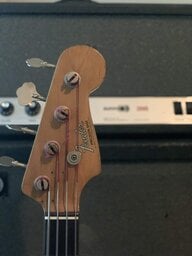
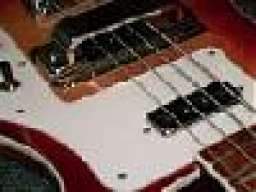
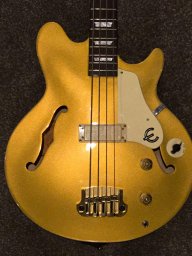
Hi! Please pardon the ‘newbie’ question. A friend asked my advice on cleaning up a vintage instrument. I’m a player … not a collector. I’ve always done whatever I wanted to do with any bass I’ve owned … without worrying about impact on value … so it’s out of my wheelhouse to give advice on vintage instrument maintenance. My friend just inherited, what appears to be, a 75 Gibson Grabber and wants to clean it up … but doesn’t want to negatively impact the value. The bass is not a museum piece as it’s been played … but certainly not in bad shape for a 50 year old instrument. Any recommendations on cleaning up the hardware that won’t impact value? Thanks!
 

Attachments

  • IMG_3755.jpeg
    IMG_3755.jpeg
    693.2 KB · Views: 45
  • IMG_3752.jpeg
    IMG_3752.jpeg
    1 MB · Views: 22
  • IMG_3754.jpeg
    IMG_3754.jpeg
    567.2 KB · Views: 26
When I got my first shortscale, a '78 Musicmaster, it had been found in a barn and the overall condition was terrible. I used a product called "Barkeeper's Friend" to restore the chrome on the bridge and tuners.

That was long ago so I'm sure there are many newer and better products out there now. Maybe a google search is the correct answer?
 
WI Short Scaler. I was just about to suggest the same product. There is a powder, and a liquid version. They polish to the same finish, but the liquid is a little easier to work with. I recommend having both on hand. There are also automotive finishing oriented products that are polishing, and rubbing compounds that include other components such as wax, or solvent.
Like these: Google Search
 
Last edited:
Wenol or Simichrome.

It's not clear from the photos, but if there are pits through the plating (which appears to be nickel), polish can't make them magically disappear. If the substrate's steel, some rust is likely to remain at such pits. If it's brass or something like that, the pits will remain but they'll be less obvious. That said, since the vast majority of the visible surface is nickel plating dulled with age, an hour or so spent with Simichrome and some rags will make a big difference.
 
clean it up … but doesn’t want to negatively impact the value.

While many want to keep the full "mojo" when getting a vintage bass, I have my routine when I get a new (used) bass.
For me, this means cleaning up some of that mojo - also known as the former owner's DNA.
It includes a deep cleaning of the body, and, with a recent acquisition, polishing the black finish to remove cloudiness from the grimed-in sweat "mojo".
I'll also smooth out indentations on the back of the neck, and use drop-fills for deeper dents, while not negatively impacting the existing finish.

Given your friend's objective, I would avoid polishing metal - where it doesn't affect the function.
My goal with hardware on a vintage bass is to clean it to make it function better, while retaining the patina.
Many wouldn't even do that. To each his own.

For bridges and tuners, a nice soak in naphtha with a little 3-in-one oil works wonders to clean the gunk & debris out.
I'll use Tri-Flow with the needle applicator on the saddle screws and a little on the tuning pegs, working it in and wiping off any excess.

On tuners, after soaking, I hit the "metal on metal" parts - (parts which are not exposed when assembled) with a brass brush in a dremel.
This smooths out any rough spots. I then lubricate with a q-tip and light coating of guitar grease. This yields great results.

I consider this maintenance to keep the bass in very good functional condition.
IMO; Maintaining an instrument at this level does not negatively affect the value.
 
Last edited:
I'm a little bit of a nutcase when it comes to cleaning up older basses. I bought a cheap ultrasonic cleaner from harbor freight and will take apart the bass, clean the metal parts, get every bit of grunge off the wood parts, and after a polish and reassembly do a setup. Usually when I'm done I end out with a good looking, well playing bass. Sometimes I can even bring a little zing back to an old set of strings.

And just to justify the purchase... I might throw my wifes wedding rings in for good measure, but she is getting smarter in her old age, so it;s tougher to pull off this kind of stuff.
1763572634225.png
 
If the goal is mainly just to clean it and maybe make it usable, I’d start with a damp rag with a drop or 2 of dish soap for an overall cleaning. Don’t get anything too wet, and best if you can at least loosen the strings to clean the fretboard. Lube as suggested by J-Bass. Use contact cleaner very sparingly if at all for the pots.

Fully restoring it will require really disassembling all hardware and cleaning and polishing. The metal polishes mentioned are good, there are automotive polishes that might be better for the plastic and final buffing, if he chooses to go that far.
 
  • Like
Reactions: EricS
Sometimes the grey looks like tarnish but is crud that you can remove with dish soap. Sometimes it's just tarnish. Dish soap in general should be your first tool, go on to stronger stuff only as needed.

I'd use Barkeeper's Friend or something similar for larger pieces of metal. Simichrome is good for polishing small metal pieces as well as plastic, a tube looks expensive but a little goes a very long way. I wouldn't use either of those on finished wood. Not sure I would want the metal polished anyway, it's going to look weird on something 50 years old.

edit: Don't underestimate the value of toothpaste: It's an abrasive and legitimately good at removing light gunk, and you can also use it for polishing plastic. Like Simichrome, a little goes a long way.
 
  • Like
Reactions: EricS and SAlcott
If you value the patina, then yeah, basically dust it off with either a brush or rag, getting anything that is honestly not part of true patina out of the workings and off of the surface. You could even follow it up with a bit of guitar polish on a rag to spiff it up and remove any true dirt and grime.

If you're going to restore, then you first must determine if anything is pitted or worn enough to where it would not only NOT come back, but actually stick out worse once buffed and shined.

Going the whole hog (and I did this to my 89 Stingray 5 tuners), you'd likely want to take the tuners off and take them apart to access as many of the nooks and crannies you can.
Use any number of products to buff back to shine (I like Mother's Billet Polish, myself) once it's been cleaned. Re-assemble, lubricate as needed, re-install.

Bridges, I ALWAYS want those working, even with patina showing on the exposed and non-mechanical features.
- Oil the screws enough to penetrate the threads. I'll typically use TriFlow, but mineral oil is good too.
- Remove and clean the screws enough to get rust/oxidation off of them, lubricate with something that will actually remain in place (beeswax or paraffin, dry wax based chain lube like CleanRide, etc), then put it back together and set up/intonate.

If any screws are completely rusted in place, PB Blaster can help remove them. That could require bridge removal beforehand, since that stuff is pretty potent to non-metal surfaces sometimes.
Again, clean up and lubricate before re-assembly.

PERSONALLY... I like to make any instrument look as good as it can. Clean and functional is always better to me than gross and worn looking. I like shiny tuners and bridges, be they 10 years old or 60 years old.
Most important though is function. If it doesn't work as it should, I'll remove it, keep it in the case, and do what I can for a non-invasive and reversible replacement.
Let the collectors have something that doesn't work but is original, should you sell it down the line.
 
I'd just wipe it off and leave it alone. I bought an old bass once..... the guy decided to polish it up before he sent it to me. I lost my mind. Once you have some nice even patina going, ya don't mess with it.
 
  • Like
Reactions: EricS
Barkeeper's Friend is an abrasive - not as harsh as some, but still not something you want to use without considering where you are using it - I would never use it on tuners - the grit could easily get in the gears, and that'd be bad. I use it to clean pots sometimes, but I can't imagine where on a bass that'd be a good product to use.

To clean metal stuff that's got oxidation, naval jelly is a good thing - it'll take off rust and other oxidation, but I'd take the metal parts off the bass before I did any cleaning on them - I'd actually take them down to individual pieces, clean each piece, re-lube and reassemble, and then put them back on the wood.

While the metal stuff is off, I'd clean the wood as well. Naptha is a good solvent that's finish friendly if you have lots of...icky sticky/organic stuff on the thing.