• TalkBass has been independent since 1998. Add your voice.
    Create a free account to reply to discussions, view embedded media, and browse with fewer display ads.
    Join freeLog in
    Want zero display ads or expanded classifieds tools? Compare plans.

Compressor Pedal opinion

Hi all, this is my first post here. I’m a new bassist, sort of, and I’m researching compressor pedals. I’m looking at either a Keeley Bassist or the Warden from EarthQuaker. Leaning towards the Warden because it’s reviews are great, but the Bassist pedals simplicity is attractive.
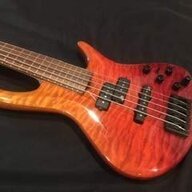
I’m playing a 1984 Electra bass through a new fender rumble 40.
Any thoughts, opinions based on direct experience? thanks.
moksha.
 
I've got both the EQD Warden (v1 with the hard-click switch) and a Keeley Bassist from about five years ago. They're both good compressors, with different characters (optical versus VCA), different pros and cons. Any opinion will be just that, so not objective.
The Keeley will be easier to get to know, it featuring half the number of knobs of the EQD. If you're into learning more about compression, the EQD would provide a little more insight thanks to more controls.

As to their characters, it's hard to communicate. I imagine that you've done lots of research already on the many online video demos that are available, which could help you identify which would be preferable to you. If you haven't, I would rely more on that than written descriptions.
In my own case, I was a little disappointed in the noisiness of the EQD's circuit, but that could just be my unit. EQD might have improved it since in their updated version, too.
 
  • Like
Reactions: Mighty Thumb
The Keeley has been one of my favorite and most used comps for a long time now. As @Redshift Crilly said, it’s pretty easy to dial in and sounds great. While I haven’t tried the Warden, I do have other optical comps. The Walrus Audio Mira has become one of my favorites.

Recently, the Empress Bass Compressor has been getting first call. Not surprising given my affinity for the Keeley. While it does have lots of knobs and switches, I think the manual does a great job of giving some example starting points - adjust to taste from there. So don’t be intimidated by it. The metering is great.

If you’re looking for something that adds its own color/character to your sound, the UAFX 1176 will definitely do that.

If you haven’t done so already, check out @scubaduba compressor pedal reviews. It’s an invaluable resource. https://www.compressorpedalreviews.com/
 
If you must have one, I'd go with something designed specifically for bass. I've tried The Warden a few times and it hasn't seemed particularly well-suited.

I think it's worth mentioning that as a new bass player the best idea would be to hold off on a compressor for now. It's going to cost as much as your amp! A really good one will cost quite a bit more. You'd be much better off putting that money toward a more powerful amp. Amps and cabs (especially cabs) are overwhelmingly the most important gear. If you want to play with a drummer and a guitar player you're quickly going to want something more powerful than a Rumble 40.

There's also something to be said for not using a compressor early on as a new bass player. That way you develop the ability to control dynamics with just your hands.
 
If you must have one, I'd go with something designed specifically for bass. I've tried The Warden a few times and it hasn't seemed particularly well-suited.

I think it's worth mentioning that as a new bass player the best idea would be to hold off on a compressor for now. It's going to cost as much as your amp! A really good one will cost quite a bit more. You'd be much better off putting that money toward a more powerful amp. Amps and cabs (especially cabs) are overwhelmingly the most important gear. If you want to play with a drummer and a guitar player you're quickly going to want something more powerful than a Rumble 40.

There's also something to be said for not using a compressor early on as a new bass player. That way you develop the ability to control dynamics with just your hands.
+1
These days I always play with a compressor live (Origin Cali76 CB), but I never practice with it because it makes my playing sound a bit better than it really is.
 
For gigging regularly, I like the Keeley. I used Origin Effects Cali76tx and Compact Bass for years, but I got tired of those and all the nuance. Keeley is pretty much plug n play.

If I was a stay at home player or studio leaning player, I'd probably still be using the Cali76tx.
I know the Cali76 is a good compressor, I just couldn’t jell with it. I use 1176 (and other FET) style compressors “in the box” often, so it’s not that I don’t like that type of compressor. At the time I had one, I was looking for another “always on” comp for live playing. The UAFX 1176 has shown me that it’s not that type of comp for me. Maybe I need to try the Cali again, but treat it like a stomp box instead of always on?

If you must have one, I'd go with something designed specifically for bass. I've tried The Warden a few times and it hasn't seemed particularly well-suited.

I think it's worth mentioning that as a new bass player the best idea would be to hold off on a compressor for now. It's going to cost as much as your amp! A really good one will cost quite a bit more. You'd be much better off putting that money toward a more powerful amp. Amps and cabs (especially cabs) are overwhelmingly the most important gear. If you want to play with a drummer and a guitar player you're quickly going to want something more powerful than a Rumble 40.

There's also something to be said for not using a compressor early on as a new bass player. That way you develop the ability to control dynamics with just your hands.
This is also good advice.
 
  • Like
Reactions: Goatrope
Sounds like you may be on a budget?

The Walrus Mira is on sale these days and is a full featured comp.

also the deamon FX cali76 is a great affordable copy of the Orign. I have a lot of good compressors (Empress, Aguilar TLC, MarkBass, MXR Bass). The Deamon is still on one of my gigging bands boards as the always on first in chain.
 
  • Like
Reactions: edwinhurwitz
Thanks for all the solid feedback. I like the idea of not practicing with compression. I’ve played guitar for years and do a lot of recording but don’t play live. I’ve been using a Barber Electronics Tone Press but it doesn’t seem well suited for bass. I decided to try the Bassist and found one used on Reverb. Will see how it works. I’m trying not to spend a lot but I can afford to get the right gear, with in reason. I decided to swap the fender rumble for an ampeg rb 112. It sounds way better and the wattage is great for my needs. The fender just felt like a toy amp.
 
  • Like
Reactions: Mighty Thumb
If you're new to playing bass (and compression) I strongly recommend getting an easy to use "one-knob" compressor, like the EBS Multicomp. It actually has two knobs, but one of them is just make up gain. There are no separate knobs for attack, release, ratio, threshold. For some reason the EBS isn't quite as popular as it used to be but it's still a very good compressor. I often use it for gigs for it's idiot proof operation, even though I've got other, more expensive compressor pedals. When I play bass I want to play bass, not worry about whether the release is set a tiny bit too slow.

The Keeley you mentioned is also what I would call a "one knob" compressor, although it has separate knobs for threshold and "compression" (presumably ratio?). I have not testet this pedal so I can't comment on how good it is. I've tested Keeley's guitar comps though (on guitar) and I didn't like them at all. They had a very distinct coloration of the tone that couldn't be dialed out, and it didn't work for me at all. Lots of guitar players like them, but I get the impression that they can be very hit-or-miss, depending on what style of music you play.

The reason that I recommend a simple one-knob compressor is that compression is the hardest effect to get right. It's very easy to mess up your tone completely, and no compression is much better than poor compression. I've seen even experienced bass players ruin their tone completely with compression. This is the reason why I always recommend the EBS to anyone new to bass/compression. It may not be the most flexible compressor out there but it's almost impossible to ruin your tone with it.

For anyone seriously interested in compression I always recommend learning it using a plugin, on pre-recorded material. The FabFilter compressor is a superb plugin-compressor for learning how compressors work. Personally I never really mastered the art of compression until I got into recording. Trying to learn compression using a stomp box while simultaneously playing bass is not the best way to truly learn the deeper aspects of compression IMO.
 
Last edited:
Welcome my 1st compressor was the Keeley Bassist absolutely the best compressor to start out with simple effective flawless pedal. If money isn't an issue Broughton Audio Omnicomp is my favorite compressor. It's cheaper than both the Empress or Cali76 CB.That being said since the Omnicomp is optical I bought the Walrus Mira compressor it's optical like the Omnicomp. The Mire goes from slight compression to full on limiting. For the money it's the best option currently available IMHO more knobs than both the Omnicomp or Bassist but just as affective. Top jacks and power is also a bonus. If I needed my 1st compressor to learn about compression the Mira is the way to go price, quality, pedalboard friendliness it's the winner.
 
As far as compressors go, it depends on what you would like to achieve tone-wise as well as how much control you would like to have. Also, you might like to read a bit about different topologies like VCA, FET, OTA, Optical, Tube, etc. (Types of Compressors)

I have recently got into a compressor shopping spree and am loving pretty much all of them. For simplicity, you cannot beat an LA-2A type compressor like Effectrode PC-2A or Universal Audio's UAFX LA-2A. These are two of the optical compressors, former of which has a tube gain stage, and the latter is simply the Universal Audio plug-in put in a box pedal form. I am getting Effectrode tomorrow afternoon, but I heard it a few times and it is one of the best compressors I have ever heard. UAFX LA-2A sounds amazing as well. Both are very easy to use and highly recommended...

On the FET side, Origin Effects Cali76 Compact Bass and Empress Bass Compressor get a lot of love around here. I have the Cali76 and love it dearly. I use it at the beginning of my chain and given its inherent color it just enriches my tone. I have not had the chance to try the Empress, but that is next in line for me. Both of these have lots of controls on, so if you would like to have minute tweaks, both are great. An alternative to these from Universal Audio is their 1176, like their LA-2A, a plugin packed in a pedal box. @scubaduba has found it not a perfect fit for bass, but there are others who love it.

On the VCA side, I recently bought Carl Martin's Honey-Comp, which is quite easy to use (with only Comp, Level and Dry) and very punchy (as attributed to the dbx 160 family of compressors). I have not had a chance to use it live but at home it sounded very good. In terms of its form factor, it is very pedalboard friendly, so highly recommended.

If you would like to go for the tube route, there is the Markbass Compressore which cannot be beaten for the price! It is a real tube compressor with all possible controls and it is one of sweetest of the bunch. However, it is huge and current draw makes it a bit difficult to power up with most power supplies (it comes with its own though).

Anyway, I would definitely check Compressor Reviews and https://www.compressorpedalreviews.com/ before making the move. Even though Cyrus of Ovnilab has stopped reviewing compressors for a while, both if these guys share amazing information and they have big ears for sure!!!
 
  • Like
Reactions: scubaduba
I just want to add this to my recommendation of the EBS Multidrive (above):

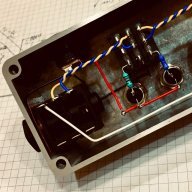
I've seen some reports about these pedals going bad over the years. I've actually experienced this too (a seemingly faulty footswitch, noise, crackling) but the pedal was over 10 years old and had been on my pedal board for literally hundreds of gigs with lots of travel before I experienced any problems.

The problem was VERY easy to fix though. The footswitch wasn't actually faulty. The problem was caused by cold solder joints under the footswitch. I simply re-heated these solder joints. Problem solved, and it took less than 5 minutes. Make sure to also check that the footswitch is firmly tightened to the chassis. Mine was just a tiny bit loose when the problem appeared, and I suspect this may have caused unnecessary strain on the solder joints. The pedal is now close to 25 years old and it's still going strong.

Anyone with a faulty EBS Multidrive may want to try this.
 
Last edited:
  • Like
Reactions: Alper Yilmaz
If you are considering the Warden and on a budget-don't overlook this sleeper. It sounds and performs great...inspired by the Warden and IMHO easily the best deal on a top quality comp out there. I love mine.
SQWZR - Optical Compressor - Blue | Reverb
That said, if I could only have 1 comp, it'd be the Empress, by a wide margin. If you're new to bass and/or compression, the advantage of having the most precise set of LED indicators is major in accelerating the learning curve of how to get the most out of it......and even after you're comfy with it, every time you use a different bass, or place a different pedal upstream from the comp, those lights will be a boon to getting it properly adjusted. Buy once, cry once, if you're able.
 
  • Like
Reactions: Cameron1243
Attack/release knobs may seem daunting at first.

Check out YouTube how sound engineers set their compressors for bass in a mix, how much reduction they are aiming for. Experiment with those settings on your comp pedal. You may find a favourite setting.
 
My advice to someone new to running a compressor is to lower your expectations. Since compression is altering the volume envelope of your notes, it's probably the hardest effect to hear, except when it's doing something that sounds bad. So don't be frustrated if you are trying different compressors and not hearing any sort of "magic" that other people say they hear. And my experience when starting was that many people loved to talk about that great magic that their favorite compressor was adding.

So next is the question of how you want to use it. The way I started was the "everyone says it's good for me" route. That is I added it just to see what I was missing. The problem for me personally was I had a lot of control over dynamics and the timbre (or tone) of notes because I had played for 30 years without a compressor. Then suddenly the compressor was messing with those dynamics and tone. So I was either struggling against it or compensating to get back to where I wanted to be. It took two years of playing with and without a compressor and probably using 10 different ones for me to start to get some control over the compressed sound. It takes a long time to unlearn things or learn them in a new way so probably won't take you as long as that.

Now as to recommendations, the fewer knobs, one is not a bad one if the compressor does what you like. The EBS multicomp I have has three knobs and a mode switch. The nice thing about it is the mix of flexibility and ease. You aren't setting attack or release times so that's easy. You are setting ratio and threshold (called comp and sens) which means you are able to adjust for different input levels as well as different compression curves as it engages. Different modes will help you think differently about compression when you read about them, and you can set-and-forget the mode when it's time to use it. There's an older two knob version but I recommend the three knob since it teaches you about setting a threshold.

Another one I like is the Walrus Mira. The Mira has a nice light that indicates what the compressor is doing. It's optical which has a character I personally like - matter of taste. It has separate attack and release knobs but they made these quite small. This means if you are putting it into and out of a bag or case they are very unlikely to be moved. This is extremely helpful for gigging. You will probably spend a while (for me it was months) deciding where to set attack and release points. Having them turned every time you pull it out of a bag is frustrating. So I love that these are made extra small. The Mira also runs compression in parallel with your uncompressed signal. You can adjust the balance of compressed to raw signal. There is a switch to run a high pass filter on the compression signal so that low frequencies aren't triggering the compression in any exaggerated way. You can add makeup gain to the compressed signal. You still set threshold and ratio independently as with the EBS. And you get an output level setting for overall volume out. It's an impressive set of features in a pedal. This is my pick for a very good set of usable features, but this means spending a lot more time reading and thinking and trying different settings and listening.

Some other compressors: Warden I really dislike because I could not get it set up the way I wanted. Keeley Bassist with three knobs is a great compressor with simple controls. Empress is a great compressor that really helps you see what's happening with the metering. The metering on the Empress might help you learn quicker how to use compression especially if you respond well to visual information.
 
  • Like
Reactions: MokshaKusa