I feel my question should be prefaced by stating that I'm being sincere and not having a "dig".
To what extent are compressors used to compensate for issues with technique? That is to ask if they maybe overused as a "magical" device to make one's playing sound better versus spending the time practising and learning how to modulate finger force.
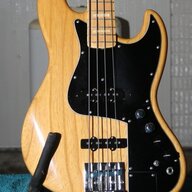
There's no magic compensation for technique. However compression can be helpful if you need more sustain from your bass. I could have used it for my 1965 Jazz back in the early 70's when I was touring, but have no need for it with my '82 Jazz with its all-maple neck. It has great sustain.
Compressors for use in live performance usually have three functions 1.) to add sustain to your sound, 2.) to protect your amp and/or your speakers, and 3.) to use as to produce a specific effect to your sound.
A compressor can help you get more sustain from a bass that just doesn't have enough sustain. It can also be used as an effect. I can max it our or max out the ratio and you will get to a a point where your bass notes start sounding like organ notes with the beginning of the note, the middle of the note, and the end of the note all being at the same level throughout and it will go on as long as you have the note fretted. That's what I call "Elephant Stomp Compression". There is absolutely no loud or soft parts to the note, it's all one level. I would classify that as an "effect" because it is so drastic. About the only song I use a lot of compression on if I have it is Cyndi Lauper's "Time After Time" There is very little dynamics in that song and it sounds like the bass is originating from a keyboard - because it is. If I want to imitate that sound, I'll do it with a compressor that is either turned up a lot (single control) or I'll bump the ratio control way up if it has multiple controls.
Good dynamics, IMO, are key to getting a good sound. You want people to hear how you play some parts softly, some loudly, as well as at all levels in between, or at least I do. That's part of the artistry in playing musical instruments. A simple and true fact about compression that you need to understand is compression eats your dynamics. The more compression you use the smaller your dynamic range becomes. It trades off dynamics for sustain. So it's one of those Goldilocks things - not too little, not too much, just enough! If you do it right, you can pretty easily add some sustain to your notes and still have plenty of dynamic range left. I would posit that many times with the optimal settings, it is not apparent to the audience that you are even using compression. everything just sounds good.
Typical controls on a compressor are
Threshold, Attack, Ratio, and Decay.
• Threshold - determines at what level the compression should engage and disengage.
•
Attack - determines how quickly after it meets the threshold to start the compression that the compression actually begins (you may want it fast for slap by slower for other styles).
• Ratio - This dials in how much compression you want. You'll see numbers like 4:1, 8:1, 12:1, etc. Often the ratio control can be set to ratios in between those that are printed on its face. 4:1 means you need to supply 4db more signal energy to get 1db in actual SPL (volume). So you have to strike the string hard enough to raise the SPL by 4db to actually get it to give you a 1db increase. It will convert the excess energy into sustain. 8:1 means you have to initiate an 8db increase in sound to actually raise it 1db, again while converting the rest of the energy into sustain. The higher you turn that ratio dial, the more compression is applied to the note. That also means the more sustain you apply to the note but the less dynamics are available to you. A 10db difference is heard by us humans as twice as loud if it's an increase, or half as loud as it's a decrease. Compressors by their inherent nature. decrease the SPL and increase sustain.
•
Decay - This one is kind of the opposite of attack. It controls how quickly, after the note energy sinks below the threshold of compression, the note disengages and starts to fade. Again with Slap techniques, you'd want this to be really fast and with other techniques you might not. If you use a too short of a decay setting for songs that you need to hold out some notes, they will come to a very abrupt end once that energy level sinks below the threshold. And that just sounds weird if you are putting an abrupt end to a legato (smooth) section.
•
Hard Knee/Soft Knee selector. Another control that is often just a switch on a compressor is a Hard Knee/Soft Knee selector. This augments how the attack and decay work. A Hard knee is an abrupt change whereas a Soft Knee is a more gradual change (can still act quickly just not so abrupt. For instance my Eden WT500/800 (800-watts rms) has an auto-compressor that I can engage. When I do that, the gain control becomes the threshold control to let the compressor know when you want it to kick in. The auto-compressor in my Eden WT amp sounds to me like it has a hard knee. It works well for slap but I really don't like the sound of it for anything else (YMMV). It's very abrupt and there is a huge difference between the native sound and the compressed sound.
On the other hand, my newer Eden TN226 (225-watts rms) also has an auto-compressor that has a much softer knee and sounds much more musical to me. I had to use it one night at that small brewpub that we played so often, because we got too loud. I looked at my amp the power clip light was flashing. If it flashes very much, very long, the protection circuits step in and shut it off. Turning down the bass EQ didn't help and turning down the master did, but then I couldn't be heard. So I sighed and turned on the auto compressor, expecting it to sound like the one in my big Eden amp. I turned the gain up slightly so that compressor light flashed a little more (it flashes while it's compressing) and started playing. That clip light went right off and my level and dynamics sounded the same. It was very nice! Evidently it was the just the peaks that were causing the clipping and as I had it set, it just compressed those peaks enough to stop clipping the power amp and yet I couldn't detect the difference in my dynamic range. I was very surprised and very happy.
Compressors can have all of those controls and perhaps more, or they may have a single control that does everything. My WTDI (DI box with Eden WT preamp) has a single control. And I use that to get the sound I want for that one Cyndi Lauper song. My guess is those control the ratio setting and all the other controls function according to an algorithm or circuitry to control the rest of it. I have two controls built into my DNA-800 amp, both the threshold and the ratio. The rest of it (attack, decay, hard knee/soft knee) automatically adjust from there. It is also a very musical compressor in that nothing sounds harsh through it. Some stompboxes will have all 4 and some just turn on and off. Some studio rack compressors with have additional controls.
I'm not sure that a compressor can compensate for poor technique and can solve sustain problems or gear protection problems, but when you fret a note and when you release a note is not going to change because you are using a compressor. If anything, it will challenge you to get as much dynamic difference in a song played with it as without it. My bass has great sustain, so that's not a problem. I have used it however as an effect and also to protect my gear.









 . Notice the long sustained parts of the line.