
I got a CIJ 1960's Victoria Short Scale bass on CL today.
I knew it would be a project and it was dirt cheap, so I'm not surprised that it's in such rough condition.
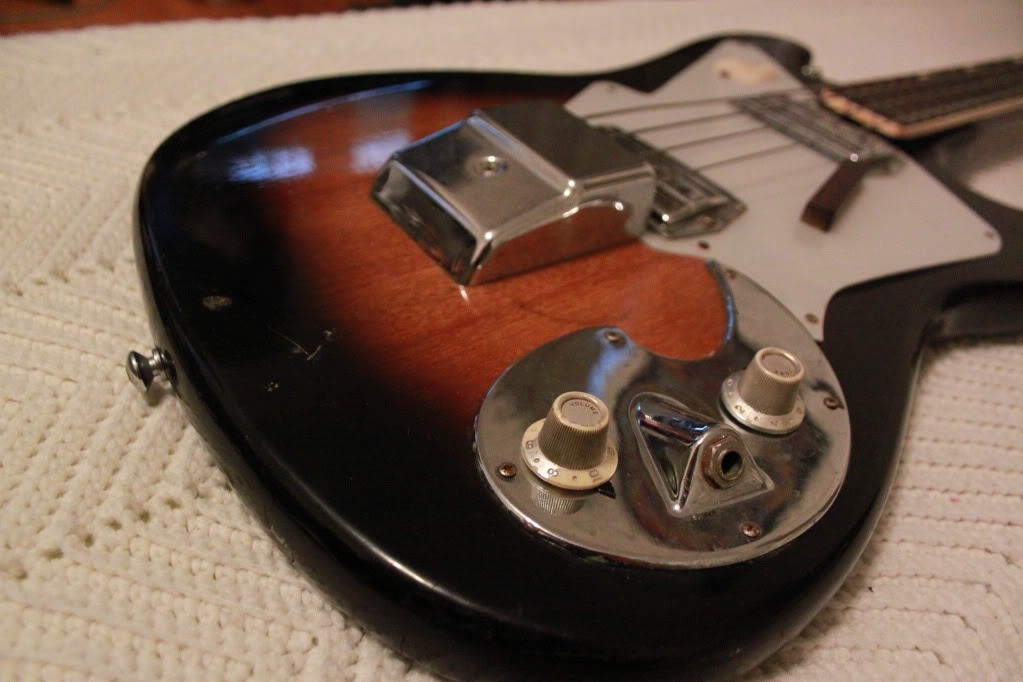
It didn't play when I got it home, so I opened her up and replaced one of the pots, now it plays fine.
It's got two rocker switches that turn each pickup on and off.
I love the look of this bass, and I was happily surprised to find out that it was a short scale. (30")
(The only reason I measured was because I tried to put a fresh set of flats on it, only to find out that my strings were way too long.)
But here's the bad news. :scowl:
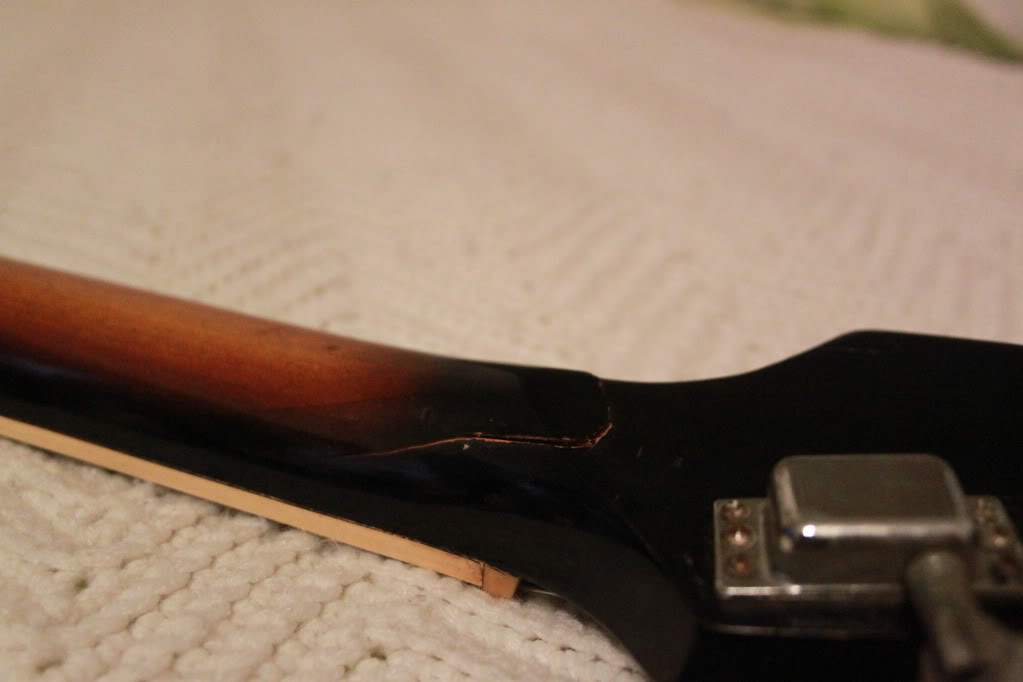
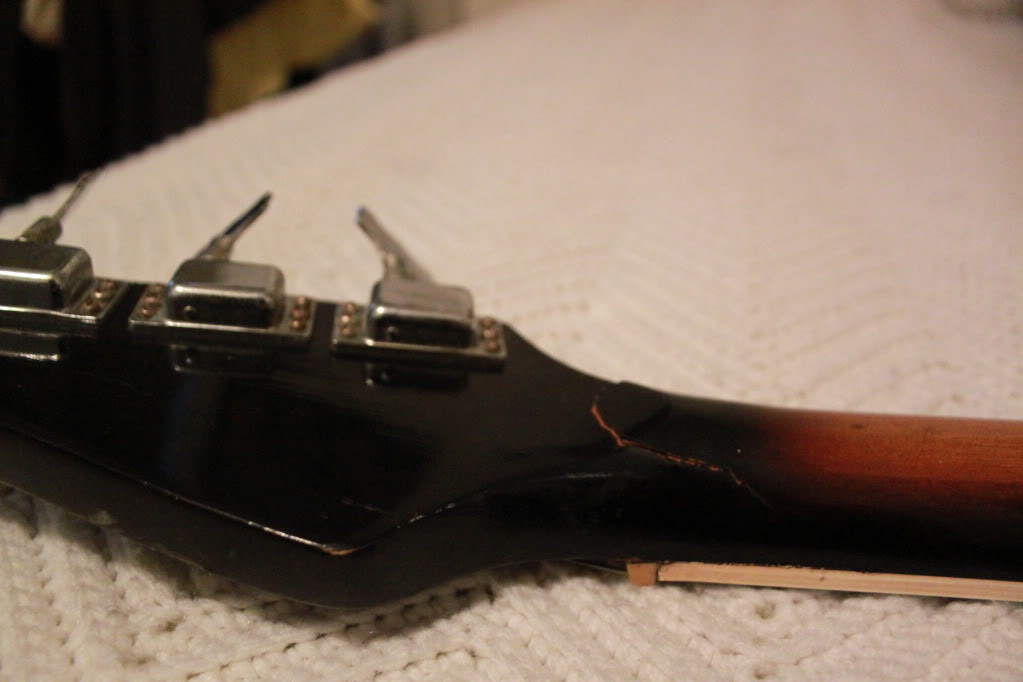
So how bad is it? Could I fix it with some epoxy and clamps?
If not, how much might a luthier charge to fix it?
I haven't put any tension on the strings other than the minimum I needed to hear the pickups
I guess if it's not fixable my next option is to get a replacement neck, but I have the feeling that might be difficult to find given the measurements.
The neck pocket measured a little over 1.75"
Any tips or information would be great.
I knew it would be a project and it was dirt cheap, so I'm not surprised that it's in such rough condition.
It didn't play when I got it home, so I opened her up and replaced one of the pots, now it plays fine.
It's got two rocker switches that turn each pickup on and off.
I love the look of this bass, and I was happily surprised to find out that it was a short scale. (30")
(The only reason I measured was because I tried to put a fresh set of flats on it, only to find out that my strings were way too long.)
But here's the bad news. :scowl:
So how bad is it? Could I fix it with some epoxy and clamps?
If not, how much might a luthier charge to fix it?
I haven't put any tension on the strings other than the minimum I needed to hear the pickups
I guess if it's not fixable my next option is to get a replacement neck, but I have the feeling that might be difficult to find given the measurements.
The neck pocket measured a little over 1.75"
Any tips or information would be great.