

Enjoy the benefits of a premium membership!
Upgrade Account
-
TalkBass has been independent since 1998. Add your voice.
Create a free account to reply to discussions, view embedded media, and browse with fewer display ads.
Join free Log in
Want zero display ads or expanded classifieds tools? Compare plans.
You are using an out of date browser. It may not display this or other websites correctly.
You should upgrade or use an alternative browser.
You should upgrade or use an alternative browser.
Double Bass DB forum "what books are you reading" thread
- Thread starter Chris Fitzgerald
- Start date
More options
Who Replied?

Just finished "Team of Rivals" about Abraham Lincoln's cabinet, and "Pride and Prejudice" for light reading. I really enjoyed both.
Team of Rivals is great—highly recommended.
I am on a John Le Carre espionage novel kick. Just finished the George Smiley trilogy.
I've been trying to use up all of the books in the house. I found one Le Carre novel in my daughter's room, got into the first couple pages, and realized I'd already read it. Oops.
Jazzdogg
Less barking, more wagging!
I thoroughly enjoyed this book - great primer on stoicism.
Jazzdogg
Less barking, more wagging!

So Anyway, this book is by the editor of Skeptic magazine.
Some of the bass weirdness revealed:
Some of the bass weirdness revealed:
- The sticker on the Ric pick guard DOES change the tone.
- Girls notice the Tort....and they dig it.
- Peavey's aren't that heavy.
- Your wife wants to hang out all day at GC with you.
- That new pedal changes everything.
- And you totally ripped that solo last night...too bad everybody went to the bar and missed it.
-


Took about a month break from reading after finishing Octavia Butler’s epic “Lilith’s Brood.” Absolutely amazing story, but extremely heavy.
Afterwards I wound up re-reading “Pedagogy of the Oppressed” by Paolo Freire, “Homage to Catalonia” by George Orwell, re-visited some of Jorge Luis Borges’ stories (Labyrinths is the best english translation of his work), and finished the year with “Towards Freedom” by Touré Reed. I started off 2021 with a collection of Howard Zinn speeches called “Zinn Speaks.”
Afterwards I wound up re-reading “Pedagogy of the Oppressed” by Paolo Freire, “Homage to Catalonia” by George Orwell, re-visited some of Jorge Luis Borges’ stories (Labyrinths is the best english translation of his work), and finished the year with “Towards Freedom” by Touré Reed. I started off 2021 with a collection of Howard Zinn speeches called “Zinn Speaks.”
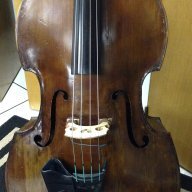
“Beethoven: Anguish and Triumph” by Jan Swafford - it is DENSE! I’m liking it. It’s a deep study on his life, everything going on around him, his thoughts and approach, his awful health and hearing struggles, and of course really deep into the music itself. I’ve been taking my time with it and listening to many of the pieces after reading about how he went about producing them, I’m up to the Eroica symphony so far. We had been doing his piano concerto No 1 and Prometheus in our community orchestra last year as part of his 250th year before we had to shut down, so I’m still in a Ludwig kinda mood.

Right now, re-discovering the great Robertson Davies and reading the Deptford Trilogy. Finished Fifth Business and moving on to The Manticore.
View attachment 3983386
This trilogy is one of my personal “touchstone series” of books that I reread every 5-10 years. Davies was in the zone when he wrote these! The Cornish trilogy was also great, but nothing tops Deptford.
Currently reading this:
I often cringe at this type of book, but this one is really excellent and I am considering making it required reading for my grad students. It really resonates.
Working on a collection of some of Hemingway’s lesser known short stories that was a holiday gift. So far it’s basically, “how many different ways can a person die while on a safari, hunting, etc.”
Recently finished The Quiet American by Graham Greene—dark but poignant, and although it’s fiction I found it interesting because I really wasn’t familiar with the setting—Vietnam during the end of the French colonial era before the US got heavily involved.
Recently finished The Quiet American by Graham Greene—dark but poignant, and although it’s fiction I found it interesting because I really wasn’t familiar with the setting—Vietnam during the end of the French colonial era before the US got heavily involved.
Last March, our library closed, so I looked at what was on my shelves that I hadn't read. I decided to work through all of Shakespeare. My practice is to read a play, then look up some on-line guides to ensure I understood what I just read  , then I read the play a second time.
It has been a bit of a slog. I'm up to Timon of Athens - maybe 2/3-3/4 of the way thru in First Folio order. I've taken breaks to read other books, including War and Peace. Some of the plays definitely read easier than others. Some are incredibly bleak. Learned a bit of English history from the cycle of King plays.
Graham Greene is one of my all time faves!
, then I read the play a second time. It has been a bit of a slog. I'm up to Timon of Athens - maybe 2/3-3/4 of the way thru in First Folio order. I've taken breaks to read other books, including War and Peace. Some of the plays definitely read easier than others. Some are incredibly bleak. Learned a bit of English history from the cycle of King plays.
Graham Greene is one of my all time faves!
Jazzdogg
Less barking, more wagging!
This trilogy is one of my personal “touchstone series” of books that I reread every 5-10 years. Davies was in the zone when he wrote these! The Cornish trilogy was also great, but nothing tops Deptford.
Currently reading this:
View attachment 4130044
I often cringe at this type of book, but this one is really excellent and I am considering making it required reading for my grad students. It really resonates.
Ordered!
I just finished reading this one - worth recommending:
https://smile.amazon.com/Ego-Enemy-...he+enemy&qid=1610814330&s=digital-text&sr=1-1
After more than 50 years, I just re-read Treasure Island - mostly to ascertain whether I thought my grandson is ready for it - it's still a great escape book.

This trilogy is one of my personal “touchstone series” of books that I reread every 5-10 years. Davies was in the zone when he wrote these! The Cornish trilogy was also great, but nothing tops Deptford.
Currently reading this:
View attachment 4130044
I often cringe at this type of book, but this one is really excellent and I am considering making it required reading for my grad students. It really resonates.
I loved the Cornish trilogy as well. Now finished the Deptford Trilogy (again) and I think you have to reach a certain age before these sorts of retrospective books make deep sense. Each, after all, is a late-life assessment by the three linked protagonists of their own lives, meshed with the counter-assessments by those characters around each of them. The series doesn't wrap up in a terribly satisfying way, but then life doesn't either.
A colleague of mine, a machinist turned political philosopher, says that he re-reads Plato's "Republic" every five years, and each time it's a different book. Not a letter has changed, but he has. Thus it is with important literature.
Currently reading this:
View attachment 4130044
I often cringe at this type of book, but this one is really excellent and I am considering making it required reading for my grad students. It really resonates.
I picked up Atomic Habits a year or two ago, and was really impressed. I need to re-read it, this time making sure actually to put it into action.

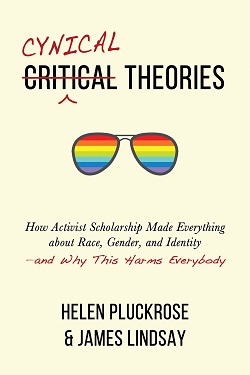
I’m halfway through Cynical Theories by Helen Pluckrose and James Lindsey. It’s equal parts fascinating and disturbing. Highly recommended for anyone who wants to better understand how we got to our current state regarding “social justice” activism.
Attachments

Last edited:
Just finished “A Long Petal of the Sea” by Isabel Allende. Wonderful historical fiction.
Currently reading “The God of Small Things” by Arundhati Roy.
Also reading “The Talent Code” by Daniel Coyle, which is discussed in it’s own thread here:
The Talent Code, and concepts related to it
“The Untethered Soul” by Michael Singer is picked up almost daily for spiritual guidance and inspiration.
Currently reading “The God of Small Things” by Arundhati Roy.
Also reading “The Talent Code” by Daniel Coyle, which is discussed in it’s own thread here:
The Talent Code, and concepts related to it
“The Untethered Soul” by Michael Singer is picked up almost daily for spiritual guidance and inspiration.
I loved the Cornish trilogy as well. Now finished the Deptford Trilogy (again) and I think you have to reach a certain age before these sorts of retrospective books make deep sense. Each, after all, is a late-life assessment by the three linked protagonists of their own lives, meshed with the counter-assessments by those characters around each of them. The series doesn't wrap up in a terribly satisfying way, but then life doesn't either.
Exactly why these books are great. Dunstan and Liesl are two of my favorite character studies in literature, ever. Also, for so many characters to be archetypes in a book that introduces and explores the concept of archetypes only halfway through the middle book is a stroke of genius, IMO.
A colleague of mine, a machinist turned political philosopher, says that he re-reads Plato's "Republic" every five years, and each time it's a different book. Not a letter has changed, but he has. Thus it is with important literature.
So true. This is why Davies, Kundera, and Durant (among a few others) keep getting reread at intervals. We can only see what we are ready to see, and only understand what we are ready to understand at any given moment. If we take in something at too early a moment, we are likely missing a large portion of it just through circumstance.
Exactly why these books are great. Dunstan and Liesl are two of my favorite character studies in literature, ever. Also, for so many characters to be archetypes in a book that introduces and explores the concept of archetypes only halfway through the middle book is a stroke of genius, IMO.
So true. This is why Davies, Kundera, and Durant (among a few others) keep getting reread at intervals. We can only see what we are ready to see, and only understand what we are ready to understand at any given moment. If we take in something at too early a moment, we are likely missing a large portion of it just through circumstance.
I had the good fortune to meet Robertson Davies a couple of times and to hear him speak when we were both at U. Toronto, he just retired as Master of Massey College. Davies was the prototypic “man of letters”, along with Northrop Frye who was also there at the time. Seems a very long time ago now, the early 80’s.


