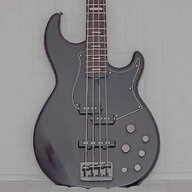
I just removed the frets from an Ibanez acoustic bass. The fret slots seem to be .025 inches wide. Where can I buy wood veneer this thin to replace the frets I removed.?

TalkBass has been independent since 1998. Add your voice.
Create a free account to reply to discussions, view embedded media, and browse with fewer display ads.
Join free Log in
Want zero display ads or expanded classifieds tools? Compare plans.

Hobby shops or wood retailers will usually carry thin veneers. Most commercial veneer available to me here is around 0.5mm thick, which is roughly 0.019"I just removed the frets from an Ibanez acoustic bass. The fret slots seem to be .025 inches wide. Where can I buy wood veneer this thin to replace the frets I removed.?

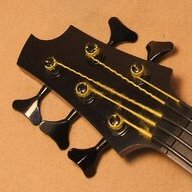
 ) two days ago and filed the bottom side first, then the string grooves slightly below the board level - this after having experimented with a temporary wooden nut. Strings anyway for some reason stay slightly over. Still playing with truss rod and saddles, but I am happy of the result.
). Likely this will give more robustness to veneer, although I do not think is a vital step. Also, super glue (cyanoacrylate) is brittle when dry, so it might be easy to sand. Consider that fully covering the fretboard with superglue is one technique too...
) two days ago and filed the bottom side first, then the string grooves slightly below the board level - this after having experimented with a temporary wooden nut. Strings anyway for some reason stay slightly over. Still playing with truss rod and saddles, but I am happy of the result.
). Likely this will give more robustness to veneer, although I do not think is a vital step. Also, super glue (cyanoacrylate) is brittle when dry, so it might be easy to sand. Consider that fully covering the fretboard with superglue is one technique too...
I'm in the middle of converting my Ibanez acoustic 5 string bass. I am filling the fret voids with veneer as suggested. I'm waiting for the glue to dry right now. I ve seen videos where they suggest putting a line of super glue on the veneer fret lines. Can someone explain if this is a vital step. If so should I use just regular super glue? Will it sand down satisfactorily?

Honestly I do not have a problem with the dots being in conventional position. I'm used to them there.So my defretted Ibanez acoustic bass is pretty good after defretting and sanding. But it has plastic binding on the sides of the neck which have the original fret marker dots. But of course those markers aren't helpful now that it has no frets. I've used a Sharpie to continue the fret veneers onto the binding but it gets rubbed off very quickly.
Any suggestions for this? Perhaps after marking them with the Sharpie I could put a small drop of super glue on each to keep them smudging into nothingness?
. However, not having binding, I see the frets end on the side. One suggestion I have found about this is to drill the markers and put a dowel of a similar wood. Then drill the new marker places and put some plastic.
So my defretted Ibanez acoustic bass is pretty good after defretting and sanding. But it has plastic binding on the sides of the neck which have the original fret marker dots. But of course those markers aren't helpful now that it has no frets. I've used a Sharpie to continue the fret veneers onto the binding but it gets rubbed off very quickly.
Any suggestions for this? Perhaps after marking them with the Sharpie I could put a small drop of super glue on each to keep them smudging into