• TalkBass has been independent since 1998. Add your voice.
    Create a free account to reply to discussions, view embedded media, and browse with fewer display ads.
    Join freeLog in
    Want zero display ads or expanded classifieds tools? Compare plans.

Design ideas needed for diy lightweight cab/combo

+1
I have to confer that this is a very practical solution.

I'd love to be able to do this but the combo is too heavy and large to fit through the attic hatchway and we don't have anywhere else suitable to store a gig rig. I blame it on the industrial revolution and the poxy, small houses this created in the UK. Unfortunately there's not much I can do about it hence the original post. :)
 
I made a very lightweight cab by using much thinner ply than is conventional and bracing each panel extensively with ply strips at 90 degrees as below (its the same behind the polyester wadding whilst the front is a ply/fibreboard/ply sandwich for extra rigidity. Corner battens are cedar. If I were doing it again I'd have some cross bracing right across the cabinet and onto the rear panel. Also the removable back was an issue, and I had to beef it up considerably and glue it in place. It was awfully convenient while I puzzled out how much damping material I needed though. Very time consuming construction. The biggest drawback to home builds, in my opinion, is the amount of tuning/testing required, especially as 98% of us won't have all the facilities to test properly. I had different length ports as well as playing with the amount of damping material, and to my surprise (and my ears) the damping had a much bigger impact on the tone than different ports did.


23167586_355741158218047_4102782550173517779_n.jpg
 
  • Like
Reactions: 6thplanet
I'll take the OP at his word - he wants to build a cab. He has previously built a guitar cab, and he's already bought Basslite SC10 speakers. So yeah, as others have said, build a box with 1/2in(12mm) plywood. If the attic hatchway is only 18" wide, you probably want a max width of 16-17"... doable for a vertical 210.

The [Invalid or Expired Link Removed] offers five 2x10 options:

Small Sealed 2x10
total volume = 1.186 cu.ft
300 watts, F3 94Hz

Medium Sealed 2x10
total volume = 1.883 cu.ft
200 watts, F3 88Hz (high-pass at 70Hz for added protection)

Large Sealed 2x10
total volume = 2.857 cu.ft
200 watts, F3 87Hz (high-pass at 75Hz for added protection)

Small Vented 2x10
total volume = 1.933 cu.ft
Fb = 60 Hz
300 watts, F3 72Hz (steep high-pass filter at 45Hz)

Medium Vented 2x10
total volume = 4.902 cu.ft
200 watts, F3 50Hz (steep high-pass filter at 45Hz)
Fb = 55 Hz


At 4.9CF, I think the Medium Vented cab would be too big, and probably the 2.9CF Large Sealed cab too. The Small Sealed cab is probably too small for a bass speaker. That would leave the Medium Sealed and the Small Vented designs, both a bit under 2CF. The sealed cab would be an easier build; the ported cab would have a little more extension. Either option should work fairly well.

 
Why use thick plywood if you're only going to shave it down? Too much work and waste. Use 1/2" plywood for all but the front baffle. Proper bracing is a key design feature that lets you use thinner plywood without compromising rigidity.

With the hatchway being one of your limiting parameters, going with a vertical 210 will probably be your best option. The SC10-16's you purchased are primarily designated for sealed cabinets, although they will work in ported designs as well. They are probably about as light as you can get and still sound decent. Here are some design proposals from Eminence:
[Invalid or Expired Link Removed]

Or if you want pre-built no compromise:
AT 208 – GRBass
AT 212 slim – GRBass


Just a thought on the Eminence plans for a small sealed 2x10. It uses 2 drivers and 'optimum' in a square cabinet which presumably means right angled panels and not necessarily a cube. Would this work if a cubed enclosure had two drivers on adjacent faces at right angles to each other? i.e. the drivers would be at 90 degrees to each other and angled at 45 deg each towards the audience. It would certainly reduce the size of the enclosure but I guess you'd spread the sound around and possibly have a dead spot directly in front of the cab. If it would work it seems like the ideal answer.
I really need to do some reading around the subject but it's not that easy to find information that introduces the concepts without talking to those that already understand it.
 
Last edited:
I'll take the OP at his word - he wants to build a cab. He has previously built a guitar cab, and he's already bought Basslite SC10 speakers. So yeah, as others have said, build a box with 1/2in(12mm) plywood. If the attic hatchway is only 18" wide, you probably want a max width of 16-17"... doable for a vertical 210.

The [Invalid or Expired Link Removed] offers five 2x10 options:

Small Sealed 2x10
total volume = 1.186 cu.ft
300 watts, F3 94Hz

Medium Sealed 2x10
total volume = 1.883 cu.ft
200 watts, F3 88Hz (high-pass at 70Hz for added protection)

Large Sealed 2x10
total volume = 2.857 cu.ft
200 watts, F3 87Hz (high-pass at 75Hz for added protection)

Small Vented 2x10
total volume = 1.933 cu.ft
Fb = 60 Hz
300 watts, F3 72Hz (steep high-pass filter at 45Hz)

Medium Vented 2x10
total volume = 4.902 cu.ft
200 watts, F3 50Hz (steep high-pass filter at 45Hz)
Fb = 55 Hz


At 4.9CF, I think the Medium Vented cab would be too big, and probably the 2.9CF Large Sealed cab too. The Small Sealed cab is probably too small for a bass speaker. That would leave the Medium Sealed and the Small Vented designs, both a bit under 2CF. The sealed cab would be an easier build; the ported cab would have a little more extension. Either option should work fairly well.

Thanks for the ideas. There's clearly a large difference in the F3 factor between the cabinets. I guess it's the classic trade off concept where you can have any two of three ideals but not all of them.
The small sealed 2x10 would certainly make a smaller cabinet but the medium is not that much bigger in practice. I don't really know whether the 6hz drop in F3 would result in that much difference.
At this point I think I'll just break out the saw and give it a go. As an ex IT person I've been know to 'over think' things and this may be one of those occasions. At the end of the day it's just a box....but I'm always of the mind that if a job's worth doing it's worth doing well.
 
Someone mentioned the BFM Simplexx cabs (and mentioned that the 210, at 18" wide, would be too wide for the attic opening).

I recall reading a post on the BFM forum in which someone asked about massaging the dimensions of one of the cabs (I forget why) and wanted to know whether it'd be okay as long as the internal volume and tuning were maintained. I believe that BFM said yes, in that case. If you're contemplating this, though, it would be best to go onto the BFM forum and ask the man, himself, with specifics.

There is Duke's aforementioned DIY thread -- if the Basslites perform like the Deltalites (within their power constraints), those are nice little cabs for four-string and should fit through the opening to the attic. They could be built as one medium-sized or two smaller boxes (and I'm sure folks would be happy to help if you posted in that thread).

I think the Eminence designs could be massaged within reason -- and Eminence certainly know their own drivers -- but I'm not qualified to say how suitable the different boxes they propose would be for use with electric bass (unless they specifically recommend one or two for that purpose -- you could write Eminence about this).

The drivers being 16 Ohms, each, might mean that you'd need just a bit more amp to get what you want from them than if they were 8 Ohms, but then there are plenty of very small amps that'll push an 8 Ohm 210 like that for all it's worth and then some.

Good luck with the project! Hope it turns out well for you.
 
Just a thought on the Eminence plans for a small sealed 2x10. It uses 2 drivers and 'optimum' in a square cabinet which presumably means right angled panels and not necessarily a cube. Would this work if a cubed enclosure had two drivers on adjacent faces at right angles to each other? i.e. the drivers would be at 90 degrees to each other and angled at 45 deg each towards the audience. It would certainly reduce the size of the enclosure but I guess you'd spread the sound around and possibly have a dead spot directly in front of the cab. If it would work it seems like the ideal answer.
I really need to do some reading around the subject but it's not that easy to find information that introduces the concepts without talking to those that already understand it.

For bass, generally the ideal configuration would be to vertically allign the speakers. It has advantages in volume, low end response and mainly in dispersion. A vertical column is also probably the easiest to carry through your house.
There are certainly interesting things you can do with down-, up- and backfiring speakers, but that really complicates the design and makes the performance harder to predict.
 
... I think the Eminence designs could be massaged within reason -- and Eminence certainly know their own drivers -- but I'm not qualified to say how suitable the different boxes they propose would be for use with electric bass (unless they specifically recommend one or two for that purpose -- you could write Eminence about this).

I don't see the ambiquity here. Eminence lists the Basslite SC10-16 under bass guitar speakers. The product page says it's "optimized specifically for sealed bass cabinets". The cab design PDF has nothing but 2x10 and 4x10 cab options, and several mention bass guitar use. I think it's reasonable to assume this 16-ohm speaker was intended for 8-ohm and 4-ohm bass guitar cabs, and that these are primarily bass cab "designs".

Some may need complete design details, but my hunch is, the OP is capable of converting these parameters to cab dimensions. Seems like good guidance for these speakers he's already bought. All that's missing is a suitable donor amp to make it a combo (his expressed preference).
 
I don't see the ambiquity here. Eminence lists the Basslite SC10-16 under bass guitar speakers. The product page says it's "optimized specifically for sealed bass cabinets". The cab design PDF has nothing but 2x10 and 4x10 cab options, and several mention bass guitar use. I think it's reasonable to assume this 16-ohm speaker was intended for 8-ohm and 4-ohm bass guitar cabs, and that these are primarily bass cab "designs".

Some may need complete design details, but my hunch is, the OP is capable of converting these parameters to cab dimensions. Seems like good guidance for these speakers he's already bought. All that's missing is a suitable donor amp to make it a combo (his expressed preference).
My bad -- that last remark was an afterthought based on seeing some of their generic plans for other drivers and not on actually looking at [Invalid or Expired Link Removed] (or, apparently, reading the product description that closely). Given what you say, though, "bass guitar use" does seem a safe bet, yeah.

Also, for some reason, I thought that dimensions were given in the plans -- by "massaged within reason" I meant primarily that one could make the cab taller, skinnier, whatever to suit his or her needs as long as volume, tuning, etc. were maintained, though it could also mean that someone more knowledgeable than I might tweak those parameters to their taste.

Good points, though, and thanks!
 
A used Genz Benz Shuttle 3.0-10T would meet all your requirements.
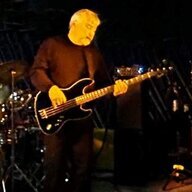
I don't have a lot of experience with that combo, but I have gotten to play both the 8T and 10T, with electric and with upright (happened to be in a store, shopping myself, when an old upright player came in looking for something small -- we took turns playing, listening, and tweaking the controls) a few times. Super-easy schlep, with a nice, clear sound from the cab and the amp, both.

Not sure that I ever tried it with a 5-string, but it was nice with four (even the 8T gave the upright a nice lift that fit well with the acoustic sound) and the amp seemed tuned to make the most of its available power with a small cab.
 
  • Like
Reactions: agedhorse
An Elf 1x10 would be cake to get into the attic and leave there, then use the lightweight head of your choice. Get a suitable gig cab, or two, and you're good to go. I have an Elf under my office desk and use my LMIII or TT-800 with it. It sounds great, takes up very little space, and didn't break the bank. My gig boxes all sit in my shop on a cart, wrapped in Tuki covers, awaiting the next gig.

I have a fully equipped pro woodshop, including a $5000 table saw, and wouldn't bother building an individual cab to save money. I'd do it for fun or experimentation, but it's awfully hard to compete with a factory and R&D team. Also, self built cabs have virtually zero resale value, so selling it can be tough if it no longer meets for needs.
 
OP, if the desired result is a specific size and lightest possible weight, the DIY option has merit.
This can be achieved but is VERY labor intensive.

Use the thinnest Baltic Birch and extensively brace it.
Make your braces from the same stock and swiss-cheese it with drilled holes to reduce weight.
This makes the brace similar to a truss that is strong without being a solid object.

Use a Neo driver for the biggest weight savings.
Use plastic pet screen instead of a metal grille.

If you use an Eminence driver, build to the Eminence cab specs for that driver.
These are found on the eminence web site.

You can change the shape of the dimensions as long as the internal volume remains unchanged.
 
I don't know if you would entertain buying a cab (rather than building one), here is one that seems to meet your requirements:

[Invalid or Expired Link Removed]
Interesting little cab -- looks like the port/"carry handle" is at the top back of the cab, along with the speaker connections. You could use a super-short speaker cable (even one with a right-angle plug) and velcro or rig up a Genz-style bracket to mount a tiny head on top and -- Voila! -- combo amp.