• TalkBass has been independent since 1998. Add your voice.
    Create a free account to reply to discussions, view embedded media, and browse with fewer display ads.
    Join freeLog in
    Want zero display ads or expanded classifieds tools? Compare plans.

Double Bass Deuce Alumatone Bridge

I wonder if any Jazz/Classical players are using this. On the site the bridge seems largely geared toward the rockabilly/psychobilly crowd and what are pluses to them (robustness, ease of pickup install) might not work well towards the rest of the doublebass crowd with regards to the actual sound. I have heard many players say they like the sound of aluminum adjusters or the wings cut off. This just looks like another cool experiment. Looking forward to Jakes update.

 
If you look through the scope of history and humanity, almost nothing that we do is new or has never been done before, the difference is more about it being the correct timing for commercial production and the public being willing to accept it as a viable new idea. Look over on the slab side at all of the people claiming to have invented fanned frets and then do a bit of research and you'll find a very well documented museum example on a 15th century lute....

I definitely like that new cnc'd bridge more than the older welded model. Just one adjuster knob???? I might just have to use one of those for the 1930 Pfretzschner custom aluminum build one the workbench right now!

j.
www.condino.com
www.kaybassrepair.com
 
Last edited:
If you look through the scope of history and humanity, almost nothing that we do is new or has never been done before, the difference is more about it being the correct timing for commercial production and the public being willing to accept it as a viable new idea. Look over on the slab side at all of the people claiming to have invented fanned frets and then do a bit of research and you'll find a very well documented museum example on a 15th century lute....

I definitely like that new cnc'd bridge more than the older welded model. Just one adjuster knob???? I might just have to use one of those for the 1930 Pfretzschner custom aluminum build one the workbench right now!

j.
www.condino.com
www.kaybassrepair.com
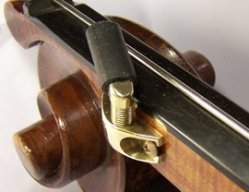
What you see is not an adjuster knob but a tool to adjust upper bolts. I think it was just put there for showing purposes.
 
I wonder if any Jazz/Classical players are using this. On the site the bridge seems largely geared toward the rockabilly/psychobilly crowd and what are pluses to them (robustness, ease of pickup install) might not work well towards the rest of the doublebass crowd with regards to the actual sound. I have heard many players say they like the sound of aluminum adjusters or the wings cut off. This just looks like another cool experiment. Looking forward to Jakes update.
I believe the reason being that Jazz/Classical players AND Luthiers tend to be more traditional..and in general less "experimenting". The goal however is the exact same: to achieve ultimate acoustic sound...there are plenty of reports saying it add's volume and tonal improvement over traditional bridges.
 
  • Like
Reactions: Brad_Pearson
Thanks for posting your thoughts Kim! I saw you guys last year with RHH and you guys killed it!

I do have to say there is a little skepticism in me about the tonal quality BUT I am very exited to hear more opinions and maybe a video of this bridge on a carved bass playing some orchestral excerpts. Have you ever heard of anyone trying this on a carved bass?

Meant no disrespect in my last post man. You're actually one of the reasons I picked up the bass years ago!
 
Kim, you and James should get along great. His work includes fascinating experiments with alternate soundpost materials, carbon fiber among them. I'd love to be a fly on the wall if you two ever discuss the new portable Coffinbass design, which as you know I like a lot.
 
Thanks for posting your thoughts Kim! I saw you guys last year with RHH and you guys killed it!

I do have to say there is a little skepticism in me about the tonal quality BUT I am very exited to hear more opinions and maybe a video of this bridge on a carved bass playing some orchestral excerpts. Have you ever heard of anyone trying this on a carved bass?

Meant no disrespect in my last post man. You're actually one of the reasons I picked up the bass years ago!

LOL no offense taken....I'm pretty thick headed. I hope that its only a matter of time before jazz and orchestral players give it a go. But like I said its a "tough" market to break into if it deviates too much from tradition...I am flattered to be of inspiration to you:)
 
  • Like
Reactions: KUNGfuSHERIFF
Wood saddle fits snug in the track not wobbly at all and aint moving anywhere.
Thanks for chiming in. The milled version is so much better looking. The desire for things related to traditional string instruments to be aesthetically pleasing cannot be overstated, and if a whole bunch of players won't use it because they think it's ugly, the inventor/manufacturer should take note. IMO. I'd very much like to hear from anyone who has has one fitted to their bass.
 
Kim, you and James should get along great. His work includes fascinating experiments with alternate soundpost materials, carbon fiber among them. I'd love to be a fly on the wall if you two ever discuss the new portable Coffinbass design, which as you know I like a lot.

I love experimenting with upright bass and I love exchanging crazy laboratory ideas. When it comes to alternate soundpost materials (including carbon fiber) I already been there, done that, many years ago. I finally ended up with my adjustable aluminum soundpost (made from Home Depot materials) that I'm using today. I also understand that beauty is in the eyes of the beholder and up to the individual person but there is no right or wrong....only results.
 
Thanks for chiming in. The milled version is so much better looking. The desire for things related to traditional string instruments to be aesthetically pleasing cannot be overstated, and if a whole bunch of players won't use it because they think it's ugly, the inventor/manufacturer should take note. IMO. I'd very much like to hear from anyone who has has one fitted to their bass.

I agree..... but sometimes tone and ease of use overpowers aesthetics... hell look at the car industry.... T'hat said I love the "industrial" look it has and together with the traditional string instrument it fits my liking for "Steam punk" looking things...:)
 
FYI they just released a new version...this one is weld-free and the weld experts on here would need something else to complain about.

The newer model is much nicer looking, and I have no doubt it performs very well for it's intended market segment. However...

I believe the reason being that Jazz/Classical players AND Luthiers tend to be more traditional..and in general less "experimenting". The goal however is the exact same: to achieve ultimate acoustic sound...there are plenty of reports saying it add's volume and tonal improvement over traditional bridges.

Our current bridge is not the result of luddites who never want to change anything. Far from it. It has come about through an evolutionary process, in which every feature has been studied and tinkered with by thousands of luthiers over hundreds of years. Good ideas survive and multiply. Bad ones perish. If you offer a new product which discards not only tradition, but much of this research, then you've got to expect some blowback by those interested in violin physics and technology. It ain't just aesthetics.

ridge.jpg


Looks and materials aside, that method of having access to variable pressure when mounting a flat wing pickup is a pretty clever feature.
I agree. However, there must be more graceful ways to achieve this. How about a thin thumb screw through either the hip or the wing?

bridge_zpsxupkzlim.jpg
 
Last edited:
The newer model is much nicer looking, and I have no doubt it performs very well for it's intended market segment. However...


Our current bridge is not the result of luddites who never want to change anything. Far from it. It has come about through an evolutionary process, in which every feature has been studied and tinkered with by thousands of luthiers over hundreds of years. If you offer a new product which discards not only tradition, but much of this research, then you've got to expect some blowback by those interested in violin physics and technology. It ain't just aesthetics.

ridge.jpg


I agree. However, there must be more elegant ways to achieve this. How about a thin thumb screw through either the hip or the wing?

bridge_zpsxupkzlim.jpg

The thumb screw through the hip of the traditional wood bridge has been around for a while and is widely used, so yes that does work well too. Our current bridge has been around and completely unchanged for a long time. The very early standardization leaves little, to no proof, that much tinkering has been done since the origin. If a new product turns out to sound amazing and better than the existing standard...then I, for one, couldn't care less about tradition or research. If the new product came about out of pure luck (as many other updated/improved/reinvented products actually does) I still say the result is what really counts.
 

Attachments

  • $_35.JPG
    $_35.JPG
    15.6 KB · Views: 99
Last edited:
And if we really dig into history and research of the bridge we will find that the bridge as we know it today was designed by del Gesù and not changed one bit in 350 years. So NOT really an evolutionary process at all. Why wasn't Stradivari's bridge the one that prevailed?
 
Last edited:
  • Like
Reactions: Brad_Pearson
On the site the bridge seems largely geared toward the rockabilly/psychobilly crowd and what are pluses to them

What? There's non jazz/classical upright bass players! That's just crazy talk.

I finally ended up with my adjustable aluminum soundpost (made from Home Depot materials) that I'm using today.

I'd like to see some info on that.


I have a D1 but I never had really have a good quality bridge to compare it too. The bridge on the rental was so warped that it would constantly fall over with anything other than high tension steels and when I got my 65 Kay I just put it right on. Turns out that bridge had the bottom of the feed concave. Essentially only the outer edges of the feed were in contact with the top so it wouldn't have been a fair comparison.

I have to say that one place where it beats the pants off a traditional bridge is the thumb screws for the pickup. It's possible to tweak with the tension on the pickup to help with feedback problems and get it just right. Plus you can switch between pickups of different widths without a problem.