• TalkBass has been independent since 1998. Add your voice.
    Create a free account to reply to discussions, view embedded media, and browse with fewer display ads.
    Join freeLog in
    Want zero display ads or expanded classifieds tools? Compare plans.

Diming the controls

Aug 3, 2019
1,225
2,032
USA
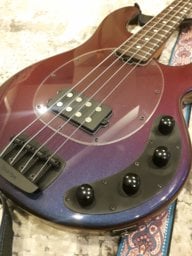
Ever since I saw a video of I think Geddy Lee a few years ago saying he just puts all his knobs up and eqs at the amp, Ive just run my bass all knobs up. Kinda realizing this might not be a great idea for gain staging reasons? Or maybe it is? Idk what do you guys think?
P.s. wasn't sure if this was the right place for this thread.
 
There is no right or wrong with amp settings because there are at least four factors at play: 1) how the amp is voiced along with its controls, 2) the electronics in the instrument/pedals and how they interact with the amp, 3) the physical interaction between you and the instrument, and 4) your own preference for how you should sound.

The amp itself will have a specific voice that is baked in by the manufacturer based on their own goals. This could be due to preferences of the amp designer, based on market research for a target customer, or perhaps to meet the needs of an artist that works with that company. The controls can vary widely across amps even in products from the same brand. Some only cut (attenuate) the signal while others boost it and each control (bass/mid/treble/etc...) will be centered around a particular frequency which differs quite a bit. Also, some controls interact with electronics in ways that aren't intuitive such as how the mid-range and gain is done in an Aguilar Tone Hammer or how low-end is added when boosting gain in various Marshall amps.

Another consideration is how far you can push an amp before it starts to distort or clip. Again this goes back to the overall design goals. The Ampeg SVT can be pretty clean at low volumes but starts to get the "dirt" or "grit" that people love as you crank it. A Hiwatt on the other hand will make you deaf before you get heavy saturation. The electronics in the signal chain also play a role since you can add things like a on-board preamp (active pickups) or use pedals which can push the amp harder than just the instrument alone. And don't let passive pickups fool you. I have some basses with passive pickups that are almost as hot as an active circuit.

The last part is really the most critical. How you play and your own sonic goals will completely dictate what you should be doing. Are you wanting something super loud with clear and articulate response? Or do you need an ultra fuzzy monster that can be tamed in your bedroom at 2am without having the police show up? If you want to sound like John Entwistle you'll need a lot of treble and learn how to percussively attack the strings like he did. I'm not sure what the secret sauce would be for Geddy Lee but a lot of it will come down to his hands so you'll have to figure out how to adapt your technique to be more like his while also paying attention to how this sounds through the gear you have. Or maybe you just want to do you own thing so some experimentation is needed.

Anyway, the TLDR of all of this is pretty simple: just sit down with your amp and start turning the knobs. Make sure to turn them all the way from lowest to highest. Pay attention to how each control individually affects your tone, volume, and overall sound. Pay attention to how the controls interact with each other and try different combinations, even if they don't sound exactly like what you want. Keep doing this until you play more than you turn knobs. That's when you know you got it right.

As they say: "If it sounds good, it is good."
 
There is no right or wrong with amp settings because there are at least four factors at play: 1) how the amp is voiced along with its controls, 2) the electronics in the instrument/pedals and how they interact with the amp, 3) the physical interaction between you and the instrument, and 4) your own preference for how you should sound.

The amp itself will have a specific voice that is baked in by the manufacturer based on their own goals. This could be due to preferences of the amp designer, based on market research for a target customer, or perhaps to meet the needs of an artist that works with that company. The controls can vary widely across amps even in products from the same brand. Some only cut (attenuate) the signal while others boost it and each control (bass/mid/treble/etc...) will be centered around a particular frequency which differs quite a bit. Also, some controls interact with electronics in ways that aren't intuitive such as how the mid-range and gain is done in an Aguilar Tone Hammer or how low-end is added when boosting gain in various Marshall amps.

Another consideration is how far you can push an amp before it starts to distort or clip. Again this goes back to the overall design goals. The Ampeg SVT can be pretty clean at low volumes but starts to get the "dirt" or "grit" that people love as you crank it. A Hiwatt on the other hand will make you deaf before you get heavy saturation. The electronics in the signal chain also play a role since you can add things like a on-board preamp (active pickups) or use pedals which can push the amp harder than just the instrument alone. And don't let passive pickups fool you. I have some basses with passive pickups that are almost as hot as an active circuit.

The last part is really the most critical. How you play and your own sonic goals will completely dictate what you should be doing. Are you wanting something super loud with clear and articulate response? Or do you need an ultra fuzzy monster that can be tamed in your bedroom at 2am without having the police show up? If you want to sound like John Entwistle you'll need a lot of treble and learn how to percussively attack the strings like he did. I'm not sure what the secret sauce would be for Geddy Lee but a lot of it will come down to his hands so you'll have to figure out how to adapt your technique to be more like his while also paying attention to how this sounds through the gear you have. Or maybe you just want to do you own thing so some experimentation is needed.

Anyway, the TLDR of all of this is pretty simple: just sit down with your amp and start turning the knobs. Make sure to turn them all the way from lowest to highest. Pay attention to how each control individually affects your tone, volume, and overall sound. Pay attention to how the controls interact with each other and try different combinations, even if they don't sound exactly like what you want. Keep doing this until you play more than you turn knobs. That's when you know you got it right.

As they say: "If it sounds good, it is good."

As much as I appreciate your take on tone, my question is more in regard to gain staging. I know what tone I'm going for mostly and have that dialed in. Just don't want to be clipping my very first pedal w my signal before it even reaches my 2nd pedal, and in turn before my 3rx pedal etc. unless intentionally. I run about 8 pedals ATM so just curious about the gain staging cons of a hot signal I guess.
 
For years I ran my (Precision) bass with volume and tone dimed, and it worked fine. With regards to tone, remember that - at least with passive electronics - "dimed" means "no attenuation."

Nowadays I will roll both off a little. That gives me room to turn up easily if needed.
 
Most pedals have a "Level" control for output. You can control that way. Or, put a volume pedal at the end of the chain (that's my solution). There's really no "right" way to handle it. Use what you like and fits your tone goals.
 
For years I ran my (Precision) bass with volume and tone dimed, and it worked fine. With regards to tone, remember that - at least with passive electronics - "dimed" means "no attenuation."

Nowadays I will roll both off a little. That gives me room to turn up easily if needed.

What does active pre amp do? Attentuate is like a roll off kinda thing almost like volume for frequency right?

Most pedals have a "Level" control for output. You can control that way. Or, put a volume pedal at the end of the chain (that's my solution). There's really no "right" way to handle it. Use what you like and fits your tone goals.

I know I have levels and all that on my pedals; my question is how my active pre amp dimed might be clipping or otherwise effecting/affecting signal via proper gain staging.
 
What does active pre amp do? Attentuate is like a roll off kinda thing almost like volume for frequency right?


I know I have levels and all that on my pedals; my question is how my active pre amp dimed might be clipping or otherwise effecting/affecting signal via proper gain staging.

My only advice is to use your ears. If your amp has a clipping light, that will help. Remember also that Geddy was referring to diming the controls on a passive bass. That's a different thing than an active pre.
 
Ever since I saw a video of I think Geddy Lee a few years ago saying he just puts all his knobs up and eqs at the amp, Ive just run my bass all knobs up. Kinda realizing this might not be a great idea for gain staging reasons? Or maybe it is? Idk what do you guys think?
P.s. wasn't sure if this was the right place for this thread.

If you have a passive bass (no battery) like Geddy does, then having all the knobs dimed is the default in a way, you're not boosting anything. That's how a lot of people play passive basses, including me. The output with all the knobs dimed is the standard bass guitar output level.

If you have an active bass and you dime the tone controls (bass and treble) you're adding a lot of output volume. The signal will be a lot hotter than if you have the tone controls flat. It's possible, even likely, that at least one of your pedals won't be able to handle that output level. Especially if you dime the bass knob.
 
So I'm guessing that maybe taking down the knobs a bit might be a good idea to keep the work the other pedals do to compress or obtain the same level to a minimum.

My only advice is to use your ears. If your amp has a clipping light, that will help. Remember also that Geddy was referring to diming the controls on a passive bass. That's a different thing than an active pre.

Again I'm not really referring to tone as much as clipping in general, and why you'd not want it at certain parts of your chain or why you'd want it at others instead. You're right a clip light is great for those instances. I have none anywhere on my current rig. Lol. Also so how does the active differ from passive? Like what does active do if passive attentuate only?
 
If you have a passive bass (no battery) like Geddy does, then having all the knobs dimed is the default in a way, you're not boosting anything. That's how a lot of people play passive basses, including me. The output with all the knobs dimed is the standard bass guitar output level.

If you have an active bass and you dime the tone controls (bass and treble) you're adding a lot of output volume. The signal will be a lot hotter than if you have the tone controls flat. It's possible, even likely, that at least one of your pedals won't be able to handle that output level. Especially if you dime the bass knob.

If its a passive bass, sure. Active preamps are another story. You should always turn your volume on the bass all the way up if its a master volume. Especially when using effects and a compresser

These are super helpful answers thank you
 
  • Like
Reactions: matante
What does active pre amp do? Attentuate is like a roll off kinda thing almost like volume for frequency right?


I know I have levels and all that on my pedals; my question is how my active pre amp dimed might be clipping or otherwise effecting/affecting signal via proper gain staging.

What preamp do you have in your bass? You might be able to look up the specs and see exactly how much db the boost with each band is adding to your signal. In terms of gain staging, by boosting all of your bands on the preamp you are sending a much hotter signal to your pedals. How it affects the pedals in the chain is going to depend on what pedals you have. For instance, a compressor is going to be compressing more of the signal if the signal is hot going in. A overdrive is going to sound more overdriven with a hotter signal. If the signal coming out of your amp sounds clean enough for you then I think what you are doing is fine.
 
  • Like
Reactions: Lenny JG
Again I'm not really referring to tone as much as clipping in general, and why you'd not want it at certain parts of your chain or why you'd want it at others instead. You're right a clip light is great for those instances. I have none anywhere on my current rig. Lol. Also so how does the active differ from passive? Like what does active do if passive attentuate only?

See what @matante wrote. The tone controls in a passive circuit cannot boost anything - only cut. So having the tone control all the way "on" is equivalent to having the pickup directly wired to the amp's input.

The tone controls in an active circuit actually boost frequencies, so, diming the tone or treble knob will boost high frequencies - AND the overall signal strength.

In regards to gain staging / clipping: @joelns advises to use your ears. Clipping is audible (you don't need no stinkin' light). Amps with lights that indicate clipping often have "clipping protection" - circuitry that attenuates the signal. Unfortunately, the effect of clipping protection is also audible and can defeat your ability to play with dynamics.
 
Overdrive, distortion, fuzz, etc., pedals clip. That's how the "dirt" sound is produced. There are probably some other pedals that do it as well. Otherwise, amp clipping is factor of "hot" the input into the amp's preamp circuit is, followed by how high the volume is. If you like the OD, distortion sound, add an appropriate pedal or increase the level going into the amp, or crank up the gain or input knob on your amp (as appropriate). A pre-amp pedal will also increase the level going into the amp.

Use your ears as a guide. There is no right answer to this. There's only the tone you're after.

If that doesn't answer your question, you might try phrasing it differently as we must not understand the type of answer you're looking for.
 
  • Like
Reactions: AGCurry
See what @matante So having the tone control all the way "on" is equivalent to having the pickup directly wired to the amp's input.
High end still bleeds to ground at 'full'. A load is still put on the pickups based on the pots value - 250K, 500k, 1 Meg pots etc. Respectively brighter and brighter as the resistance changes for each pot value. But there are 'no load' pots which basically take themselves out of the circuit at 'full'.
 
  • Like
Reactions: AGCurry
Overdrive, distortion, fuzz, etc., pedals clip. That's how the "dirt" sound is produced. There are probably some other pedals that do it as well. Otherwise, amp clipping is factor of "hot" the input into the amp's preamp circuit is, followed by how high the volume is. If you like the OD, distortion sound, add an appropriate pedal or increase the level going into the amp, or crank up the gain or input knob on your amp (as appropriate). A pre-amp pedal will also increase the level going into the amp.

Use your ears as a guide. There is no right answer to this. There's only the tone you're after.

If that doesn't answer your question, you might try phrasing it differently as we must not understand the type of answer you're looking for.

I get that. I have 2 distortions and compressors always on in my chain as well as eqs, I know that increasing my gain from one pedal to another can induce clipping and that sometimes it's desirable or not, I was wondering specifically about dining the controls on the bass guitar itself. A couple people here definitely answered my question mostly. TBH I've been playing active bases for 15 years so I guess I didn't realize the real difference between that and a passive bass; so when I heard that I kind of just figured it went for all bases LOL. I sure am glad this forum is here. :laugh: