Maybe this subject is being taken a little too far? 
Going from bass to quantum physics is a tell tale sign! :scowl:
Going from bass to quantum physics is a tell tale sign!
:scowl:
TalkBass has been independent since 1998. Add your voice.
Create a free account to reply to discussions, view embedded media, and browse with fewer display ads.
Join free Log in
Want zero display ads or expanded classifieds tools? Compare plans.
:scowl:
Maybe this subject is being taken a little too far?
Going from bass to quantum physics is a tell tale sign!
 my apologies if my post is a little verbose--i'm just trying to clarify without the benefit of drawing

Maybe this subject is being taken a little too far?
Going from bass to quantum physics is a tell tale sign!



The old Fenders however did have flatter fretboard radius' and did allow for lower actions. It's one of the reasons
why Vintage Fenders are so highly prized.
I thought vintage spec Fender's had rounder a generally rounder neck radius than modern Fenders?
Sorry for the long post. 
This discussion is like masturbating with a cheese grater. It's mildly amusing at first, but becomes painful very fast.
Now that's damn funny! And true.
3mm action for a B string is a medium-med/high action, sorry.
1,5/2 mm it's more like very low action.
This is Exactly what I've had done to my Marcus Miller V and there's no buzzing whatsoever now.The bass you play has nothing to do with how long your strings last. Sadowsky basses offer a lot more in terms of quality and playability. I would not buy one without playing it. You might hate the way it sounds. You could always take your bass to a luthier and have the frets leveled and crowned and have a bass that plays wonderful. That would save you about 3+ grand.

Dude, did you even bother to read what I wrote before writing this?
This statement is patently false. It could have lots of things going on and one of the most likely are the frets IME.I get the thing about not being able to get a low action on a Fender. Its got nothing to do with the need for a fret-leveling.
All things being equal, this might be true. I'm not an expert.I never said a fret-leveling wouldn't help a bass that needed it. However for two new basses, with the only difference between them being the fretboard radius, the one with the larger radius will achieve a lower action.
You might have a point that Fenders suck so much that they all need a fret job right out of the factory though.
 --props for conveying this without a diagram, ha
OK, here goes.
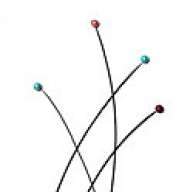
What I meant by "circular" was the "generic" circle--generally round. The strings actually vibrate more like an oval than a perfect circle. The alignment of the elongated portion of the distance traveled within that oval is dictated by how the string is plucked. Therefor while the string is plucked generally parallel to the fretboard, it isn't plucked exactly perpendicular to the tangential line drawn from the center of the fret board radius circle through the string.
Do the same thought experiment you proposed earlier and instead of imagining the string traveling in a perfect circle, imagine a slightly elongated oval. Overlay that oval on the fretboard so that an imaginary line running through the elongation aligns with the direction the string would be plucked and it should illustrate what I was trying to say.
I understand that action height is mainly determined by technique, and that a very careful player, or one with a very light touch, may be able to achieve an action so low that this movement is completely negligible. However, for a normal touch (and even for the before-mentioned player, although the difference in action he could achieve would be virtually impossible to feel) it is mechanically necessary for the elongated portion of the string vibration on the G side of the neck to be drawn in to a "raised" portion of the fret toward the center of the neck--although, in reality the fret isn't raised there at all. It only seems that way from the perspective of the strings direction of travel.
Likewise, the E string side of the neck will react in the opposite way (toward the center from the other direction) due to the mechanics of how the hand works in relation to the strings (generally although this is much more dependent on the technique the player employs).
The way the hand must move, and how it dictates the fingers strike the strings, is what causes the difference in achieved action heights. The hand doesnt act any differently depending on the radius of the board, but the difference in the board causes an obstacle for the string's vibration that would not be there if it was flatter.
The difference in how the fingers attack the strings, from the G string side to E string side of the neck, is also why the E string side can generally due with a proportionately smaller increase in action to compensate for an increased fretboard curvature. The imaginary line drawn through the elongated portion of the oval caused by the pull of the string is generally closer to being perpendicular to the imaginary line drawn from the center of the fretboard circle on that side than on the G string side.
Now, this all becomes kind of irrelevant the larger the fretboard radius is. After about 9 ¼ inches, the achievable action is close to - if not - the same no matter how large you go. However since a lot of Fenders have fretboard radii this size or smaller, I think it explains why they cant be set up with the kind of low action a bass with a very flat fretboard can. A view that seems to have been verified by setting up many Fender, and non-Fender, basses throughout the years.
Shred away.
i see what you are saying here, thanks for the explanation
if i'm understanding correctly, key to the issue is the idea that one doesn't necessarily pluck a string parallel to the tangent of the fret radius, and this elliptical movement can collide into the portion of the fret nearer the center of the fret, or crown, without necessarily contacting the fret at a point directly under the string on axis with the center of the fret radius--this makes sense to me
)There are a lot of variables to this though. Depending on which strings you use; whether they are flexible or not, the inherent tension, how you pluck the string, how hard you pluck it etc.
I wouldn't take either position as the gospel until you have first hand experience.
Dan

What I meant by "circular" was the "generic" circle--generally round. The strings actually vibrate more like an oval than a perfect circle. The alignment of the elongated portion of the distance traveled within that oval is dictated by how the string is plucked. Therefor while the string is plucked generally parallel to the fretboard, it isn't plucked exactly perpendicular to the tangential line drawn from the center of the fret board radius circle through the string.
I hate it when someone posts a thread and gets the "Look at the forum search" crap. Maybe people want to be in an active dialogue about a topic and not just read what someone else has said in the past. New members come on board everyday and they may have a perspective that was not present in the older topics found under the search. Participate in the new discussion or not, but please do not tell people to search for it. It comes across as rude and may have a negative effect on new members or the younger bassists on this forum. Just my .02...
This has been discussed a thousand times. Respect the bandwidth. Do a search.


