I use some compression on my Darkglass X Ultra, but as it compresses only the low passed signal, I dont lose too much dynamics on the mids. I also have EBS Multicomp and I think it adds nice color to the sound but dont feel like I need it with the X Ultra.

Enjoy the benefits of a premium membership!
Upgrade Account
-
TalkBass has been independent since 1998. Add your voice.
Create a free account to reply to discussions, view embedded media, and browse with fewer display ads.
Join free Log in
Want zero display ads or expanded classifieds tools? Compare plans.
You are using an out of date browser. It may not display this or other websites correctly.
You should upgrade or use an alternative browser.
You should upgrade or use an alternative browser.
Do you consider a compressor pedal a "must have"?
- Thread starter ArcadeNate
- Start date
More options
Who Replied?I have used them here and there. The only one I really liked was the Boss CS-2. It seemed pretty transparent, but then again I was playing only with a pick when I used it so the sound was already kind of muted and compressed sounding.
Check to see how many are for sale on Ebay or Reverb, and that may give you an idea of whether you need one or not.
I can’t stand them now. I have tried them and then I just turn them off.
Check to see how many are for sale on Ebay or Reverb, and that may give you an idea of whether you need one or not.
I can’t stand them now. I have tried them and then I just turn them off.

I own one but nah.
Not when you run two overdrives through a tube amp!
But, I almost always compress bass post-recording.
Not when you run two overdrives through a tube amp!
But, I almost always compress bass post-recording.


If it's a good soundman.. They already comp the signal.. The one on the board is for the bad sound Men.. Lol if they say they know exactly what good bass sounds like.. Beware
For me they are not a "must have",
but...
I have 6 of them, and I think they are a lot of fun.
Most used in a band setting: Hartke Amp Compressor, Boss LM-2B and a modded CS3.
At home: the spectracomp, amazing pedal with unlimited options.
TC Electronic | Product | SPECTRACOMP BASS COMPRESSOR
but...
I have 6 of them, and I think they are a lot of fun.
Most used in a band setting: Hartke Amp Compressor, Boss LM-2B and a modded CS3.
At home: the spectracomp, amazing pedal with unlimited options.
TC Electronic | Product | SPECTRACOMP BASS COMPRESSOR
No, I don't think they are "must have" pedals, but a lot of people like them. They work like others have described and are used frequently live and in the studio.
I have one but I don't use it at all because I just don't really rate the one I have, it an old Peavey CSR-2 and I think it's meh (sorry if you're a fan of that one)
I am looking forward to the Source Audio Ultrawave pedal that will be a future release, compressor built in.
I have one but I don't use it at all because I just don't really rate the one I have, it an old Peavey CSR-2 and I think it's meh (sorry if you're a fan of that one)
I am looking forward to the Source Audio Ultrawave pedal that will be a future release, compressor built in.
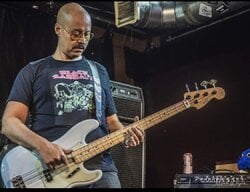
Not any more since I no longer play with that whiney guitarist that cried if I pulled off a note on my G string....

I have an MXR Bass Compressor on one board and an Ampeg Opto Comp on the other. Sounds really nice.

Like any other effect, compressors are a tool. Whether you need/want that tool depends on your application and your goals. Like with any tool, you should consider what job it is that you want done, and decide if a compressor is the right tool for the job. Just because there are other players here who say they never use one (or always use one) doesn't mean that's what you should do; you might not have the same job in mind that they do.
For instance, some (maybe many) compressors color the sound in some way, and if you want that coloration, then of course you'll want one.
Even without obvious coloration, some songs are recorded with an enormous amount of compression and if you're interested in getting that sound, you'll need a compressor.
And this thing about compressors only being to make up for bad technique... bunk. Listen to Tony Levin's bassline on "Sledgehammer"—it's compressed super-hard. (Apparently it was compressed on the way in, and then compressed again in post.) Is Tony Levin's technique bad, such that it needs to be covered up? Uhh, I'm going to go with "no" on that one. The compression is there because the goal was a super-compressed sound. (Personally I love this bassline—terrific fun to play, especially the last third of the song after the second chorus—and I put on a compressor for it, drop the threshold low and go 10:1. It just sounds wrong if not crazily compressed. It'd be like playing "For the Love of Money" without a phaser. I mean, sure, you can, but it won't be quite right, will it?)
There are other applications as well. As has been said, lots of engineers (FoH or recording) will compress the bass regardless, and you may want to take control of that rather than leaving it entirely to the engineer. Lots of other examples throughout the thread—but maybe none of those apply to you. If not, then nope, you don't need a compressor.
For instance, some (maybe many) compressors color the sound in some way, and if you want that coloration, then of course you'll want one.
Even without obvious coloration, some songs are recorded with an enormous amount of compression and if you're interested in getting that sound, you'll need a compressor.
And this thing about compressors only being to make up for bad technique... bunk. Listen to Tony Levin's bassline on "Sledgehammer"—it's compressed super-hard. (Apparently it was compressed on the way in, and then compressed again in post.) Is Tony Levin's technique bad, such that it needs to be covered up? Uhh, I'm going to go with "no" on that one. The compression is there because the goal was a super-compressed sound. (Personally I love this bassline—terrific fun to play, especially the last third of the song after the second chorus—and I put on a compressor for it, drop the threshold low and go 10:1. It just sounds wrong if not crazily compressed. It'd be like playing "For the Love of Money" without a phaser. I mean, sure, you can, but it won't be quite right, will it?)
There are other applications as well. As has been said, lots of engineers (FoH or recording) will compress the bass regardless, and you may want to take control of that rather than leaving it entirely to the engineer. Lots of other examples throughout the thread—but maybe none of those apply to you. If not, then nope, you don't need a compressor.

For years, I didn't use one... straight into my Trace Elliot head and cab.
But, over the course of a few months of gigging a couple of years back, I found myself wondering why I had to work at being careful my sound and 'push' in the mix didn't vary too much, in the course of very varied cover sets that lasted for 3 hours per night. "Why am I having to think about this, as well as everything else?" I wondered...
I'm well versed in the instrument, being playing live for decades and watch my right hand technique... perhaps just occasional 'enthusiasm' in the heat of the moment, may have been to blame... plus, I did switch between finger-style and plectrum a lot.
Suddenly realised I hadn't been using my faithful compression pedal (Aphex Punch Factory... sounded amazing but died after heavy use for a year)... completely forgotten to use one after the last one failed...
Tried the excellent EBS Multicomp and fell in love... just a subtle compression, but with a nice vintage flavour "tube" switch that really helped out my Trace head!
Now own a Mesa Boogie Walkabout Scout combo, and still use the EBS compressor (with tube switch engaged) as an 'always on'... just a very light setting. It gives me peace of mind that I don't have to overthink my technique, given I use vintage 70s instruments (that are... ahem... a bit 'nuanced' in some of their use!) and may switch from fingers to plectrum.
That's all I recommend them for... a subtle evening up of any "spikes" from a passive instrument... or the player (!) in a live setting. Peace of mind for me... and I love the more vintage colour it adds to my tone.
But, over the course of a few months of gigging a couple of years back, I found myself wondering why I had to work at being careful my sound and 'push' in the mix didn't vary too much, in the course of very varied cover sets that lasted for 3 hours per night. "Why am I having to think about this, as well as everything else?" I wondered...
I'm well versed in the instrument, being playing live for decades and watch my right hand technique... perhaps just occasional 'enthusiasm' in the heat of the moment, may have been to blame... plus, I did switch between finger-style and plectrum a lot.
Suddenly realised I hadn't been using my faithful compression pedal (Aphex Punch Factory... sounded amazing but died after heavy use for a year)... completely forgotten to use one after the last one failed...
Tried the excellent EBS Multicomp and fell in love... just a subtle compression, but with a nice vintage flavour "tube" switch that really helped out my Trace head!
Now own a Mesa Boogie Walkabout Scout combo, and still use the EBS compressor (with tube switch engaged) as an 'always on'... just a very light setting. It gives me peace of mind that I don't have to overthink my technique, given I use vintage 70s instruments (that are... ahem... a bit 'nuanced' in some of their use!) and may switch from fingers to plectrum.
That's all I recommend them for... a subtle evening up of any "spikes" from a passive instrument... or the player (!) in a live setting. Peace of mind for me... and I love the more vintage colour it adds to my tone.

Definitely no, you do not need one. I have two at home and have had a few gigs out of a thousand were I thought I could have used a little leveling. I do not use effects or a compressor as an effect. But I have always been as straight in to the amp and set flat kind of guy. The few times I've tried them at gigs, they sound OK at the beginning but as the night goes on and I start digging in more, the compressor kicks in harder and I get lost in the mix. To me it is not really doing anything, or should be, to my tone.
I guess the other thing is I spent as long time getting a even attack in my playing.
Yeah, I dont believe You NEED one. I never used one before, I believed my technique to be really good, but played with a band,the rhythm guitarist(parttime bassist) suggested I needed to use a compressor,I was surprised, made me think my technique wasnt as good as I thought! he lent me his compressor,saying all Bass players need to use one. okay.I 'd give it a shot. I didnt want to offend this seasoned veteran. I didnt notice anything, I was expecting to hear a big difference, nothing. no Huge tone difference, I asked my Good friend (A Tone chaser) if he could hear a difference. He said "No,your fine, Ignore that dude", hes got poor technique, probably jealous." Just what I thought. He coveted my gear, always wanted to play my Frankenbass, and had to comment on my playing or remind me of the song structure,He was real annoying! he even got irritated when I fiddled with the settings on his compressor pedal, I was just trying to figure out what the knobs did. he did kind of insist I use it. after the gig we were played together, I gave it back & never used one since, no one ever mentions using one, & i haven't missed it either. I think if you need one they help a lot, so you tell every one they're essential! if you dont you never hear what they do!

JeezyMcNuggles
Inactive
- Feb 23, 2018
- 14,723
- 20,970
- Disclosures
- I suck, but nobody really notices
Nope, not necessary at all. Although, I have one in front of my tube amp. Only pedal I plug in to. Compression one one knotch, release on one knotch. It catches the accidentals, and helps keeps my amp amp from driving itself. When I want the drive, the compressor is on so low that I can by playing harder.I have gigged off and on for many years and have never used a compression pedal. But from what I understand, they even out volume variance under normal playing conditions. If that's true, it seems like it could turn a good sound into a great sound. Do most pros use these? (I don't consider myself a pro based on the dives I've played.) Are these must haves? Is the difference noticeable at a small club type setting?
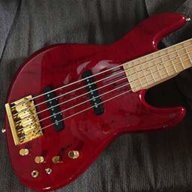
Cali76cb user here. I never play without it.
I use just a minimum amount of compression and blend that with the uncompressed signal.
Got the attack/release set so that I have more punch in my tone.
Also the sound just becomes thicker and more warm.
All my bassses sound better through this comp in the mix.
People who state 'learn to play better' are really saying they don't know ****.
I use just a minimum amount of compression and blend that with the uncompressed signal.
Got the attack/release set so that I have more punch in my tone.
Also the sound just becomes thicker and more warm.
All my bassses sound better through this comp in the mix.
People who state 'learn to play better' are really saying they don't know ****.

Hummergeist
Commercial User
- Jul 21, 2020
- 1,269
- 3,084
- Disclosures
- Tutorials, reviews, and interviews for Future Publishing.
I use them all the time - with bass and with live electronic instruments. But just a tad, no need to overdo it. There are of course compressors which impart a sonic character of their own, which is a different category to the 'level management' tools.

i've only ever used one to mellow out the insanity from my old FX25 envolope filter, after it destroyed more than one speaker..
i like 'em on guitar, but for bass i don't find that it generally helps the tone. some can really elevate things, but just not to my taste I guess.
i like 'em on guitar, but for bass i don't find that it generally helps the tone. some can really elevate things, but just not to my taste I guess.

The "if you have good technique you don't need a compressor" argument only applies to a certain spectrum of techniques. If you play with a consistently light touch, then dynamics are super easy to control. If your tone comes from a more aggressive technique, then a compressor might be more useful. If you go around telling everyone that they should all play without a compressor and using a light touch is the best and only proper technique, then I'm not answering the door when you ride up on your bicycle.
Definitely not a "must have" for me; in fact, I've never owned a compressor pedal. Back when most of my live performances were pop/rock-oriented, especially if they involved any slap/pop, I had a line-level studio compressor in my onstage rack. But as I started playing more jazz shows I found even modest amounts of compression were interfering with the sort of micro-dynamics the music demanded, so I stopped using one. And that was over 20 years ago!


