I'm going to talk a bit more about Donna Lee because I'm really passionate about this stuff, and that's a guilty pleasure of mine. I guess it's hard to appreciate Jaco's rendition of the tune without being familiar with it and its history. The tune is a bebop melody that was written over the chords of a popular song of the early 20th century Back Home Again in Indiana. Bebop players (Charlie Parker & co) invented a knew melodic vocabulary, that relied on fast playing, busy melodies, extended and altered arpegios, chromaticisms and ornementations. Their preferred method was to take popular tunes of the time, tunes that traditionnal jazz musicians already used as a basis for soloing, and put their new vocabulary on the chord changes of these tunes. For a listener of that time, the chord changes would sound familiar, yet the melody avant-gardist. Nowadays it would be similar to taking a Taylor Swift tune and put some shredding arrangement over it. In fact, some modern jazz musician do just that, check Justin Biebe'rs "Baby" by Dirty Loops :
For a today listener, there already is a barrier, in that these tunes that serve as basis are no longer popular, so the chord changes may not sound as familiar as they were in 1940. So if one is interested, he must first familiar itself with that Indiana song. Here are a few versions :
Early vocal rendition of the song (traditionnal american), the chorus (the only part used in jazz renditions) starts at 0:40 :
Typical 1940s' vocal group rendition (chorus starts at 0:40) :
Traditionnal jazz rendition (Louis Armstrong) :
A sung rendition, while being arranged in a typical bebop fashion. The song is easily recognizable in the sung exposition, and during the guitar solo you can see how bebop players would envision improvisation over the tune :
In a totally different style, modern sung version, I don't know how to call this genre (american trad singing ?)
Note that I absolutely hate this style, but it's still interesting to see the different reaches this song has.
Now let's go to Donna Lee. As I said previously, the chords changes are exactly the same, however the melody was replaced with a more convoluted one, using all bebop idioms. The famous Charlie Parker version :
If you are now familiar with the Indiana tune, you can try to sing along its melody over the head played by Charlie Parker (not an easy exercise, I just tried myself ^^).
Before dwelving into Jaco's tune, I think it's also important to familiarize itself with various versions of this tune. Here's a somewhat more "relaxed" approach of the tune :
And there, a blazing fast version ! For me it's totally joyous to listen to this, that's what I dig about bebop.
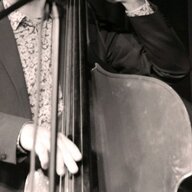
For a change of instrument, here it's played on guitar and upright bass :
(btw, Niels Henning Orsted Pederson on upright bass, who is I believe the fastest upright bass player of all time). The Donna Lee tune is a testimony of virtuosity whatever your instrument. I guess Jaco started the trend to play it on any instrument to demonstrate your technical ability.
And now, I think that when you are really familiar with Indiana and Donna Lee, hearing Jaco's tune sound totally different, because it doesn't exist in a vacuum anymore.
Jaco Pastorius - Donna Lee
Finally, to put that into historical context, Jaco's Donna Lee is the opening track of his debut album. To me, the song is in part here to make several statements :
- That he is a virtuoso, able to play this tune that was still considered to be exclusively for horns, guitar and piano players.
- That he knows the jazz tradition. Like "ok guys, let me play this traditionnal bebop tune as a bass solo, now I'm gonna play a bunch of fusion stuff and no one can put my jazz knowledge into question". It's a big thing among jazz musician, that you may play modern stuff but you need to know the tradition as well to be respected. He tells that he's not some guy coming from a rock or funk background, but a true jazz musician, whatever he might play next. I think the song is not made to cater to a broad audience, but to jazz educated listeners and his fellow jazz musicians.