
pickups has more effect.. but I'll always listen to an electric bass unplugged.. before buying it if i canthe answer is "sometimes", but not nearly so much as with acoustic instruments.

Enjoy the benefits of a premium membership!
Upgrade Account
-
TalkBass has been independent since 1998. Add your voice.
Create a free account to reply to discussions, view embedded media, and browse with fewer display ads.
Join free Log in
Want zero display ads or expanded classifieds tools? Compare plans.
You are using an out of date browser. It may not display this or other websites correctly.
You should upgrade or use an alternative browser.
You should upgrade or use an alternative browser.
More options
Who Replied?
I'm sure in a quiet private studio playing solo there is a noticeable difference, but bangin' away on stage that difference disappears real quick.
Yup. This. Any tonal differences you may hear in your studio/bedroom mean very little in a live setting IMHO. I'm sure body wood will make some tiny differences in tone, but you do have a tone knob, as well as an EQ on your amp, and maybe even an onboard preamp, so all you're really doing is moving the tonal profile a smidge here and there from what you'll likely be augmenting with dials and gadgets down the chain.
IMHO again, fretboard wood matters most, but mostly in terms of feel and playability. That's where "rubber meets road" so to speak. Find out what kind of neck/fretboard woods feel good to your fretting hand. That's where I get the most value for the distinctions. Body woods are mostly cosmetic to me. YMMV.


Can't say a fretboard wood adds to the feel for me. My fingers touch the strings, not the board beneath them.Yup. This. Any tonal differences you may hear in your studio/bedroom mean very little in a live setting IMHO. I'm sure body wood will make some tiny differences in tone, but you do have a tone knob, as well as an EQ on your amp, and maybe even an onboard preamp, so all you're really doing is moving the tonal profile a smidge here and there from what you'll likely be augmenting with dials and gadgets down the chain.
IMHO again, fretboard wood matters most, but mostly in terms of feel and playability. That's where "rubber meets road" so to speak. Find out what kind of neck/fretboard woods feel good to your fretting hand. That's where I get the most value for the distinctions. Body woods are mostly cosmetic to me. YMMV.
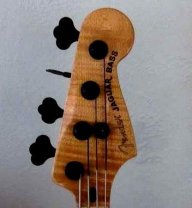
Hmm.. the question at hand...You can't go wrong with ash, alder, mahogany, maple, or poplar, they get used a lot, with good success, there are lots of other woods that work well too. Maple and mahogany, (generally) weigh more, enough to make a difference in the instrument's weight, while alder and ash vary more, from piece to piece, they are normally a bit lighter, poplar is lighter still, it's the least expensive, and is still strong enough to hold up. If weight isn't any issue, any of those will work well for you, and hold up well. Though I'm very sure different body woods have some affect on overall sound, it isn't enough to make one outstanding, or very poor for a particular type of music, or style of playing. Basswood is another wood used a lot, it works, it's very light , but more easily damaged, actually very easily.

After fiddling with many basses and bass configurations, my experience has been that wood absolutely does matter. I can tell the difference. But it's only part of the equation. Of equal importance, if not more (in my experience), is the pickup placement. Pickup placement is huge!

Staying totally out of the tone argument, I've found no difference in woods regarding wear and tear. With care, they all stay great, with normal use, they all get dinged, with rough play, they all get beat up. I'd just go with something that sounds and looks great to you.what body wood, with care, holds up best to standard wear and tear
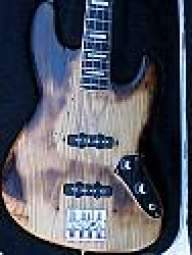


what did he omit?I watched the entire thing, and I have a degree in the relevant field (physics). My comment was one part praise because the guy doing the video wasn't wrong about the bulk of his presentation about physics... and one part critique that he (intentionally or not) omitted a relevant possibility to win the argument. Opening the video with a statement amounting to 'if you disagree with me, you disagree with science' was a bit over the top, but mehh.

Live is when I notice a bass' tonal shortcomings the most. I've had more than one bass that sounded amazing in my living room but didn't work at all on stage - not even with all of the EQing in the world. I always find that suggestion (that the details, subtle or not, of a bass' tone cease to matter in live settings) odd.Yup. This. Any tonal differences you may hear in your studio/bedroom mean very little in a live setting IMHO. I'm sure body wood will make some tiny differences in tone, but you do have a tone knob, as well as an EQ on your amp, and maybe even an onboard preamp, so all you're really doing is moving the tonal profile a smidge here and there from what you'll likely be augmenting with dials and gadgets down the chain.
IMHO again, fretboard wood matters most, but mostly in terms of feel and playability. That's where "rubber meets road" so to speak. Find out what kind of neck/fretboard woods feel good to your fretting hand. That's where I get the most value for the distinctions. Body woods are mostly cosmetic to me. YMMV.

If the wood doesn't matter, why not use masonite or plywood? Maybe what what we know is in the instrument or what it looks like influences our self-esteem playing it.
One of my favorite "telecasters" I assembled from left-over parts and an agathis Squier body. Maybe I just did a good job of filling a guitar-shaped space. I don't want to deforest Indonesia but agathis is light, resonant, pretty and hard enough to hold screws.
I've assembled a dozen guitars and basses, mostly from ash. As we know, no two pieces of ash are the same.
Maybe the high end guys really can make wood decisions worth paying for.
Maybe the guys who buy high end basses play so well they can afford them.
One of my favorite "telecasters" I assembled from left-over parts and an agathis Squier body. Maybe I just did a good job of filling a guitar-shaped space. I don't want to deforest Indonesia but agathis is light, resonant, pretty and hard enough to hold screws.
I've assembled a dozen guitars and basses, mostly from ash. As we know, no two pieces of ash are the same.
Maybe the high end guys really can make wood decisions worth paying for.
Maybe the guys who buy high end basses play so well they can afford them.
If the wood doesn't matter, why not use masonite or plywood?
Some companies do/did, most famously Danelectro since the '50s, Jerry Jones, and Moonshine (masonite); and Ampeg Stud series guitars and basses from the mid '70s (plywood). I've had Danos, JJs, and an Ampeg Big Stud. I still have a few Danos and JJs.
Last edited:
Live is when I notice a bass' tonal shortcomings the most. I've had more than one bass that sounded amazing in my living room but didn't work at all on stage - not even with all of the EQing in the world. I always find that suggestion (that the details, subtle or not, of a bass' tone cease to matter in live settings) odd.
I think the point really is that tone solo in a practice/bedroom situation doesn't tell you much about how it sounds in a mix/live. Whether you find that all differences are flattened and tone sounds the same no matter what, or whether you think the live mix is where tone differences get highlighted, the point is that it is the mix of frequencies/room config/soundboard, that will make the bigger determination as to how it sounds, not whether it's an ash or alder body.
And yet basses with the same electronics, pickup placement, string type, design and hardware (all of the same variables except for the wood) can sound different in that mix (different enough that one bass might cut through while the other doesn't).I think the point really is that tone solo in a practice/bedroom situation doesn't tell you much about how it sounds in a mix/live. Whether you find that all differences are flattened and tone sounds the same no matter what, or whether you think the live mix is where tone differences get highlighted, the point is that it is the mix of frequencies/room config/soundboard, that will make the bigger determination as to how it sounds, not whether it's an ash or alder body.
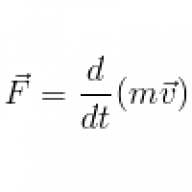
what did he omit?
What he doesn't consider is that the coefficient of energy return may be non-constant across varying frequencies, which is to say maybe the coefficient of energy return is a function of frequency. He never makes a claim on this, he seems to merely not imagine that it's a possibility. It's a possibility, and one that structural engineers have to take seriously.
If energy returned on reflection at the ends (by the fret/nut on one end and the bridge saddle at the other) is not a function of the incident frequency, then the material you make the instrument out of won't impart a harmonic distortion to the string; i.e. he'd have finished proving that the material you make a guitar out of influences only sustain but not tone. This was the thesis of his video: a case made using physics that the material a solid body electric guitar is made of won't impact its tone.
However, wave reflection at a discontinuity is a frequency-dependant phenomenon because materials in the real world don't have constant properties across all frequencies. Specifically to the tonewood debate, solids will have Invalid Link Removed. The dude in the video I referenced fell a little short with his "tonewoods are bunk, physics says so" argument.
All this isn't to say I'm arguing that the construction materials make a difference to the tone of the instrument. (i.e. to argue that the particular materials an instrument is made of impart a harmonic distortion to the vibrating string that would be different for different materials) but it is a sketch of the direction I'd head if I were making that argument.
Frankly, I'm convinced that the materials make a difference, but a less strong difference than the strings and electronics. Give you and me four recordings: ash/maple P, ash/maple J, alder/rosewood P, alder/rosewood J. You and I will pick out the P and the J with good reliability. I bet we'd have no luck picking the wood combos.
Last edited:

The wood on an electric bass does matter depending on how you want to finish it.
Fancy grain for clear, dyed, transparent finishes. Any grain or wood for an opaque finish.
Fancy grain for clear, dyed, transparent finishes. Any grain or wood for an opaque finish.

Body wood debate again!
Aaaaahhhhhhhhh!
(Runs screaming away from thread)
Aaaaahhhhhhhhh!
(Runs screaming away from thread)

Blind tests aren't interesting because the player isn't involved in the loop. It is like asking an audio engineer to compare two different compressors by giving him a few sound clips.
Since people claim they can HEAR the difference, blind test is very interesting. IMO of course.
Latest posts
-

-
 Adding J pup to P bass, should I go 60’s or 70’s spacing?
- Latest: Gianni "Orlandez" Orlati
-
-

-
