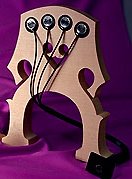
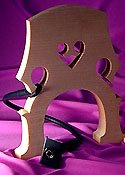
Here's an interesting and useful update for anyone who might still be watching this thread, especially you Chris Fitz. My little AI Ten2Ex / Clarus head combo, while wonderful to schlep around, has been struggling with louder stage volumes a little bit, so I've acquired a Barefaced Two10, which definitely has more punch down low at the higher SPL. It's also voiced quite a bit darker than the AI 2x10, enough so that my JDV trick outlined above was sounding a bit muddy through the JDV > Clarus head > Barefaced 2x10. I also wanted more amplification power and fewer preamp sections in the signal chain, so I've now swapped out the entire rig so it looks like this:
- Same bass, same pickups (**I'm only using the Gage Lifeline now, see below)
- JDV (with drag circuit, which I'm now using Chris), connected via the balanced XLR out to....
- Crown XLS1000, unadorned 1100W power amp, no preamp section at all
- Barefaced Two10
**Here's where it gets interesting: the JDV is now the only preamp in the signal chain, no more Clarus with 1MΩ inputs, just the Crown power amp. I've recently become interested in the topic of pickup loading and input impedance. Interested enough to experiment with the drag circuit on the JDV, and it turns out the input impedance witnessed by the passive piezo pickups makes a huge difference to the tones that come out at the speaker. Conventional wisdom says that a passive piezo should go into the highest possible impedance input, but I'm finding the 10MΩ piezo booster on the JDV makes the Lifeline sound pretty tubby and dark, which seems to be its nature, but is manageable with some EQ intervention. Buuuut, with the piezo booster off and Drag Circuit engaged, the Lifeline sheds all of that dark, tubby character and takes on a lovely, organic and woody timbre that is quite pleasant and very lifelike. Radial says the range of the Drag Circuit is 22kΩ - 500kΩ, but for the signal chain I have in place, the sweet spot is with the Drag about a quarter turn from the bottom. Hard to say what that impedance figure is exactly, but maybe 100kΩ? With the +20dB JDV output line booster engaged, this makes the Lifeline produce a strong, balanced, woody sound with none of the brittle finger and string noise, none of the dark, boomy thwacky attack sounds, just a lovely, musical mid range with some authentic growl that I didn't know the Lifeline was even capable of producing, and just enough bottom to sit below the mix and just a touch of string noise. This is totally contrary to everything I've read about the input impedance passive piezo pickups like. It's worth noting that this only works with this specific signal chain. If I plunk the AI Clarus back in with the 1MΩ mic inputs behind the JDV, all that dark tubbiness returns. I'm sure someone out there knows why that is.
Anyway, the significant information in this update is about changing the input impedance seen by a passive piezo pickup using the Drag circuit on the JDV in a way that shouldn't work on paper, but it does. Makes the Lifeline sound fabulous. FWIW.