• TalkBass has been independent since 1998. Add your voice.
    Create a free account to reply to discussions, view embedded media, and browse with fewer display ads.
    Join freeLog in
    Want zero display ads or expanded classifieds tools? Compare plans.

Drop D Tuning and 5 Strings...

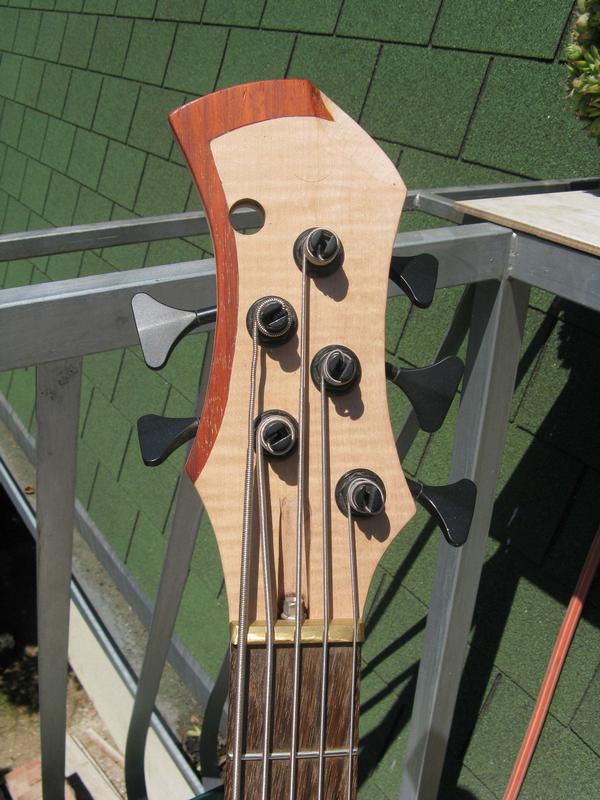
I think most headstocks won't fit a xtender for the E string, you may need some adaptations, I woul consider switching the order that the strings get to the tuners, something like that:
l.jpg

That might open up some little extra room to fit the Xtender.

If a treble side tuner is used for the E string being wound like that, it will turn the same for tuning as a normal bass side tuner and would be easy to de-tune without an extender.

mech
 
XtheDeadPawn said:
With all due respect CLEF DE FA we are a bassist the least cool person in the band as far as crowds are concerned.

You hold the low end buddy nothing else unless you sing like me and even then most people are still looking at the guitarist.

The exceptions to that rule are as follows:
Sir Paul
Lemmy
Geddy
Flea
Nikki Sixx

IMO unless your one of those guys people look past you.
People know them due to them being a pop icon.

Besides slaping and poping ain't for everybody.

You should check out music styles other than rock - Jazz probably the best example.
 
I know Dream Theater isn't everyone's cup o' tea, but I know that John Myung chooses to play a bunch of stuff with one of his Bongo 6 HS's drop tuned to D on the E string.

I don't know anybody's skill levels on TB, really, but all the folks who insist anything that's done in D can be done on a standard tuned 5 string bass instead of using drop tuning as a crutch to follow the guitar isn't playing really demanding music. IMO.

Of course, you don't need drop-anything tuning if you are in a covers band playing pubs. The average cover tune like Mustang Sally, Brown Eyed Girl, or dare I say it, Freebird don't call for just a whole lot of technical proficiency!
 
Agree wholeheartedly with the comments about Hipshot and their customer service which is second to none. I play a Bongo 4 with drop D and they have a special Music Man version for the Bongo with shorter shaft so it looks like the rest of the tuners. They are an absolutely great company.

We play at least 50% of our songs 1/2 step down tuning and this thing is all I need. I do keep a second bass tuned 1/2 step down for a few songs that have mad stretching and chording. But I love the Bongo so much that I don't like to put it down.
 
This just came up in another thread, so I'll echo my comments here. For certain covers where there isn't a lot of interaction with the open D like hammer-ons, pull-offs, etc., I think BEADG works pretty well. However, some songs written in drop D on guitar need that feel to be replicated on bass. Plus if you're really letting the open D ring while riding it, it's going to have a sound different than riding the D on a B string.

I personally have one bass tuned ADGCF at all times but that's because I have a standard D guitar I write songs on. If I had to play a lot of drop D stuff on a 5-string, I'd probably tune it ADADG.
 
I do weird-screwball tunings to suit a busted up index finger on my fret hand. I'm also king of the left handed/play right moronicus. All of my guitars and my basses are tuned thusly: DGDG(BD).

I can't make many chord shapes because my index finger is essentially a flesh covered slide with a bone in it. It bends a little, but not enough to make most chords (the result of breaking my finger at work and just splinting it with black tape and a cut-off peice of a welding rod .. no time to go to the Emergency Room when you own and run your own shop - I just ran with that splint setup for a couple of months. Many shops literally run on Advil). Consequently I've had to learn to adapt. It's kept me from getting ANY cover-band gigs, so I write my own stuff and play in groups that allow for experimental ideas. Few and farrrrr between in my part of the desert. Haahaa! :)

This is about the best I can do ...

Fluxwith6-stringCarvinandAmpeg-1.jpg


Point being, do what works, and do it as well as you can (sig).
 
Surprised to see so many BDADG players...I hate playing that way. When I need to play a song written for drop D on my 5, I tune ADADG. Not that I'm using the low A string, but I really hate having the B-D-A intervals.
 
Surprised to see so many BDADG players...I hate playing that way. When I need to play a song written for drop D on my 5, I tune ADADG. Not that I'm using the low A string, but I really hate having the B-D-A intervals.

I agree - I probably wouldn't use the low A much either. It just feels more natural to have the string under the D tuned in a 4th.

On my aforementioned ADGCF bass, I commonly drop the D to the C, and it's always a little bit of a mental adjustment to play that Bb under the C on the 1st fret of the A string. Thankfully I haven't had to gig that tuning yet. Time to practice! :)
 
In my last band, the guitarists all used drop D and the riffs used the open string, so I tuned ADADG. Basically just dropped the B and E strings down. Really useful actually, as any runs you normally play on your standard A string can now be played on your lower A string with a deeper / darker / lower tuned tone.

edit: Also, if you're doing something like this, I recommend building your own "set" of strings on bassstringsonline or juststrings, like picking the individual gauges you want. Don't think any stock set of strings will take ADADG very well or consistently.
 
Flux Jetson said:
I do weird-screwball tunings to suit a busted up index finger on my fret hand. I'm also king of the left handed/play right moronicus. All of my guitars and my basses are tuned thusly: DGDG(BD).

I can't make many chord shapes because my index finger is essentially a flesh covered slide with a bone in it. It bends a little, but not enough to make most chords (the result of breaking my finger at work and just splinting it with black tape and a cut-off peice of a welding rod .. no time to go to the Emergency Room when you own and run your own shop - I just ran with that splint setup for a couple of months. Many shops literally run on Advil). Consequently I've had to learn to adapt. It's kept me from getting ANY cover-band gigs, so I write my own stuff and play in groups that allow for experimental ideas. Few and farrrrr between in my part of the desert. Haahaa! :)

This is about the best I can do ...

Point being, do what works, and do it as well as you can (sig).

I commend you on your solution and perseverance.
 
edit: Also, if you're doing something like this, I recommend building your own "set" of strings on bassstringsonline or juststrings, like picking the individual gauges you want. Don't think any stock set of strings will take ADADG very well or consistently.

I agree. I think some guys can get turned off to drop tunings because they do it with a standard set and tension isn't right.

I use D'Addario's tension guide to build sets comparable in tension to my BEADG sets. The last set I used for ADGCF was 145-125-95-70-50. I went with the 125 since I'd be dropped to C more than tuned to D on the 4th string. 145-120-90-70-50 is good as well.
 
I commend you on your solution and perseverance.
Thank you for the encouraging reply .... it's not so bad, really ... loving music is the motivation. I eventually learned that making music can be done in many ways. The standard concert-E tuning is just that .. a standard.

I've run 5-strings with E-A-A-D-G. The first two strings being ~normal~ guage:note ratio. The three thinner strings being thinner than usual for that 70s rock bass "Geddy" sound. It works out to be E105 - A80 - A66 - D45 - G32.

Detuned .. or rather REtuned to my needs that works out to be D105 - G80 - G66 - D45 - G32.

Sortof a "modified open G" slide tuning transposed down an octave for bass use. The two Gs sound very different from one another. The D105 and G80 are setup low to provide access to the John Entwistle "tap/typewriter" technique and the G66-D45-G32 are higher actioned to provide access to the Geddy/70s rock bass sounds.

With some practice at switching from typewriter to plucking techniques it made it to where it was almost-but-not-quite like playing a doubleneck. With the upper strings set up for low groovin' and the three thinner strings set up for riffing and rockin'.

A headless doubleneck would be my best fix. And since those grow on trees I'll run right out and pick one up today!

;)
 
I know Dream Theater isn't everyone's cup o' tea, but I know that John Myung chooses to play a bunch of stuff with one of his Bongo 6 HS's drop tuned to D on the E string.

I don't know anybody's skill levels on TB, really, but all the folks who insist anything that's done in D can be done on a standard tuned 5 string bass instead of using drop tuning as a crutch to follow the guitar isn't playing really demanding music. IMO.

Of course, you don't need drop-anything tuning if you are in a covers band playing pubs. The average cover tune like Mustang Sally, Brown Eyed Girl, or dare I say it, Freebird don't call for just a whole lot of technical proficiency!

Well, sure, I don't play a lot of Dream Theater and count "demanding" measures in 17/27 on a calculator. And Yes I have been known to play Mustang Sally and really kick it too. And yes, I only play 5/6 strings and no I don't play in drop tunings EXCEPT on guitar.

Sure, drop tuning is great if you always play your songs in the same key where you learned the drop tuning riffs. Dropping the E is a wonderful "crutch" (tee hee) for you! Ok, and now the singer wants that tune in a different key! Or even better what we are going to do is modulate it up a half step at the last chorus to increase the intensity and then modulate it up another half step to the end. In drop tuning, yes indeed that WILL take a "whole lot of technical proficiency".

Look. It's not that any technique is "better" than others. I don't care what odd ball way you taught yourself to play, for SOME, music, SOMEWHERE, at SOMETIME, that way will be BETTER than the "standard" way people play. There are no rules in art and there's always a place that almost anything can be found to fit best. But as Dirty Harry says, "A man just needs to know his limitations." :)