• TalkBass has been independent since 1998. Add your voice.
    Create a free account to reply to discussions, view embedded media, and browse with fewer display ads.
    Join freeLog in
    Want zero display ads or expanded classifieds tools? Compare plans.

Dunlop Flats: Gaps and Indentations Appearing

DB66

Supporting Member
Aug 24, 2005
298
1,130
Long time user of Chromes, trying Dunlops 45/105 for the first time. They have a similar tension to light Chromes (ECB81), 45/100. So far, a couple weeks in they sound great.

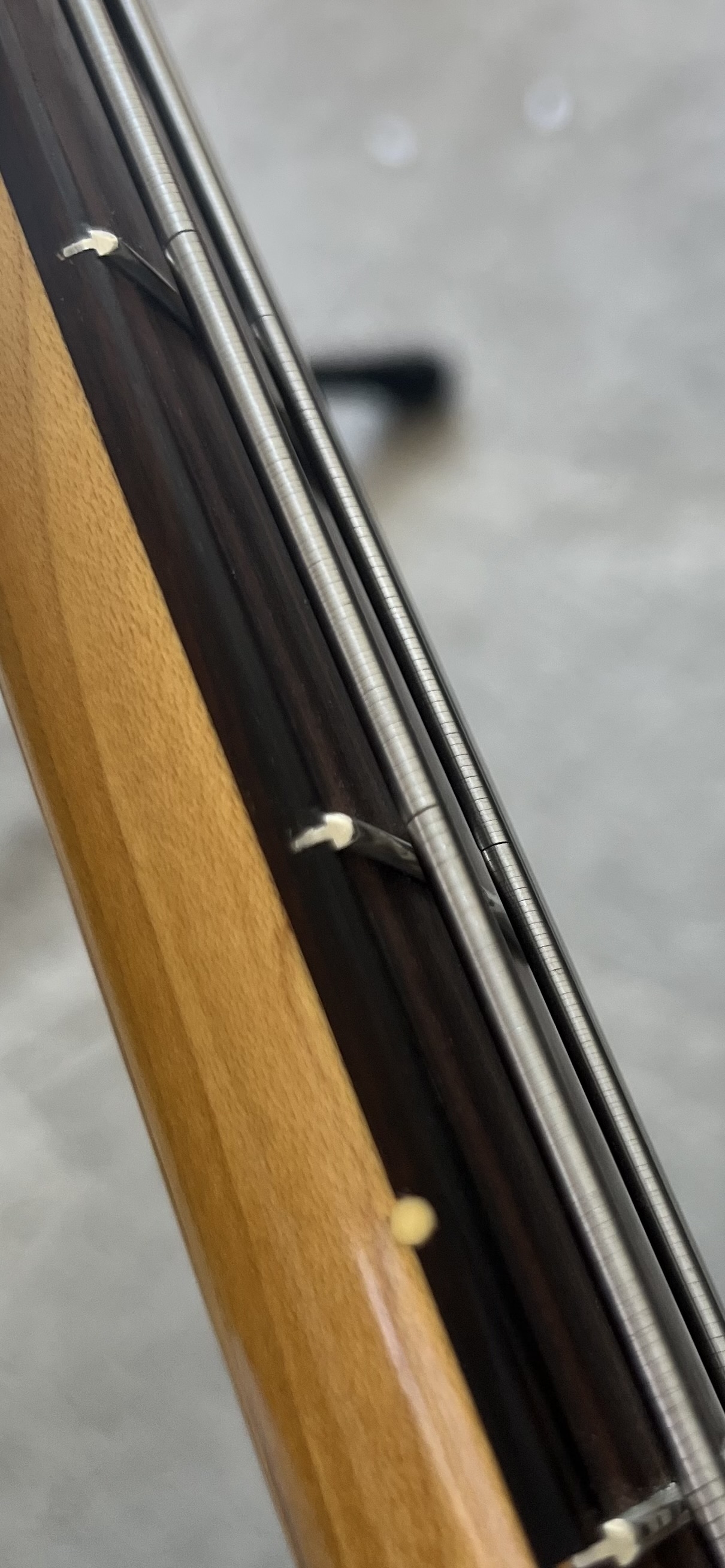
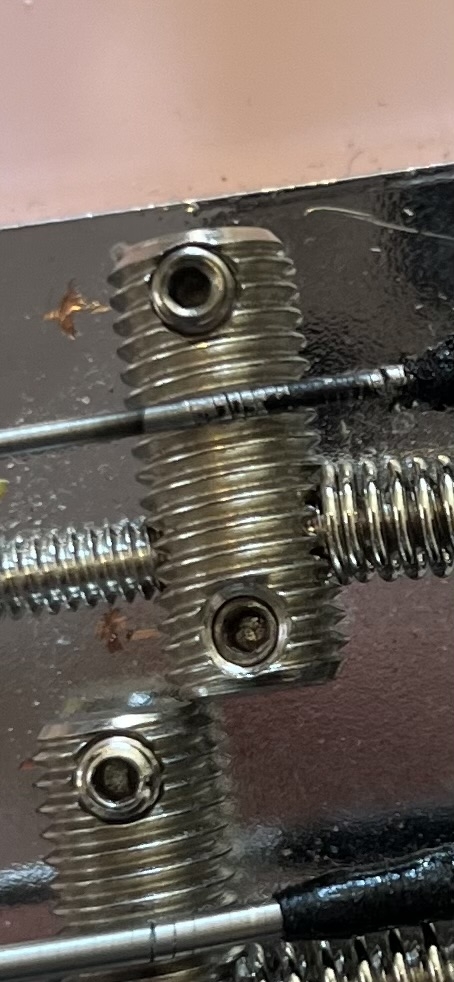
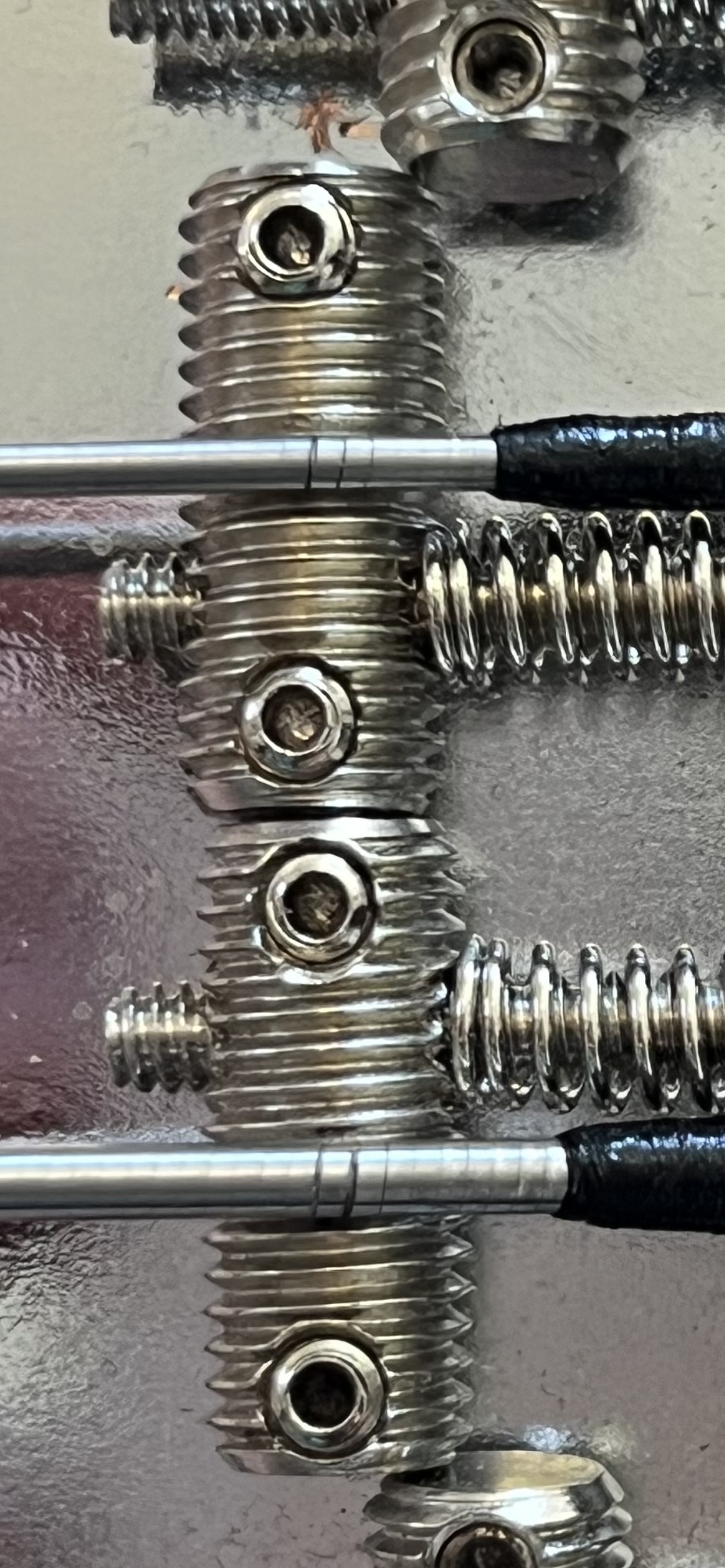
Couple of pictures below and request for your opinion. Is this normal for gaps and indentations to start appearing in the wraps over the frets and bridge? I’ve never seen this with Labella or Chromes.

Also, the silk was too long at the bridge on the G string, so I burned it off with a match. I hope I didn’t compromise that area now. They sound fine, but I don’t want to break a string on a gig.

Is this normal? Thoughts please.
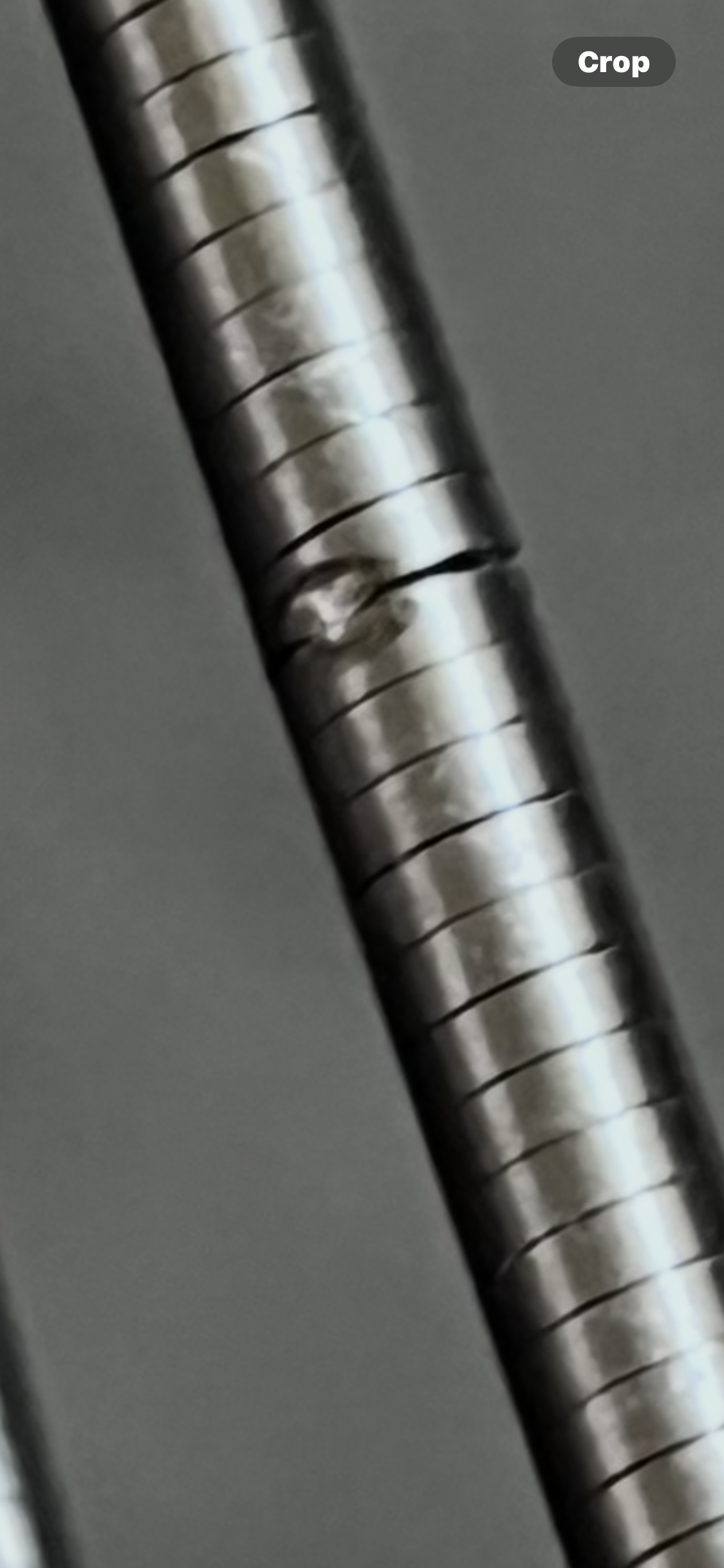
IMG_4901.png


IMG_4895.jpeg


IMG_4905.jpeg


IMG_4898.jpeg
 
Looking at your pics, i'd guess heat didn't help. Maybe gentle cutting, shoving it back? What's the state of the art there? Otherwise... could the ridges at an angle to the string put too much stress on them? Compared to 'flatbed'-stringriders? Bad set to start with? I wouldn't expect anything in your pics to be normal, but I'm just an unknowing party that has more questions than answers himself but also a funny cigarette. Might explain my posting. Cheers
 
Probably stating the obvious, but it looks like the frets are just the right shape and position to cut between the wraps. Maybe that combined with hard fretting is why they're getting effed up at the frets? Like everyone else, I've never seen this sort of damage myself, and I definitely wouldn't expect it on a set that isn't that old.
 
  • Like
Reactions: newfuture
I’ve seen this before. It wasn’t necessarily a prelude to string breakage, but after awhile (months, years) the winding will degrade to the point where you can hear a little rattle on some fretted notes.
 
This happened to me too. I wrote to Dunlop and they sent me a replacement set, but the same thing happened again. I played them for a while and it never seemed to get worse. I've not seen anything like it with the other flats I've tried on the same bass (Chromes and TI Jazz Flats)
 
is it intonated at the bridge?! the G string saddle is strangely back... usually the G string intonates "before" the D string, more toward the neck.

I sometimes end up with some weird-looking saddle positions myself when I put on new strings. I know what it should look like, but in order to get the notes intonated at the twelth fret and above, sometimes I end up with some strangely situated saddles. Makes me wonder if I'm doing something wrong, but if it sounds good and the tuner says the notes are in tune... 🤷‍♂️
 
is it intonated at the bridge?! the G string saddle is strangely back... usually the G string intonates "before" the D string, more toward the neck.
yes, it's intonated now, it's taken a lot of tweaking. I just checked another bass, you're correct the G shouldn't be that far back. I don't know what's goin' on.....
 
I sometimes end up with some weird-looking saddle positions

sure, but the G so back it's strange. intonation is a physical factor, where usually larger strings need more length (for example, using heavier gauges usually means that the saddles will be moved toward the bridge).

in this case, the G is 1cm or more behind the D saddle, and that's really strange! :D

I don't know what's goin' on.....

maybe a faulty set, it can happen.
 
The weird Dunlop flatwound G string saddle position has been noted by others on these boards.

I see two possibilities:
1- either the G string is, in absolute terms, more or less where it tends to be with other string sets of similar gauge, but the other three are, somehow, significantly more flexible
2a- the other three string saddles are in positions comparable to when other string sets are installed, and it's only the G one that is egregiously back; this could happen if the string is very low-tension but actually fairly stiff
2b- some inner defect in the string, which, however, I would expect to manifest itself in other ways (weird overtones) than just the 2nd harmonic vs. fretted 12th note dictating a significantly back saddle compensation. Yet, the saddle position seems to be the only curious thing about it, according to posters who report it, with nothing else really off.

Whatever the cause, it is an interesting little mystery.

As for the indentations shown in the OP, they aren't normal IME.
 
The weird Dunlop flatwound G string saddle position has been noted by others on these boards.

I see two possibilities:
1- either the G string is, in absolute terms, more or less where it tends to be with other string sets of similar gauge, but the other three are, somehow, significantly more flexible
2a- the other three string saddles are in positions comparable to when other string sets are installed, and it's only the G one that is egregiously back; this could happen if the string is very low-tension but actually fairly stiff
2b- some inner defect in the string, which, however, I would expect to manifest itself in other ways (weird overtones) than just the 2nd harmonic vs. fretted 12th note dictating a significantly back saddle compensation. Yet, the saddle position seems to be the only curious thing about it, according to posters who report it, with nothing else really off.

Whatever the cause, it is an interesting little mystery.

As for the indentations shown in the OP, they aren't normal IME.
Thanks for your insightful response @HaphAsSard, I will scour this site for more discussion on the, "Mystery of the Back Saddle Compensation".

...and to quote Sir Arthur Conan Doyle in his most famous character, Mr. Sherlock Holmes:

"When you have eliminated the impossible, whatever remains, however improbable, must be the truth"

Cheers!
 
  • Like
Reactions: HaphAsSard