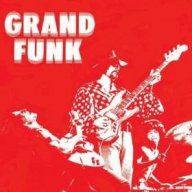
All the OP wanted to know was where you think they would be on the chart. Not whether you like them or not.

TalkBass has been independent since 1998. Add your voice.
Create a free account to reply to discussions, view embedded media, and browse with fewer display ads.
Join free Log in
Want zero display ads or expanded classifieds tools? Compare plans.

I don’t want to pay for the extra cost of compressing the windings.Good thing I didn’t ask about Compression Wounds, lives might have been lost!


Jeez, I wasn't expecting the Spanish Inquisition......Skip the Dunlop strings. Here's why:
At 52 weeks per year, and changing your Dunlops about 2 to 3 times per week, comes out to 130 sets of strings (52 x 2.5). The street price for super brights 5 string sets range from $22 to $36 dollars. Cheapest is PittBull on eBay for $21.03 with free shipping*.
So let's take $22 per set. That represents $2,860 that Dunlop has to make up in retail sales for the free strings given to just one artist, not to mention the wastefulness and contribution to global warming (if that's your priority).
Now consider it's likely that one artist represents a fraction of the free strings given out, maybe 5%, then Dunlop needs to make up lost revenue and profit for about $60,000 every year from those that purchase their strings. That's just one avenue of the spiffs they give out.
So my take on it is that Dunlop is heavily into the free spiffs, and I'm significantly reluctant to subsidize other people who probably make more than I.
So, my recommendation is to move to another string manufacturer that you like, and let those that appear to be excessive on spiffs know that you oppose this form of marketing.
*= cheapest I found is actually Kiesel Guitars at $20 even, but they charge shipping unless you pick up in their store. Then, you are subjected to CA state income taxes if you are a non-resident.

Of course, the part you leave out is it costs Dunlop a fraction of what they charge retail to manufacture strings, thus making your post null and void. The other part you leave out is that endorsers sell product, otherwise they don't stay endorsers for long. So you get this:Skip the Dunlop strings. Here's why:
At 52 weeks per year, and changing your Dunlops about 2 to 3 times per week, comes out to 130 sets of strings (52 x 2.5). The street price for super brights 5 string sets range from $22 to $36 dollars. Cheapest is PittBull on eBay for $21.03 with free shipping*.
So let's take $22 per set. That represents $2,860 that Dunlop has to make up in retail sales for the free strings given to just one artist, not to mention the wastefulness and contribution to global warming (if that's your priority).
Now consider it's likely that one artist represents a fraction of the free strings given out, maybe 5%, then Dunlop needs to make up lost revenue and profit for about $60,000 every year from those that purchase their strings. That's just one avenue of the spiffs they give out.
So my take on it is that Dunlop is heavily into the free spiffs, and I'm significantly reluctant to subsidize other people who probably make more than I.
So, my recommendation is to move to another string manufacturer that you like, and let those that appear to be excessive on spiffs know that you oppose this form of marketing.
*= cheapest I found is actually Kiesel Guitars at $20 even, but they charge shipping unless you pick up in their store. Then, you are subjected to CA state income taxes if you are a non-resident.

NOBODY expects the Spanish Inquisition!Jeez, I wasn't expecting the Spanish Inquisition......


Now consider it's likely that one artist represents a fraction of the free strings given out, maybe 5%, then Dunlop needs to make up lost revenue and profit for about $60,000 every year from those that purchase their strings. That's just one avenue of the spiffs they give out.
So my take on it is that Dunlop is heavily into the free spiffs, and I'm significantly reluctant to subsidize other people who probably make more than I.
So, my recommendation is to move to another string manufacturer that you like, and let those that appear to be excessive on spiffs know that you oppose this form of marketing.

Perfectly so. Do you ever look into the free products given out to endorsers for the products you buy? There's some truths to the free market. Some of which are:
1- Manufacturers are free to determine how best to maximize profits including giving free products to endorsers.
2- Consumers are free to determine which competing products to buy, including considering how much free products to given out.
3- Anything given freely has to be accounted for in what's sold.
I'm telling OP why I don't buy Dunlop strings. Actually one of several reasons why I don't buy Dunlop. Instead I buy GHS and Elixirs. They probably have spiffs, but I'm not aware of real life examples of excessiveness. If I learn of some, it's a good bet that I'll move on. I don't fund excessiveness of others. It's a question that each of us asks as paying consumers.
So ask yourself. If the answer is that you don't consider it's worth factoring it in to your purchases, that's fine too. It's a free market, not Venezuela or the Soviet Union (a country that I played bass in once).
The example is from an endorsing artist, not OP, btw.
Actually, it’s not. Nothing in post #7 has anything to do with realistic business and marketing.Good rationale...
Actually, it’s not. Nothing in post #7 has anything to do with realistic business and marketing.
Aside from saying “Good rationale”, your post demonstrates that you have a better outlook.
 . [rewind] If they could charge $500 for a set of 15 cent strings they would. But its a free country thank goodness, and I'm sure plenty of folks feel much better paying $50 than $5, and they probably play much better too
Again, the scenario in post #7 is not how advertising, marketing, and endorsement costs are recovered. Ultimately, those costs need to be eclipsed for profitability, but that’s not how it’s done.That would be wrong on the 1st point, and right on the second...
Again, the scenario in post #7 is not how advertising, marketing, and endorsement costs are recovered. Ultimately, those costs need to be eclipsed for profitability, but that’s not how it’s done.
If you disagree, that’s fine...
Again, the scenario in post #7 is not how advertising, marketing, and endorsement costs are recovered. Ultimately, those costs need to be eclipsed for profitability, but that’s not how it’s done.
If you disagree, that’s fine...
I apologize to ALL of the TALKBASS community for starting this thread!
Skip the Dunlop strings. Here's why:
At 52 weeks per year, and changing your Dunlops about 2 to 3 times per week.
It’s cracking me up! The internet at its finest.
 I’m going back to enjoying TalkBass.com