I'm playing in a band with one guitar player and it sounds a little empty when he solos. It's a rock band and the recordings typically have rhythm guitar with distortion. Any suggestions?

Enjoy the benefits of a premium membership!
Upgrade Account
-
TalkBass has been independent since 1998. Add your voice.
Create a free account to reply to discussions, view embedded media, and browse with fewer display ads.
Join free Log in
Want zero display ads or expanded classifieds tools? Compare plans.
You are using an out of date browser. It may not display this or other websites correctly.
You should upgrade or use an alternative browser.
You should upgrade or use an alternative browser.
Emulate rhythm guitar
- Thread starter Justinisraelson
- Start date
More options
Who Replied?

Listen to other bands that only have 1 guitar and 1 bass and listen to how the bass player does it there.
ZZ Top
Rush
King's X
Cream
Queen
The Police
Muse
Nirvana
Motorhead
etc...the list goes on
ZZ Top
Rush
King's X
Cream
Queen
The Police
Muse
Nirvana
Motorhead
etc...the list goes on

Listen to some of the band recording and live perormances and you'll figure out they have backing tracks going on. It's been going on for decades.
Guitar players also do a lot of looping. Bass players can do it too. Loop the baseline then add harmonies up higher.
Guitar players also do a lot of looping. Bass players can do it too. Loop the baseline then add harmonies up higher.
Listen to some of the band recording and live perormances and you'll figure out they have backing tracks going on. It's been going on for decades.
Guitar players also do a lot of looping. Bass players can do it too. Loop the baseline then add harmonies up higher.
Not any bands I've ever seen live. Pantera wouldn't even have a rhythm guitar track on the majority of their studio releases during solos.
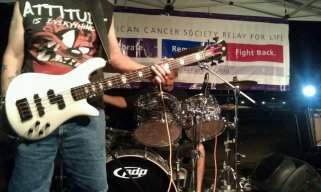
Try finding some isolated bass tracks for some of the above mentioned bands. Listen to their tone. Most have some grit or tube distortion going on. Also the guitarist need to have a fat sounding lead channel, not just boosting a thin, tinny sound louder.


have the guitar play quieter the rest of the time and crank it up during the solos.
seriously.
also the guitar player can incorporate some harmony notes that weren't there in the original solo. A couple go a long way.
seriously.
also the guitar player can incorporate some harmony notes that weren't there in the original solo. A couple go a long way.

Study John Paul Jones stuff. he was great at seizing that space when Page would solo.
With out knowing the particulars of any of your music this is a tough one to answer.
I prefer to take those opportunities to walk(or run depending on the tempo) the basslines.
So if you are just playing the roots while the guitarist is playing rhythm, then you could explode your bassline into running through the chords (use lots of chromatics).
That would also provide a more energetic bed for the solo to go over the top.
With out knowing the particulars of any of your music this is a tough one to answer.
I prefer to take those opportunities to walk(or run depending on the tempo) the basslines.
So if you are just playing the roots while the guitarist is playing rhythm, then you could explode your bassline into running through the chords (use lots of chromatics).
That would also provide a more energetic bed for the solo to go over the top.
Study John Paul Jones stuff. he was great at seizing that space when Page would solo.
With out knowing the particulars of any of your music this is a tough one to answer.
I prefer to take those opportunities to walk(or run depending on the tempo) the basslines.
So if you are just playing the roots while the guitarist is playing rhythm, then you could explode your bassline into running through the chords (use lots of chromatics).
That would also provide a more energetic bed for the solo to go over the top.
Excellent example. Live especially, they just make it work, where the album might have layers of guitars, they come up with great ways of filling the space.

Lou Barlow in Dinosaur, Jr. played chords up on the neck. They're a trio and I always thought they had a huge sound.
Thank you for the great replies. Besides, walking and being "busier" under the solos, is there a pedal or effect I could use, that anyone could recommend?

The greatest, most destructive myth in music today is that "emptiness" is a negative thing.
Yeah I like the openness. I really enjoy playing in a 3 piece whenever the opportunity comes up
...Also the guitarist need to have a fat sounding lead channel, not just boosting a thin, tinny sound louder.
+900 ...this makes a huge difference
This doesn't seem to happen Brian Setzer/Stray catsI'm playing in a band with one guitar player and it sounds a little empty when he solos. It's a rock band and the recordings typically have rhythm guitar with distortion. Any suggestions?
Thank you for the great replies. Besides, walking and being "busier" under the solos, is there a pedal or effect I could use, that anyone could recommend?
Fishman Fission Bass Powerchord comes to mind

What I do to make it sound heavyer is use my overdrive and keep in the low register, or overdrive and powerchords on my A-string. Talk to your drummer how to keep together and make it tight.
Listen to Rush...
To me Geddy does a fantastic job being a perfect gap in between the drums and one guitar. Study how he does his phrasing, it's very melodic, harmonic, and rhythmic aall at the same time.
To me Geddy does a fantastic job being a perfect gap in between the drums and one guitar. Study how he does his phrasing, it's very melodic, harmonic, and rhythmic aall at the same time.
Fishman Fission Bass Powerchord comes to mind
In theory. In practice, the Fission is pretty disappointing. Hopefully they'll come out with a second generation with better tone and better tracking.
Options are -
1) embrace the open space.
2) play busier
3) use effects to lush up your sound.
I do all three at one point or another, and all are valid, depending on the song. It's a judgment call. As far as effects to do #3 go, something I use on a couple of songs is to kick on distortion (on an MXR M-80 in this case) and an octaver (Boss OC-3) and play higher on the neck. Makes for a very grungy, dirty tone that fills a lot of frequencies under a solo. Like I say - great for some songs, not for others, and don't overuse it.
I guess it's kind of "play busier," but one other thing I've been doing is on Franz Ferdinand's "Take Me Out," on the verses - between downbeats on the E (A string 7th fret) I'll hit the open E string and let it ring - kind of creates a low drone which covers our lack of a 2nd guitarist. Then play fifths where it goes A - B.


