

Enjoy the benefits of a premium membership!
Upgrade Account
-
TalkBass has been independent since 1998. Add your voice.
Create a free account to reply to discussions, view embedded media, and browse with fewer display ads.
Join free Log in
Want zero display ads or expanded classifieds tools? Compare plans.
You are using an out of date browser. It may not display this or other websites correctly.
You should upgrade or use an alternative browser.
You should upgrade or use an alternative browser.
Epiphone Jack Casady Replacement Tuners and/or Bridge
- Thread starter abngourmet
- Start date
More options
Who Replied?


Yes please ~ what's the deal with tuners for the Jack Casady? They've been around a while, so what is the correct lightweight tuning heads? Are they bolt on or require drilling?Please fellas, the tuners for the Jack Casady are 1/2 ou 3/8? I searched all the fóruns here, and google, and did´nt found a conclusive answer.

Just to throw a dissenting opinion into the mix, I don't consider there to be anything wrong with the three-pointer bridge. My Casady needs replaced/upgraded tuners (one is bent and they all feel gritty and imprecise), but the bridge is fine. Idiosyncratic, but perfectly serviceable.
nothing with the tuners themselves; the bass suffer from neckdrive, the light tuners is a way to attenuate the problem, or even fix it.Yes please ~ what's the deal with tuners for the Jack Casady? They've been around a while, so what is the correct lightweight tuning heads? Are they bolt on or require drilling?

Just to throw a dissenting opinion into the mix, I don't consider there to be anything wrong with the three-pointer bridge. My Casady needs replaced/upgraded tuners (one is bent and they all feel gritty and imprecise), but the bridge is fine. Idiosyncratic, but perfectly serviceable.
I'd agree too. Just brought myself a JC and was planning on swapping the bridge out straight away. However now i own it it seems to function OK and i'm surprised at just how much sustain it has considering how little contact it has with the body
Thumbnail physics: say you had a jack hammer and use it on concrete. You put a 2” flat faced bit on it and begun to pound away. Surface chips away but you aren’t getting anywhere. Switch to a sharp pointed bit and pound away. In a short time you penetrate the concrete and make good progress in breaking it up. You just focused the same force onto a smaller area of contact.
How does a three point bridge differ from a “full contact” bridge taking into account the above anecdote?
I’m sure someone will explain but it seems to me the loss is minimal. The above post and my personal experience with my JC and Epi ‘bird are similar.
But intonation is a pain in the butt with them, that isn’t up for debate.
How does a three point bridge differ from a “full contact” bridge taking into account the above anecdote?
I’m sure someone will explain but it seems to me the loss is minimal. The above post and my personal experience with my JC and Epi ‘bird are similar.
But intonation is a pain in the butt with them, that isn’t up for debate.
I'd agree too. Just brought myself a JC and was planning on swapping the bridge out straight away. However now i own it it seems to function OK and i'm surprised at just how much sustain it has considering how little contact it has with the body
Yep, the stock bridge on the JC is adequate. The Mod-Bar made for these by Evan Webb (in USA) makes it even better by moving the silks off the bridge saddle and providing a solid position for the string ball-ends. The neck-dive on the JC is noticeable, less so with a wide non-slip strap. Now if anyone from Epiphone/Gibson is interested in improving this model ~Lighter tuners please. Until Epiphone goes to lighter tuning heads, you can always get Hipshot Ultralite tuners.

Thumbnail physics: say you had a jack hammer and use it on concrete. You put a 2” flat faced bit on it and begun to pound away. Surface chips away but you aren’t getting anywhere. Switch to a sharp pointed bit and pound away. In a short time you penetrate the concrete and make good progress in breaking it up. You just focused the same force onto a smaller area of contact.
How does a three point bridge differ from a “full contact” bridge taking into account the above anecdote?
I’m sure someone will explain but it seems to me the loss is minimal. The above post and my personal experience with my JC and Epi ‘bird are similar.
But intonation is a pain in the butt with them, that isn’t up for debate.
All I know is I replaced the bridge on my JC with a Hipshot Supertone and it sounds much better.
But it’s still off the body and only contacting the three points, right?. The supposition I made had nothing to do with whether a Supertone sounds better than stock, it was in reference to someone’s statement that three pointers do not transmit vibrations as well as a full body contact bridge.All I know is I replaced the bridge on my JC with a Hipshot Supertone and it sounds much better.

Does any of you have tried the Babicz 3 point bridge ? I am tuxedoing my Jack Casady Silverbust and want to have a better and easier bridge to set up. This one called my attention as I've heard a lot about these bridges and really like them.
If any of you have installed this bridge? Is it easy?
If any of you have installed this bridge? Is it easy?

Rise, zombie thread!Until Epiphone goes to lighter tuning heads, you can always get Hipshot Ultralite tuners.
What Mike states above makes perfect sense and there's loads of people who fitted them. But, in the years gone by, did anyone find tuners out there which are both a real drop-in replacement (so corresponding screw holes and no visual clue that tuners have been swapped) as well as able to reduce neck-dive to acceptable levels due to significant weight reduction?

Rise, zombie thread!
What Mike states above makes perfect sense and there's loads of people who fitted them. But, in the years gone by, did anyone find tuners out there which are both a real drop-in replacement (so corresponding screw holes and no visual clue that tuners have been swapped) as well as able to reduce neck-dive to acceptable levels due to significant weight reduction?
I'm looking to pick up a JCB this winter, and so am wondering about "drop-in" tuners as well. The stock tuners look to have a standard Fender 4-hole pattern, so it appears that some of the Hipshot HB series tuners would work. Here's the page: Bass Tuning Machines
I will contact Hipshot to inquire, will do that tomorrow and post what I find out.
Hipshot lists all dimensions but does not list the tuner weights, so these full-size keys may not offer significant weight savings.
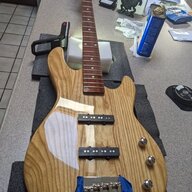
The 3-point bridge bothered me because of the hassle involved in string changes and string gauge changes. I cannot imagine trying to intonate with that bridge. I have installed the Babicz bridge and it was very, very easy. It includes a separate full-shaped spacer plate (not washers) that take care of the contour of the top and it fit my JCB perfectly. The adjustments that the bridge allows are an incredible advantage over the stock bridge. I'm sure the Hipshot has advantages also but it seems to me that the Babicz design goes a bit more to the extreme. I've never played a Hipshot, but they seem great and look great as well. They should be standard instead of the 3-point bridge. The sound of the bass did change with the Babicz. To my ears it was very similar to a very light compression. I am referring to the sound when plugged in. I noticed it immediately. Would it make a real difference when playing out of an amplifier or in the sound mix? Probably not. It actually seemed to add some sustain and a consistency on long notes. This type of long note would probably not normally be called for so again, not of any real-world significance.Does any of you have tried the Babicz 3 point bridge ? I am tuxedoing my Jack Casady Silverbust and want to have a better and easier bridge to set up. This one called my attention as I've heard a lot about these bridges and really like them.
If any of you have installed this bridge? Is it easy?
The action that I was able to achieve was as low as I wanted to go and I could have gone even lower. If I wanted a high action for a particular feel, that would have been easy also. I could probably have those two choices quickly in the same session if it was needed as long as I had a hex wrench. Now I need the ultralight tuners. I wish that someone would redesign the body so that it was comfortable and perhaps make the body smaller as well. I'm 6'4" with long arms so take that into consideration when evaluating my comment about the comfort. This is the bass that I would grab if the house was on fire or I needed to have only one bass.
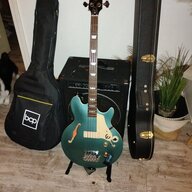
mine has it and it works greatThe super tone works on it? I have one on my Gibson G3 reissue, and it's great, but I'm worried about the arched top on the Jack Casady.
Thanks,
Alan


