
Enjoy the benefits of a premium membership!
Upgrade Account
-
TalkBass has been independent since 1998. Add your voice.
Create a free account to reply to discussions, view embedded media, and browse with fewer display ads.
Join free Log in
Want zero display ads or expanded classifieds tools? Compare plans.
You are using an out of date browser. It may not display this or other websites correctly.
You should upgrade or use an alternative browser.
You should upgrade or use an alternative browser.
Ergonomic basses
- Thread starter JjjonnyY
- Start date
More options
Who Replied?
Tom Clement builds some really nice ergo models. Lightweight and look very comfortable. I dont have any direct experience with them, but i have two other Clement basses which are great instruments.




^ Pretty interesting idea from Torzal. At least worth a try if the opportunity ever arises.
I will chip in that I have a pair of pretty comfortable basses. The Lightwave is very light and wearable at (I think) 7.5 lbs.
A little heavier, but perfectly balanced is the Conklin, specifically GT 5. They call that particular body style a sidewinder. Between the balance and the body contours it is hands down the most comfortable bass I've ever played.
I will chip in that I have a pair of pretty comfortable basses. The Lightwave is very light and wearable at (I think) 7.5 lbs.
A little heavier, but perfectly balanced is the Conklin, specifically GT 5. They call that particular body style a sidewinder. Between the balance and the body contours it is hands down the most comfortable bass I've ever played.



- Jun 3, 2009
- 3,330
- 398
- Disclosures
- Bassgearu, Music Industry Consulting and Sales. Tech 21, NBE Corp, Sonosphere.
There have been many "ergonomic" designed basses over the years. Started with the Ovation "Breadwinner" designed body, which later wound up improved on the Steve Klein basses (only a handful ever built).The first mas produced truly ergo was the Spector NS-2, followed by the Kubicki Ex-Factor, then Warwick thumbs. The Steinbergers were ergo too, from the standpoint that the strap attachment was a boomerang shape and the little basses hung perfectly. Then there is the Ibanez Ergodyne series, and their new ones the Grooveline series.
The headless basses you are showing are Hohner B2s, wood licensed copies of the original Steinberger L2. Nice basses for the buck.
The other is the new Steinberger Synapse, which is Ned Steinberger's latest evolution of his original L2 design. The innovative front strap hook makes the bass very ergonomic.
The headless basses you are showing are Hohner B2s, wood licensed copies of the original Steinberger L2. Nice basses for the buck.
The other is the new Steinberger Synapse, which is Ned Steinberger's latest evolution of his original L2 design. The innovative front strap hook makes the bass very ergonomic.

There have been many "ergonomic" designed basses over the years. Started with the Ovation "Breadwinner" designed body, which later wound up improved on the Steve Klein basses (only a handful ever built).The first mas produced truly ergo was the Spector NS-2, followed by the Kubicki Ex-Factor, then Warwick thumbs. The Steinbergers were ergo too, from the standpoint that the strap attachment was a boomerang shape and the little basses hung perfectly. Then there is the Ibanez Ergodyne series, and their new ones the Grooveline series.
The headless basses you are showing are Hohner B2s, wood licensed copies of the original Steinberger L2. Nice basses for the buck.
The other is the new Steinberger Synapse, which is Ned Steinberger's latest evolution of his original L2 design. The innovative front strap hook makes the bass very ergonomic.
The singularly most comfortable 4 banger I ever played was my Kubicki Ex-Factor, hands-down. 32" scale but feels like a 34" in terms of reach.
Riis
Ergonomics will vary from person to person in part depending on how you like to wear your bass. First I'll try to describe why ergonomics get applied to necks. With Jacksons compound radius necks you have a flatter fretboard as you get closer the the body and more curved up by the neck. This is supposed to fascilitate chording and bending at various places on the neck. Part of the idea like with asymetrical necks is to have the neck better fit the hand depending on the angles of hand to wrist to elbow. But in reality these angles will vary depending on the basses upward angle and position low to high wear wise. The torzal twist bass does it one better and attempts to more place the neck postion relative to the average best wrist bend based on elbow angles and distance from body.
In reality what might be a perfect fit ergonomically fit of bass A for person B might not work quite as well for person C. Cause person C may prefer to wear their bass low and pointing upward. Whereas peep B may prefer to wear their bass high. People dont allways try to do things in the manner that allows for best joint and limb angles relative to body position. In martial arts class Id talk about how you want to get correct muscle and tendon locks and core rotation for ones strikes and pushes so whole body weight is behind it and one isnt weakening oneself in their movement due to bad positions. When you look at the human body and its mechanics from the point of view of easiest precise movements and less strain to shoulders, wrists, elbow, and back, a few are discovered which points out common flaws with how humans typically do things as a result of bad habbits formed concerning posture etc.
But with music instrument playing what might in reality be the best ergonomic position of the instrument relative to fretting hand and picking/finger striking hand, sint very popular with a lot of people. This being that relatively low position with bass angled skyward. For people that like to wear and play their bass this way a few constants come up: The shape of the bass body rear affects playing comfort since this is often rested against the upper inner leg. Hence the BC Rich warlock and Bich rear cutouts being perfect examples of very ergonomic shapes for these type of players in that regard. Most basses just have a basic curve to their rear. The thunderbird and mockingbird stylebeing opposite curve direction then most. This makes it awkward for some people.
If you want a bass to be trully ergonomic to you you have to take into concideration a few things in recognizing such a bass compared to those that arent as ergonomic for you. Example, basses with all rounded edges like Ibanez soundgear. They look all great but might feel overly slippery against some people. Whereas less curved edges feel less like their gonna go sliding about to some. As far as necks go, most ergonomic neck is going to be one thats custom fitted to the player. For its profile, width, thickness and so on. The only way a person can build such a neck for a person is to do various grip tests and observations to determine that individuals most common hand curling and wrist bending etc habbits along with wether or not they tend to try to ride thumb down necks rear center or more over and around that sides fretbaord edge.
A person who likes to play sitting down needs to determine where they want the bridge and neck end relative to their lap. Does that lower body inward curve belong near the front, rear, or middle of the body for them. And such peeps idea of perfect balance may well be what is concidered moderate to high neck dive for those who like to play standing. Sitting person ussually likes idea of bass neither tiliting rearward or over upward if the let go while it rests on their leg. They want the bass to balance horizontally. Standing peep who doesnt want neck dive wants the bass to naturally tilt upwards to one degree or another.
Belly cut, most loved by those who have beer belly etc. Not so big a deal for those with slim build and 6pack abs.
Forarm cut on upper bodys front. The idea here is forarm is at a natural angle and thus flat top tends to present just a narrow straight edge resting surface to it. Whereas a forarm cut or slope to the bodys upper front near area forarm is ussually touching provides more resting surface and and angle more like the forarm is at.
Those who have done weight training or much excercise are aware that for example with pushups and presses they naturally have a range of motion with greatest strength. Outside that area one isnt as strong. What the heck does this have to do with playing bass or guitar since heavy handedness isnt desireable. Your hands, fingers, and wrist can best do their job the esasiest for fretting or picking when the angles of wrist to hand, wrist to forarm and forarm to elbow and elbow to upper arm and upper arm to shoulder are positioned in that range of motion where maximum natural dexterity is. This best positioning is slightly different for finger pluckers compared to pick users btw.
But one does not need to take a class in the subject to learn what kind of body shapes, instrument balance, distance of bridge from rear of body, neck profile, etc is best for them ergonomically
By ergonomics we mean Ergonomics (or human factors) is the scientific discipline concerned with the understanding of interactions among humans and other elements of a system, and the profession that applies theory, principles, data and methods to design in order to optimize human well-being and overall system performance. This takes into account things like limb movement range, range within that movment range where maximum strength and dexterity are, limb angles and posture elements that reduce fatigue, cramping, and stress injury or hyperextension. The vast majority of "proper playing technique are based on garbage that has more to so with how polite society culture wants you to move and behave so as to present what a culture society peeps concider proper decorum and politeness (no lewd or sensual acts or movements and sillyness like stick litle finger out while holding the teacup. The supposedly how one should hold themself and behave in front of royalty type idea of polite society is where most guitar and keyboard etc proper technique evolved. Musnt have the orchestra players looking like that lewd rock and roller can we?
Ok, so ergonomics in bass building is going to vary some from person to person C neck profile is more ergonomic for some people whereas D profile is more ergonomic for some other people. This is part is a result of finger length to palm length and wether or not a person tends to curl theyre fingers in tight close to finger base or deeper more toward the wrist. With musical isntrument ergonomics you have to take into acount individual ways of body language in a sense as well as how a given person likes to move when getting it on musically or in free form dance. Then apply that to limb angles etc where greatest dexterity and precision for finger tricks (fretting, tapping etc) and pick ujse of finger plucking. Remember as noted earlier theres some little differences in this depending on wether your useing a pick or useing your fingers and thumb to pluck, slap etc.
The goal is to go with an instrument whose shape, cutouts, neck, weight balance, etc make playing more effortless, precise, and easy with the least amount of work involved. Small bodied basses have a diff fit then their larger scale large body equivalents. Neither is better, but one or the other will ussually better fit, be more ergonomic for a given person.
Me, I find basses with the bridge allmost at the very end of the bodies rear not as comfortable as those with some distance. I like bodies whose rear makes for good leg rest with no slipperyness. I find I have the most dexterity and precision with picking with hand around pelvis level or little lower. Those who tend to prefer to wear their basses higher for picking comfort do so cause their normal hand position is most often with hand angled a little bit downward relative to the wrist. Whereas folks like me more keep hand inline with wrist or slightly upward. Though some who like to wear their bass high do so from the belief that the closer to their face their hand is the better. Like they want to be able to be looking up close at their hand actually. Some wear their bass high or low for fashion and dont have a clue about ergonomics nor any interest in such. Unlesss thats the latest fashion craze.
Go with works best for you. It dont matter if that breaks every single rule of the proper technique crowd. Your playing ability will be far better then theres so long as you stick with what works for you for least strain, discomfort, and error in movement. Error in movement is messing up, being sloppy.
I boat oar steiny bass is somehow especially comfortable for you, use it or something with that char. If wide neck and thumb near rear center of neck actually makes it easier for you to be precise and expressive without sloppyness, go for it. Otherwise be like John entiwistle and countless other pros who frequently have thumb riding fretboard edge etc.
A given persons playing style and easy movement habbits have to be taken into account to have an idea of what kind of bass is more ergonomic for them. You can even say with some truth that how a person habitually stands, wether more at an angle oblique, or straight on, will affect their way of playing an instrument in the most ergonomic way for them. Everyones walk is a little unique. Unless one is handicapped, the way a given person walks, those little things that help you identify a person from afar based on their walk. Is cause thats the most naturally ergonomic way for them to walk. Theyve gotten out of their own way and are moveing in the best way for them individually. The exception being for those who grew up learning that the grownups dont want them moving their arms much as they walk. I knew one guy who tried to never swing his arms when he walked cause of the abuse hed get from parents if he did. To overcome that bad habbit required getting him to loosen up and rid himself of developed beliefs. To become more animal like rather then "stiffly polite" as I called it.
When you hold and play a bass however you want to when no one is looking and it feels just right and you kinda go "wow, this fits me perfect" youve found one that fits you well individually for your natural unlearned ergonomics. Little kids scamper about with a speed, easynesss and so on that makes it hard for adults tocatch them cause they are being fully ergonomic in their movements. Rather then moving as society wants them to which is really rather constrained, limited, and stifled.
If you dont have a injury, and your often feeling fatigued, cramped, sore backed, sore necked, or otherwise worn out from playing bass, or getting stiffnesss in joints. its often due to not letting yourself move ergonomically. Or not wearing your bass in the best height or lowness for you, or your struggling with the isntrument due to a shortcoming in it for you due to body shape, neck profile, weight balance, etc.
Simple answer to your question: Whats an example of a very ergonomic bass? The one that feels perfect to you when your just being yourself and feeling good and at ease and moving easilly as you choose to. I find warlocck basses very ergonomic for me and tbirds the opposite of that. For some the opposite holds true.
In reality what might be a perfect fit ergonomically fit of bass A for person B might not work quite as well for person C. Cause person C may prefer to wear their bass low and pointing upward. Whereas peep B may prefer to wear their bass high. People dont allways try to do things in the manner that allows for best joint and limb angles relative to body position. In martial arts class Id talk about how you want to get correct muscle and tendon locks and core rotation for ones strikes and pushes so whole body weight is behind it and one isnt weakening oneself in their movement due to bad positions. When you look at the human body and its mechanics from the point of view of easiest precise movements and less strain to shoulders, wrists, elbow, and back, a few are discovered which points out common flaws with how humans typically do things as a result of bad habbits formed concerning posture etc.
But with music instrument playing what might in reality be the best ergonomic position of the instrument relative to fretting hand and picking/finger striking hand, sint very popular with a lot of people. This being that relatively low position with bass angled skyward. For people that like to wear and play their bass this way a few constants come up: The shape of the bass body rear affects playing comfort since this is often rested against the upper inner leg. Hence the BC Rich warlock and Bich rear cutouts being perfect examples of very ergonomic shapes for these type of players in that regard. Most basses just have a basic curve to their rear. The thunderbird and mockingbird stylebeing opposite curve direction then most. This makes it awkward for some people.
If you want a bass to be trully ergonomic to you you have to take into concideration a few things in recognizing such a bass compared to those that arent as ergonomic for you. Example, basses with all rounded edges like Ibanez soundgear. They look all great but might feel overly slippery against some people. Whereas less curved edges feel less like their gonna go sliding about to some. As far as necks go, most ergonomic neck is going to be one thats custom fitted to the player. For its profile, width, thickness and so on. The only way a person can build such a neck for a person is to do various grip tests and observations to determine that individuals most common hand curling and wrist bending etc habbits along with wether or not they tend to try to ride thumb down necks rear center or more over and around that sides fretbaord edge.
A person who likes to play sitting down needs to determine where they want the bridge and neck end relative to their lap. Does that lower body inward curve belong near the front, rear, or middle of the body for them. And such peeps idea of perfect balance may well be what is concidered moderate to high neck dive for those who like to play standing. Sitting person ussually likes idea of bass neither tiliting rearward or over upward if the let go while it rests on their leg. They want the bass to balance horizontally. Standing peep who doesnt want neck dive wants the bass to naturally tilt upwards to one degree or another.
Belly cut, most loved by those who have beer belly etc. Not so big a deal for those with slim build and 6pack abs.
Forarm cut on upper bodys front. The idea here is forarm is at a natural angle and thus flat top tends to present just a narrow straight edge resting surface to it. Whereas a forarm cut or slope to the bodys upper front near area forarm is ussually touching provides more resting surface and and angle more like the forarm is at.
Those who have done weight training or much excercise are aware that for example with pushups and presses they naturally have a range of motion with greatest strength. Outside that area one isnt as strong. What the heck does this have to do with playing bass or guitar since heavy handedness isnt desireable. Your hands, fingers, and wrist can best do their job the esasiest for fretting or picking when the angles of wrist to hand, wrist to forarm and forarm to elbow and elbow to upper arm and upper arm to shoulder are positioned in that range of motion where maximum natural dexterity is. This best positioning is slightly different for finger pluckers compared to pick users btw.
But one does not need to take a class in the subject to learn what kind of body shapes, instrument balance, distance of bridge from rear of body, neck profile, etc is best for them ergonomically
By ergonomics we mean Ergonomics (or human factors) is the scientific discipline concerned with the understanding of interactions among humans and other elements of a system, and the profession that applies theory, principles, data and methods to design in order to optimize human well-being and overall system performance. This takes into account things like limb movement range, range within that movment range where maximum strength and dexterity are, limb angles and posture elements that reduce fatigue, cramping, and stress injury or hyperextension. The vast majority of "proper playing technique are based on garbage that has more to so with how polite society culture wants you to move and behave so as to present what a culture society peeps concider proper decorum and politeness (no lewd or sensual acts or movements and sillyness like stick litle finger out while holding the teacup. The supposedly how one should hold themself and behave in front of royalty type idea of polite society is where most guitar and keyboard etc proper technique evolved. Musnt have the orchestra players looking like that lewd rock and roller can we?
Ok, so ergonomics in bass building is going to vary some from person to person C neck profile is more ergonomic for some people whereas D profile is more ergonomic for some other people. This is part is a result of finger length to palm length and wether or not a person tends to curl theyre fingers in tight close to finger base or deeper more toward the wrist. With musical isntrument ergonomics you have to take into acount individual ways of body language in a sense as well as how a given person likes to move when getting it on musically or in free form dance. Then apply that to limb angles etc where greatest dexterity and precision for finger tricks (fretting, tapping etc) and pick ujse of finger plucking. Remember as noted earlier theres some little differences in this depending on wether your useing a pick or useing your fingers and thumb to pluck, slap etc.
The goal is to go with an instrument whose shape, cutouts, neck, weight balance, etc make playing more effortless, precise, and easy with the least amount of work involved. Small bodied basses have a diff fit then their larger scale large body equivalents. Neither is better, but one or the other will ussually better fit, be more ergonomic for a given person.
Me, I find basses with the bridge allmost at the very end of the bodies rear not as comfortable as those with some distance. I like bodies whose rear makes for good leg rest with no slipperyness. I find I have the most dexterity and precision with picking with hand around pelvis level or little lower. Those who tend to prefer to wear their basses higher for picking comfort do so cause their normal hand position is most often with hand angled a little bit downward relative to the wrist. Whereas folks like me more keep hand inline with wrist or slightly upward. Though some who like to wear their bass high do so from the belief that the closer to their face their hand is the better. Like they want to be able to be looking up close at their hand actually. Some wear their bass high or low for fashion and dont have a clue about ergonomics nor any interest in such. Unlesss thats the latest fashion craze.
Go with works best for you. It dont matter if that breaks every single rule of the proper technique crowd. Your playing ability will be far better then theres so long as you stick with what works for you for least strain, discomfort, and error in movement. Error in movement is messing up, being sloppy.
I boat oar steiny bass is somehow especially comfortable for you, use it or something with that char. If wide neck and thumb near rear center of neck actually makes it easier for you to be precise and expressive without sloppyness, go for it. Otherwise be like John entiwistle and countless other pros who frequently have thumb riding fretboard edge etc.
A given persons playing style and easy movement habbits have to be taken into account to have an idea of what kind of bass is more ergonomic for them. You can even say with some truth that how a person habitually stands, wether more at an angle oblique, or straight on, will affect their way of playing an instrument in the most ergonomic way for them. Everyones walk is a little unique. Unless one is handicapped, the way a given person walks, those little things that help you identify a person from afar based on their walk. Is cause thats the most naturally ergonomic way for them to walk. Theyve gotten out of their own way and are moveing in the best way for them individually. The exception being for those who grew up learning that the grownups dont want them moving their arms much as they walk. I knew one guy who tried to never swing his arms when he walked cause of the abuse hed get from parents if he did. To overcome that bad habbit required getting him to loosen up and rid himself of developed beliefs. To become more animal like rather then "stiffly polite" as I called it.
When you hold and play a bass however you want to when no one is looking and it feels just right and you kinda go "wow, this fits me perfect" youve found one that fits you well individually for your natural unlearned ergonomics. Little kids scamper about with a speed, easynesss and so on that makes it hard for adults tocatch them cause they are being fully ergonomic in their movements. Rather then moving as society wants them to which is really rather constrained, limited, and stifled.
If you dont have a injury, and your often feeling fatigued, cramped, sore backed, sore necked, or otherwise worn out from playing bass, or getting stiffnesss in joints. its often due to not letting yourself move ergonomically. Or not wearing your bass in the best height or lowness for you, or your struggling with the isntrument due to a shortcoming in it for you due to body shape, neck profile, weight balance, etc.
Simple answer to your question: Whats an example of a very ergonomic bass? The one that feels perfect to you when your just being yourself and feeling good and at ease and moving easilly as you choose to. I find warlocck basses very ergonomic for me and tbirds the opposite of that. For some the opposite holds true.


also agree the Kubicki Ex-Factor. also my Bongo seems pretty decent too-doesnt feel as heavy to me as its actual weight
I'm Fascinated by these headless basses. What are people's thoughts on these?
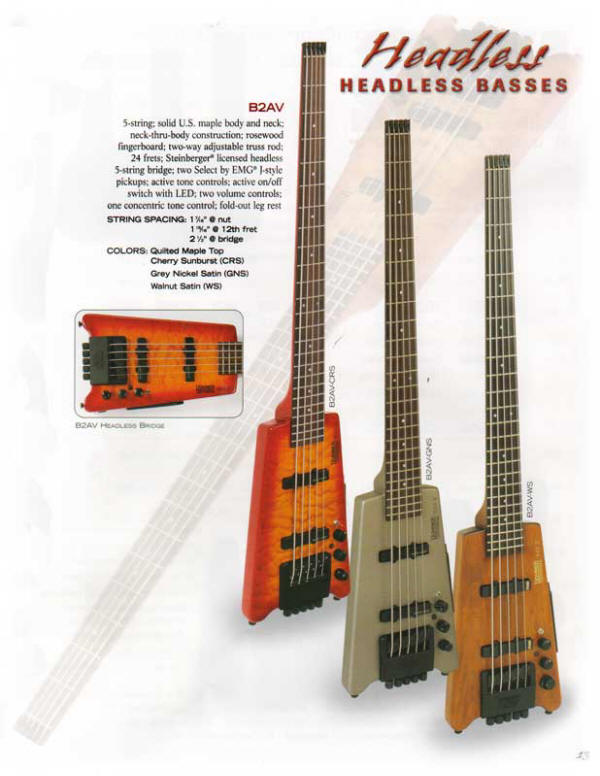
[Invalid or Expired Link Removed]
The colourful ones are hohner basses. they would be less "ergonomic" than the black one ( A Steinberger Synapse) because they don't have the strap hook, which makes the bass hang on your body in the correct position.
The Hohners tend to require more of a stretch to the first fret because they have no strap hook or strap pivot like the original Steinbergers, making them hang more towards your fretting hand.
Say what you like about Steinies, but they're "ergonomic" in the sense I think the OP meant it.


