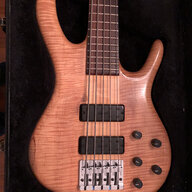
IMHO, People should feel free to play however many strings they want without being judged. Your thread title is inconsistent with that and I find it every bit as offensive as the 4-string purist who claims anything with more than 4 strings is not a bass.
For the record, my #1 BG has been a 6-string since about 1995. Although I own 4s and 5s, I prefer to play the 6 almost exclusive to maintain the highest proficiency. Basically I am most at home on 6 and miss the B and/or C strings if they are absent, even if they will not be used. I am not saying I couldn't switch if I thought there was a need. I am saying there is a cost to switching that I generally prefer to avoid.
I also play a 6 string electric upright (EUB). My EUB sounds more like a fretless than a upright. It don't really consider it a proxy for acoustic upright. For the context, I use primarily one finger per fret on bass guitar and Simandl 1,2,4 on upright. In other words I use totally different fingering systems.
I don't currently own an acoustic upright. However, I want one and will most likely get a 4 string. I could get one with a C extension or get a 5 string with either a B or C string. I prefer the fretboard logic of the 5. However from an acoustic standpoint, the C extension should work better, as adding a string puts more tension on the top plate and changes the resonance.
Traditional jazz standards do not typically drop below the open E. Some orchestra work does, but I am don't expect to perform any of that repertoire. So with upright the benefit of the extended range does not sufficiently offset its costs in my mind. A different person with different needs could easily make a different choice.