
Most importantly ProSteels. These are the worst strings for frets. Like ever. They destroy fingers, too. I don't know how people enjoy them, but hey! Glad they work.
Well, I've learned this much the hard way.

TalkBass has been independent since 1998. Add your voice.
Create a free account to reply to discussions, view embedded media, and browse with fewer display ads.
Join free Log in
Want zero display ads or expanded classifieds tools? Compare plans.
Most importantly ProSteels. These are the worst strings for frets. Like ever. They destroy fingers, too. I don't know how people enjoy them, but hey! Glad they work.
I was not aware that nickel-plated frets are standard and SS an option. Why would “they” start out with a softer fret wire than the SS rounds that probably half the players like? PS — D’Addario nickel plated steel rounds are very bright and don’t eat frets...similar if not the same as the 7250’s you have changed to.
Maybe. But maybe they're just easier to dress.I suppose nickel frets contribute to a more agreeable tone.

I guess, changing the pitch.Stretching? You mean vibrato?
I was not aware that nickel-plated frets are standard and SS an option. Why would “they” start out with a softer fret wire than the SS rounds that probably half the players like? PS — D’Addario nickel plated steel rounds are very bright and don’t eat frets...similar if not the same as the 7250’s you have changed to.
Maybe. But maybe they're just easier to dress.


You talk about bendingI guess, changing the pitch.
Right. So if you're building a bass you're going to keep for 10 years, stainless is the way to go. If you're a luthier building a bass to sell, though, nickel is the win. Less labor to get it just right and out-the-door.Nickel = An hour every couple of years (depends on use, obviously)
Stainless = a couple of hours every couple of decades. If even that often.
Right. So if you're building a bass you're going to keep for 10 years, stainless is the way to go. If you're a luthier building a bass to sell, though, nickel is the win. Less labor to get it just right and out-the-door.

Some manufacturers, such as Ibanez, have started giving stainless steel frets as standards in the last few years, although not in all models. The BTB Premium line comes with SS frets (the BTB standard models still have non-SS frets). And their latest headless EHB basses also come with SS frets.I was not aware that nickel-plated frets are standard and SS an option. Why would “they” start out with a softer fret wire than the SS rounds that probably half the players like? PS — D’Addario nickel plated steel rounds are very bright and don’t eat frets...similar if not the same as the 7250’s you have changed to.
Nickel = An hour every couple of years (depends on use, obviously)
Stainless = a couple of hours every couple of decades. If even that often.
Judging from your photos, your fret wear doesn't look too serious to me at all, certainly nothing that I would worry about. Notwithstanding, if it were me, I would not continue using the SS strings unless you are prepared to have some fret maintenance work done on a fairly regular basis (crowning/dressing). I don't use SS strings, but what about EB Cobalts?

Is that for refretting or for leveling & crowning?
Yes!! bend, stretch, change pitch !! push string up to the next !You talk about bending
levelling and crowning. With stainless, you should never have to refret.
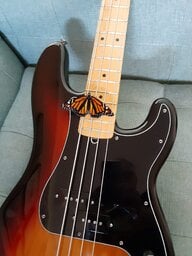
I don't know about vintage instruments but my '13 Squier VM P V, '18 MIM Fender PJ, and '20 Sterling Ray5 all have fret wear from ProSteels. It ranges from clear as day on the Squier to just starting on the Ray5.I have found so much conflicting information about SS strings and fret life. Some people claim that strings such as the Prosteels and Roto 66 are "fret eaters" . Other people say that reputation comes mainly from use with vintage instruments that used softer fret wire (Eg: Rickenbacker) and doesn't apply so much to modern fret materials. Some people report they have used Prosteels or Rotos for years and have never noticed any excessive wear. Too many variables: fret material, size and shape, action, left hand technique, etc. Of course, nothing wrong with playing it safe and going with nickles, either. Lots of good choices out there.





