• TalkBass has been independent since 1998. Add your voice.
    Create a free account to reply to discussions, view embedded media, and browse with fewer display ads.
    Join freeLog in
    Want zero display ads or expanded classifieds tools? Compare plans.

Double Bass Extended Techniques/Prepared double bass

I wanted to dig up this thread, maybe it should be a new one, but I want to talk about formal practice of "extended techniques".
For years I have just practiced standard things, Simandl, Petracchi, Rabbath, Billie, standard classical solos and transcriptions, etc.
I worked on my sounds enough to understand them and reasoned that if my traditional chops are up the sounds will take care of themselves.

I still agree with that - I am most interested in the sounds that lie beyond traditional playing which means you need a good handle on that stuff.

Lately, I have really wanted to formally push my control of the sounds themselves. I have come up with some pretty obvious ideas, but it really helps to formalize things:

ex.1 Long tones are long tones, compound harmonics, sub-harmonics, upper partial harmonics, etc. still need to be treated as regular long tones, meaning try to use the whole bow, make the changes as clean as possible and sustain the same tone trying not to allow other harmonics/fundamentals etc. to sound at the bow change or even the beginning of the sound.
I found I had a tendency to use shorter, faster strokes for many of these sounds, getting that under control helped a lot. It is still an option but not a default setting.

Ex. 2 try to push the dynamics of the sound, make the loud ones soft, make the multiphonics scream.
It is pretty incredible how loud you can get some of these things acoustically!

I'd like to keep adding to this list, next I am going to apply these ideas to bowing the tail piece.

Are there any techniques that you have found to be particularly effective with pizzicato? I'm jamming with my brother this weekend (he's a drummer) and I'm looking for some auxiliary sounds that would allow for me to maintain a "groove" so to speak. I'm about to go mess with tin foil and see if something cool happens but I thought I'd ask. You're bowing advice is great btw. Long tones are like 50% of my practice time haha.

Edit: I guess I'm thinking of these types of techniques in the way that a guitarist might think of a pedal if that makes any sense.
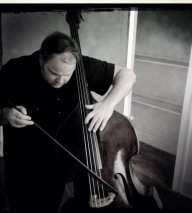
 

Hi, I know this has been an older thread but I find it good to revive it, since really there hasn't been a lot talked about that topic. I have been studying, teaching and playing contemporary music since about 10 years now and would like to contribute a bit with my experiences.
We are dealing with two topics here: what is called "extended playing techniques" but still uses only the bass plus bow, and working with preparations, which is using external objects to modify the sound (like paperclips, sticks, etc.). There is some, yet few written literature on extended techniques, yet much less on preparations. Most of it still is "tacit knowledge", passed on from player to player.
I have started to compile a bit of my findings on a blog, including some books / theses / papers and case studies. I am also working to add a series on explaining how to work with preparations, because especially when working with composers it is useful to have resources at hand to demonstrate basic techniques. If you like, take a look here:
unlearning bass.

I know this is far from being complete, and it never can be, since playing techniques are always part of every one's personal, growing musical practice. Hope that some people still find this useful.
 
Great resource! Thank you, @emm . For me ,getting into so called "creative music" and improvised music has been incredibly gratifying, but just as daunting. It's good to see this type of stuff being made more readily available on the internet, especially right now when it's not easy to collaborate with other like-minded people.
 
The first stop in studying this stuff needs to be Barry Guy:


It starts with Barre Phillps, Bertram Turetzky & Fernando Grillo and moves on to many great bassists.

Peter Kowald is another important bassist:

As is Joelle Leandre:

Stefano Scodanibbio was a wonderful player who made Grillo's innovations more melodic and accessible.
In Free jazz it starts with Alan Silva playing next the original Henry Grimes and having to find a space for himself and that moves on to the great William Parker:
 
[QUOTE="Ken Filiano occasionally uses a couple of (I think) metal dowels through the strings in a kind of lopsided V and plays them with two other ones. I'm not sure, they might not be metal, but it sounds great."[/QUOTE]

Ken uses metal knitting needles.

**Leigh
 
[QUOTE="Ken Filiano occasionally uses a couple of (I think) metal dowels through the strings in a kind of lopsided V and plays them with two other ones. I'm not sure, they might not be metal, but it sounds great."

Ken uses metal knitting needles.

**Leigh[/QUOTE]
Fiiiano is one of the greats, a student of Turetzky!
There are a lot of great extended techniques on this one with Joelle Leandre and Vinny Golia:


This is bass duo from that album: