

Enjoy the benefits of a premium membership!
Upgrade Account
-
TalkBass has been independent since 1998. Add your voice.
Create a free account to reply to discussions, view embedded media, and browse with fewer display ads.
Join free Log in
Want zero display ads or expanded classifieds tools? Compare plans.
You are using an out of date browser. It may not display this or other websites correctly.
You should upgrade or use an alternative browser.
You should upgrade or use an alternative browser.
EZ-Lok Threaded Steel Inserts
- Thread starter KingRazor
- Start date
More options
Who Replied?
Any of you who have purchased these, where did you buy them from?
http://www.reidsupply.com/Detail.aspx?itm=303-3
Thanks for the link, these look like what I'm after: http://www.reidsupply.com/Detail.aspx?itm=EZ-111
Thanks for the link, these look like what I'm after: http://www.reidsupply.com/Detail.aspx?itm=EZ-111
Better choice, IMO.
I go to 1/4-20, when I convert to inserts & machine screws.
Dang, shipping is ridiculous. What I'm ordering would only cost $0.32 but shipping would be over $40.
I'm wondering if Ace or Home depot can special order some of these...
I'm wondering if Ace or Home depot can special order some of these...
Dang, shipping is ridiculous. What I'm ordering would only cost $0.32 but shipping would be over $40.
I'm wondering if Ace or Home depot can special order some of these...
My local Ace has them, as does the HD, I believe, but I'm unsure if they carry 8-32. Again, I prefer 1/4-20, due to the tremendous torque you can apply.
I went out to the shop--I can send you 4 each, 10-32 & 1/4-20, PM me your snailmail.
Attachments


Try the source below. Great selection. Fair price. Beyond reliable company.
http://www.mcmaster.com/#threaded-inserts/=b08jjh
http://www.mcmaster.com/#threaded-inserts/=b08jjh

I have used the stores on Amazon and the prices were ok. I don't think they have stainless steel inserts at the Home Depot but I could be wrong
Never found them at my Home Depots, but can get them at a family-owned hardware/lumber-yard in town. Ace Hardware is worth a call, too, if you like to shop locally.
I use the ezlok 303-3 and 10-24 SS machine screws.
Plenty beefy.
With these, one can drill the correct sized mounting hole and use a tap to cut threads in the wood before installing the insert.
This makes for a much more drama free installation than using the insert to cut the threads, IME.
Maple can be hard and I've ruined a couple of inserts by trying to force them in without tapping first.
Fortunately, no necks.
I've been unable to find a tap with the right thread pitch for the ones designed for woodworking,
but the metal ones like the 303-3 have external threads (3/8-16) that are common enough to find taps at Ace.
Plenty beefy.
With these, one can drill the correct sized mounting hole and use a tap to cut threads in the wood before installing the insert.
This makes for a much more drama free installation than using the insert to cut the threads, IME.
Maple can be hard and I've ruined a couple of inserts by trying to force them in without tapping first.
Fortunately, no necks.
I've been unable to find a tap with the right thread pitch for the ones designed for woodworking,
but the metal ones like the 303-3 have external threads (3/8-16) that are common enough to find taps at Ace.
I got the idea to use these inserts from this thread:
http://www.talkbass.com/forum/f18/basses-newbies-sx-batch-build-thread-627147/
I'm going to be doing this to the same brand of bass, so I figured I'd use the same ones he got.
http://www.talkbass.com/forum/f18/basses-newbies-sx-batch-build-thread-627147/
I'm going to be doing this to the same brand of bass, so I figured I'd use the same ones he got.

Not a bad idea to use a tap to make threads - remember that the larger size inserts can crack the wood at the side of the neck...I came pretty darn close to that in my insert project using 10/32 bolts.
http://www.talkbass.com/forum/f18/installing-threaded-inserts-insert-nuts-neck-long-612671/
http://www.talkbass.com/forum/f18/installing-threaded-inserts-insert-nuts-neck-long-612671/

- Aug 5, 2005
- 7,243
- 92
- Disclosures
- Endorsing Artist: J.C. Basses
For my n00blet self, can you enlighten me as to how to properly use a tap? I've looked at them, but I wasn't entirely sure on what to do with them. Do you literally just tap them in and pull them out? Or do they affix to a drill of some sort?
I turn the tap manually and carefully to insert it - the word tap does not imply that you "tap" on it, although I can see how one might interpret it that way. When turning, you have to feel the tap bite into the material being tapped and feed it into the hole gently as you turn it. This is one place where the sensitivity of your fingers is really important, and cranking really hard is a bad idea. Don't force anything.
Perhaps others will have more suggestions.
Perhaps others will have more suggestions.
- Aug 5, 2005
- 7,243
- 92
- Disclosures
- Endorsing Artist: J.C. Basses
Okay, so it is twisted. I was just trying to figure out exactly how it worked.
And you stop, often, to back it up, and break the chips. This is a hand-only operation; use a tap handle.
Hardwoods will take machine threads remarkably well.
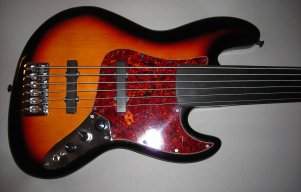
My local Ace has them, as does the HD, I believe, but I'm unsure if they carry 8-32. Again, I prefer 1/4-20, due to the tremendous torque you can apply.
I went out to the shop--I can send you 4 each, 10-32 & 1/4-20, PM me your snailmail.
I use 8-32 EZ-lok as in the Chunger thread. I've been VERY successful with them. Ace hardware has them (in screw boxes in the box marked furniture hardware) I also bought a bunch at Amazon.
I experimented with 10-24 and 1/4-20 sizes too. But decided on 8-32 because the screw heads seemed too large for the metal backplates with the larger sizes. I only use 8-32 flat (or oval) socket head machine screws (tighten with an Allen wrench) These allow an amazing amount of torque and you can crank a neck down as much as you want. Trust me!
I have also used the fat screw-driver inserted ones usually in smaller sizes like 4-40 (which take a 1/4" drill!) for like say pickup mounting screws. Experience has not been good! Generally I ended up using a drill one size over the proper size so as not to destroy the inserts putting them into hard wood. And then I coat them with gorilla glue to keep them in place so they won't turn. They do NOT work well and are much harder to install than the EZ-lok things you just crank in with an allen wrench. But they do work to hold pickups down and won't pull out no matter how strong the springs/foam under the pickup.
So I have to recommend 8-32 of the EZ-lok (was in the thumbnail of OP) type. They are zinc but are very easy to install, create huge tension and I've had no failures with any of the basses I've put them in. Really improves the "feel" of the neck as well. I've also used them to hold down bridges. They work especially well on the G&L Bridges that are held down with just two screws and tend to pull up easily. Fixes that. But you do have to drill out the bridge holes to fit 8-32 screws.
I use button head 1/4-20 machine screws. The flat skirt of the head lays flat on the neckplate. I haven't had to deal with pre-existing holes that were too close to the outside edges of the heel, though.
I was thinking about what I'd have to do, if I had a problem like that: I'd drill/fill the old holes w/ hardwood dowels, then drill the holes for the threaded inserts in the neck, closer to the centerline.
Then, use dowel centers to transfer the new positions to the neck pocket, which had been plugged the same way, and drill the through holes on a drill press. (This should all be drillpress work)
I was thinking about what I'd have to do, if I had a problem like that: I'd drill/fill the old holes w/ hardwood dowels, then drill the holes for the threaded inserts in the neck, closer to the centerline.
Then, use dowel centers to transfer the new positions to the neck pocket, which had been plugged the same way, and drill the through holes on a drill press. (This should all be drillpress work)


