

Enjoy the benefits of a premium membership!
Upgrade Account
-
TalkBass has been independent since 1998. Add your voice.
Create a free account to reply to discussions, view embedded media, and browse with fewer display ads.
Join free Log in
Want zero display ads or expanded classifieds tools? Compare plans.
You are using an out of date browser. It may not display this or other websites correctly.
You should upgrade or use an alternative browser.
You should upgrade or use an alternative browser.
Fender 400 PS - Parts or Project
- Thread starter bearhart74
- Start date
More options
Who Replied?


- Feb 12, 2006
- 61,047
- 5
- 220,998
- Disclosures
- Development Engineer-Mesa Boogie, Development Engineer-Genzler (pedals), Product Support-Genz Benz
That’s a difficult and expensive amp to work on ime.


I have heard from many, that that particular amp is not the feint of heart, or inexperienced. Apparently, if they’re not set up just right, they’re prone to bursting into flames. Anybody know if that’s true?
I do know that the designer of that amp, Ed Jahns, wouldn’t provide any assistance to anyone who couldn’t prove to his satisfaction, that they were experienced enough to work on it.
Personally, I’d let this one pass.
I do know that the designer of that amp, Ed Jahns, wouldn’t provide any assistance to anyone who couldn’t prove to his satisfaction, that they were experienced enough to work on it.
Personally, I’d let this one pass.


It's a rare and awesome amp, but AFAIK not particularly coveted. It basically has three 145W tube output sections. So you need to run three 4 ohm cabs for full power. Not very practical for the majority of playing situations most of us would deal with.
From what I see this one is pretty rough. Potentially a good project for one person and piece of garbage for the next.
Not worth paying a tech to fix it (Most likely the cost will far exceed the value of the amp). If you don't have the skill, knowledge, and test equipment required to do the work, I would pass.
I would hate to see it parted out, and suspect turning a profit would be more work than it's worth.
The amp is often described as difficult to work on. The circuit is a bit unusual, but I don't perceive it as extraordinarily complex. The amp is said to be hard on tubes. Which could make it difficult to fix and keep running. Not sure why it would be hard on tubes as the working voltages shown on the schematic appear fairly similar to an SVT. My guess is problems are more likely to occur if you don't run all three output sections.
I wouldn't mind owning a 400PS, but not one in this condition. Also, I wouldn't be willing to pay big bucks.
From what I see this one is pretty rough. Potentially a good project for one person and piece of garbage for the next.
Not worth paying a tech to fix it (Most likely the cost will far exceed the value of the amp). If you don't have the skill, knowledge, and test equipment required to do the work, I would pass.
I would hate to see it parted out, and suspect turning a profit would be more work than it's worth.
The amp is often described as difficult to work on. The circuit is a bit unusual, but I don't perceive it as extraordinarily complex. The amp is said to be hard on tubes. Which could make it difficult to fix and keep running. Not sure why it would be hard on tubes as the working voltages shown on the schematic appear fairly similar to an SVT. My guess is problems are more likely to occur if you don't run all three output sections.
I wouldn't mind owning a 400PS, but not one in this condition. Also, I wouldn't be willing to pay big bucks.
What are asking for it?Saw this in the AM on FB Marketplace and thought it worth sharing.
Might be a good project or source of parts for an expert.
View attachment 7065535
www.facebook.com
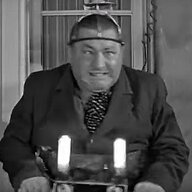
Look at the mold on that thing. It was at the very least stored in a hostile environment, might even have been submerged in a flood. I'd be surprised if you could find anyone to work on it. In its current condition I'd qualify it as an explosive device that could get you arrested by the ATF.

Best offer.What are asking for it?
There was one for sale near me for a long time, eventually got down to $900 and that was fully serviced and functional. I was interested but couldn’t even justify that price at the time seeing as how much of a pain in the butt these are to run and repair. Given the complexity of this amp and the condition I wouldn’t pay more than a few hundred and would assume I’m getting a box of parts.

That was my first thought, and still is. Long lost Katrina victim?Look at the mold on that thing. It was at the very least stored in a hostile environment, might even have been submerged in a flood.
- Feb 12, 2006
- 61,047
- 5
- 220,998
- Disclosures
- Development Engineer-Mesa Boogie, Development Engineer-Genzler (pedals), Product Support-Genz Benz
The amp has a VERY unusual output section, specifically it uses a driver transformer/phase splitter driven by a class A 6L6 driver tube with global feedback around the output transformer to the cathode of the 6L6. The output transformer is a little unique in that it uses 3 parallel yet discrete secondaries, but it's really a single output section, not 3 as many on the internet suggest. The output primary impedance is pretty low, the tubes are working hard. They are a special design Tungsol 6550, I don't recall exactly what's different about them but they are different.It's a rare and awesome amp, but AFAIK not particularly coveted. It basically has three 145W tube output sections. So you need to run three 4 ohm cabs for full power. Not very practical for the majority of playing situations most of us would deal with.
From what I see this one is pretty rough. Potentially a good project for one person and piece of garbage for the next.
Not worth paying a tech to fix it (Most likely the cost will far exceed the value of the amp). If you don't have the skill, knowledge, and test equipment required to do the work, I would pass.
I would hate to see it parted out, and suspect turning a profit would be more work than it's worth.
The amp is often described as difficult to work on. The circuit is a bit unusual, but I don't perceive it as extraordinarily complex. The amp is said to be hard on tubes. Which could make it difficult to fix and keep running. Not sure why it would be hard on tubes as the working voltages shown on the schematic appear fairly similar to an SVT. My guess is problems are more likely to occur if you don't run all three output sections.
I wouldn't mind owning a 400PS, but not one in this condition. Also, I wouldn't be willing to pay big bucks.
When a plug is not inserted into the speaker jack, the power tubes for that section are disabled (protecting the OT's respective secondary winding).
Last edited:

This is an unfortunate outcome for this amp. I used one for a number of years and it sounded spectacular. I had 2 2x15 Bassman cabinets that I used with it and toted the whole thing around in a big old Buick LeSabre. My dad kept the thing running, not that I had any real problems with it, he cut his teeth as a radar tech during Korea and knew his way around a set of tubes.
Sorry, I accidentally left out the word “they”(the individual offering it up). If it didn’t have the schmutz all over it, and was cheap enough, it could be a contender as a fix’n’flip, but still a slow seller. Too risky at any price.IDK.. its not mine
Last edited:
- Feb 12, 2006
- 61,047
- 5
- 220,998
- Disclosures
- Development Engineer-Mesa Boogie, Development Engineer-Genzler (pedals), Product Support-Genz Benz
It might be a "try to fix and fail" project too (based on my experience with this amp). By the time you get done, it could (easily) be a colossal money loser. Just shipping it is expensive.Sorry, I accidentally left out the word “they”(the individual offering it up). If it didn’t have the schmutz all over it, and was cheap enough, it could be a contender as a fix’n’flip, but still a slow seller. Too risky at any price.
Specced tubes for the 400PS were GE6550A, an improved version of the standard GE6550.They are a special design Tungsol 6550, I don't recall exactly what's different about them but they are different.
More details here:
Here's mine which has never been gigged but has been reliable for the twenty years or so that I've had it.
If you look closely you'll notice a dust cap off of a Hartke speaker that shook loose last time it was powered up through the Fender 400 PS
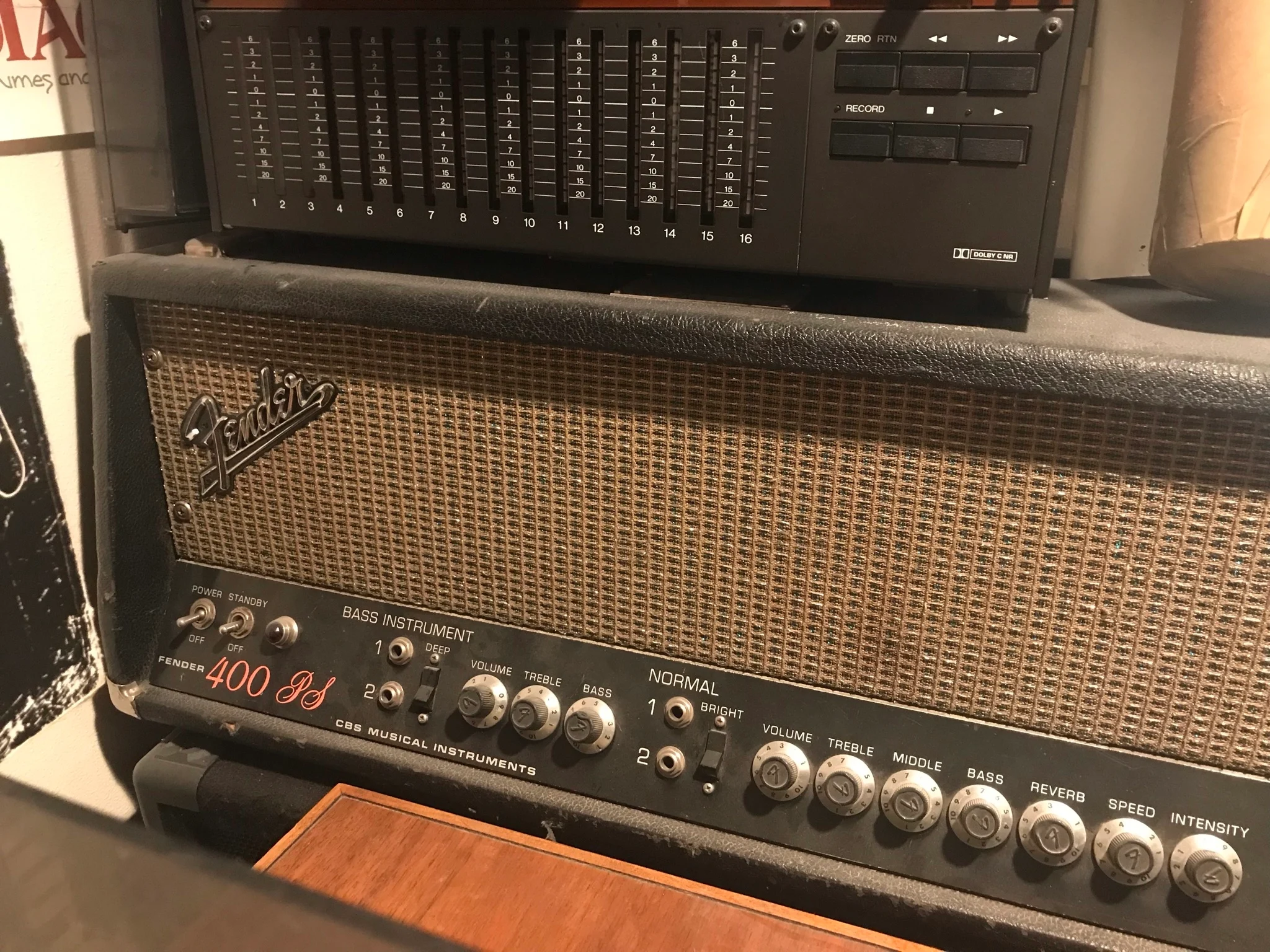
If you look closely you'll notice a dust cap off of a Hartke speaker that shook loose last time it was powered up through the Fender 400 PS
it's really a single output section, not 3 as many on the internet suggest.
I don't disagree, especially since all six tubes are connected to a common primary in the output transformer. However, for the non-technical user, it behaves as if it has three discrete 4 ohm outputs.
With most tube amps, available power stays the same regardless of the number of speakers as long as the amp sees the expected load. For example an Ampeg SVT is expected to produce 300W with one 4 ohm 810 and it is also expected to produce 300W with two 4 ohm 810s. This is typical of how tube amps work.
The 400PS is different. It has three 4 ohm outputs and you get an additional 145W every time you connect another 4 ohm cab. Also the output tubes are switched on in pairs as you connect speakers. Use one speaker out and two tubes are activated. Use two speaker outs and four tubes are activated, Use all three speaker outs and all six tubes are activated.
So it's more accurate to say the output section is modular, rather can saying it has has three output sections. However, I think non-technical users will find it easier to understand how to use the amp if we describe it as having three separate outputs, rather than trying to explain the modular aspect of the design.
Last edited:
It's not fair that the Normal channel gets eight controls but the Bass Instrument channel only four. We always seem to get shortchanged! 

Latest posts
-

-

-

-
 Curious what the percentage of bass players use rounds vs flats is.
- Latest: Swamp_Ronin