
Enjoy the benefits of a premium membership!
Upgrade Account
-
TalkBass has been independent since 1998. Add your voice.
Create a free account to reply to discussions, view embedded media, and browse with fewer display ads.
Join free Log in
Want zero display ads or expanded classifieds tools? Compare plans.
You are using an out of date browser. It may not display this or other websites correctly.
You should upgrade or use an alternative browser.
You should upgrade or use an alternative browser.
Fender dead note/harmonic
- Thread starter rabs
- Start date
More options
Who Replied?
That's just the "classic" Fender dead spot, where the fundamental somewhere between the 5th and 7th fret on the G string dies off quickly. The harmonics still tend to ring out, as you noticed, so the dead spot is a lot more obvious with dead strings and/or the tone control turned down.
Mike
Mike

Yep. The upper harmonic was already there - you just hear it more clearly on a "dead note" because the fundamental isn't filling up space. If you think it's bad on a Fender, you should hear the dead spots on my Status! Endless sustain of that harmonic a fifth above the fundamental (yes, even graphite-neck basses get dead spots...).
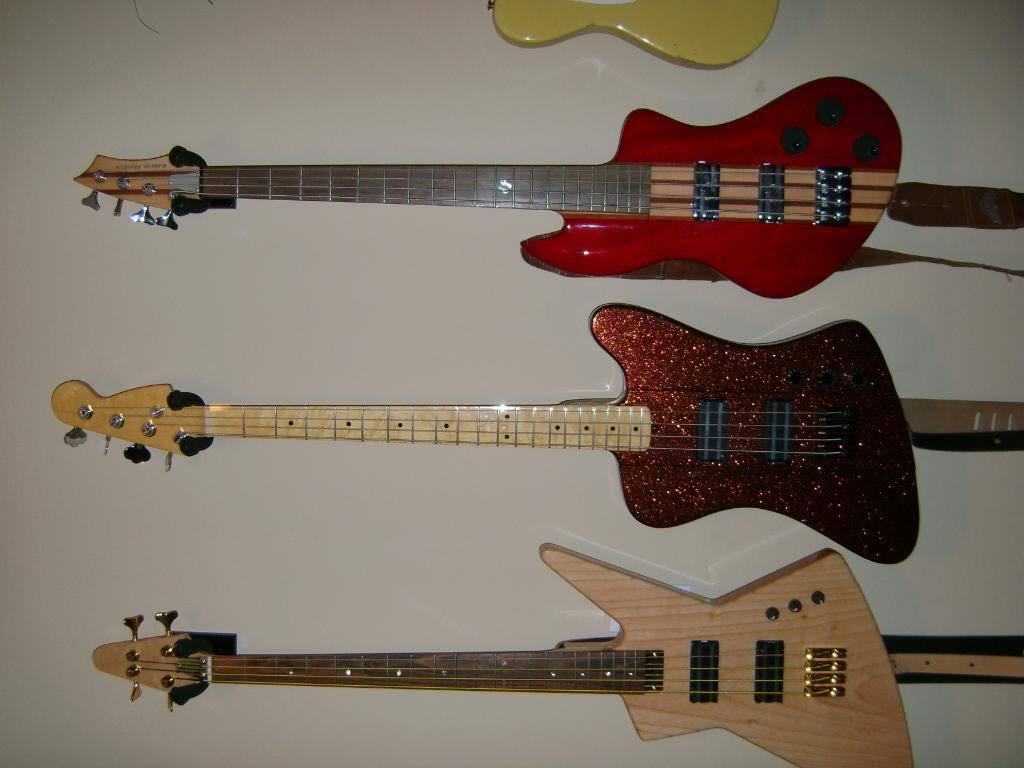
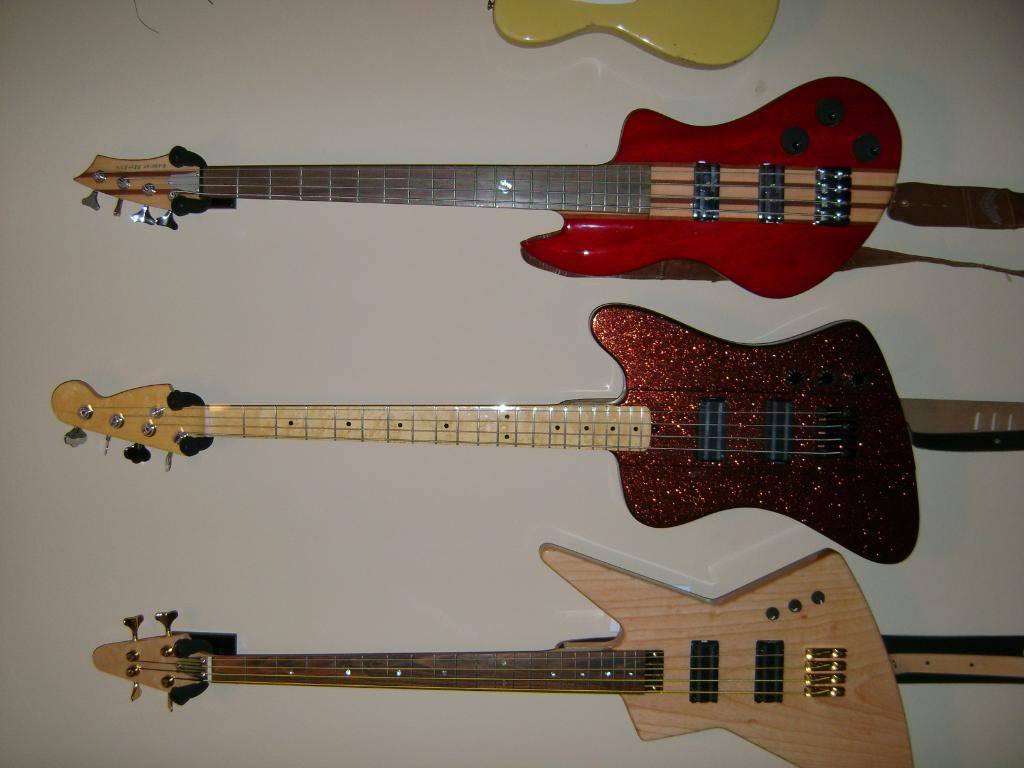
I've owned 5 different American P's and J's and they ALL had dead spots. That's why I got rid of them all. Now I have two custom Warmoths and a Lace Helix. NO dead spots whatsoever, better tone & sustain. Never again, Fender. I don't care what anybody says about Fender, and I don't care if I'm not like all the other bass players who swear by Fenders. I can't understand why anyone would want or tolerate dead spots. One of my pet peeves.
I've owned 5 different American P's and J's and they ALL had dead spots. That's why I got rid of them all. Now I have two custom Warmoths and a Lace Helix. NO dead spots whatsoever, better tone & sustain. Never again, Fender. I don't care what anybody says about Fender, and I don't care if I'm not like all the other bass players who swear by Fenders. I can't understand why anyone would want or tolerate dead spots. One of my pet peeves.
Uh, I'll take the dead spots.
 Seriously, Fender has very little to do with it. No bass, whether wood or graphite has 100% even response across the neck. Dead spots vary in their severity, but all basses have some notes whose fundamental doesn't sustain as long as another's. I'll guarantee that what I consider dead spots on some of my basses would escape most people's attention. Some basses have pronounced dead spots and some don't, but don't fool yourself into believing that certain companies' basses are immune to dead spots - though some companies do, admittedly, have better quality control than others. Such quality control cannot, however, alter the fact that necks do have resonant frequencies.


 but they do sorta kinda bug me on a puristificationous
  level.
Every bass I've owned has suffered from dead spot syndrome to some degree...I suspect that if you spend enough time with your instrument, you too will hear one or more notes where the fundamental "chokes" and dies a little early, leaving the upper harmonics ringing. It can drive a bassist crazy (although I'd wager your guitarist, audience member, or neighbor won't notice anything.) I myself was a few years into playing (about 16 years ago) when I began to notice the phenomenon on my fretless Ibanez (the curse seems more noticeable on fretlesses.) I pointed out the weak note to my bass teacher and asked if it was fixable. "Sure" he said cheerfully, "buy a new bass!" So I did....and again...and again...
As far as Fender vs. non-Fender, I've not experienced a wide enough variety of instruments to offer more than a limited assessment but I have owned basses made by Fender and several other companies and I've yet to own (or try out) a bass that is 100% Dead Spot Free. It isn't as much of a nuisance in some places; in many Fenders dead spots famously occur on the 5th-7th fret on the G string and one usually doesn't rely on those particular notes to anchor, say, one's jazz combo or prog-rock ensemble.
But I have noticed a weird thing with Fenders specifically and I'm curious to see if this happens to anyone else, either with Fender-types or other basses. If played while seated, the lowest few notes on the E string ring out normally. However, if played standing up so that the instrument makes body contact a dead spot forms on either the E string (usually open E on Precisions or low F on Jazz basses.) All joking aside (about Fender being allergic to me, etc.) I don't notice body mass altering the resonance of non-Fenders quite like this. String/hardware/pickups don't seem to matter. Could the culprit be bolt-on necks? I've sold a MIA Jazz Deluxe, taken back a Squier P, passed on a Sting, and stopped playing a Warmoth-necked fretless P because of this....this strange thing.... so strange...[cue Twilight Zone theme]
As far as Fender vs. non-Fender, I've not experienced a wide enough variety of instruments to offer more than a limited assessment but I have owned basses made by Fender and several other companies and I've yet to own (or try out) a bass that is 100% Dead Spot Free. It isn't as much of a nuisance in some places; in many Fenders dead spots famously occur on the 5th-7th fret on the G string and one usually doesn't rely on those particular notes to anchor, say, one's jazz combo or prog-rock ensemble.
But I have noticed a weird thing with Fenders specifically and I'm curious to see if this happens to anyone else, either with Fender-types or other basses. If played while seated, the lowest few notes on the E string ring out normally. However, if played standing up so that the instrument makes body contact a dead spot forms on either the E string (usually open E on Precisions or low F on Jazz basses.) All joking aside (about Fender being allergic to me, etc.) I don't notice body mass altering the resonance of non-Fenders quite like this. String/hardware/pickups don't seem to matter. Could the culprit be bolt-on necks? I've sold a MIA Jazz Deluxe, taken back a Squier P, passed on a Sting, and stopped playing a Warmoth-necked fretless P because of this....this strange thing.... so strange...[cue Twilight Zone theme]
Fenders seem to always have em from what I hear. I cant say I've noticed them on all the Fender's I've owned but definately on a few.
Its really just the physics of 34" scale bolt on basses.
From what I hear there can be a lot of different variables that effect it, from scale length, neck material and thickness, mass of the headstock, etc etc.
They're definately annoying if you get a really bad one.
Its really just the physics of 34" scale bolt on basses.
From what I hear there can be a lot of different variables that effect it, from scale length, neck material and thickness, mass of the headstock, etc etc.
They're definately annoying if you get a really bad one.

But I have noticed a weird thing with Fenders specifically and I'm curious to see if this happens to anyone else, either with Fender-types or other basses. If played while seated, the lowest few notes on the E string ring out normally. However, if played standing up so that the instrument makes body contact a dead spot forms on either the E string (usually open E on Precisions or low F on Jazz basses.)
Hmmm... I actually have noticed that on occasion with my P bass. Not consistently mind you - I thought it was the hollow stage I was playing on sucking up the low E.
my Geddy does have the same dead spot as your Jazz, mister [C#/Db in the 6th fret of the G string]

- Jul 30, 2006
- 2,315
- 453
- Disclosures
- Endorsing artist:Regenerate Guitar Works Carvin, Micheal Kelly Guitars
When I go to buy one, I play all of hem until I find one that doesn't have any. Even so, they sometimes develop dead notes when the strings are changed or when the bridge is adjusted.


