
• TalkBass has been independent since 1998. Add your voice.
    Create a free account to reply to discussions, view embedded media, and browse with fewer display ads.
    Join freeLog in
    Want zero display ads or expanded classifieds tools? Compare plans.

Double Bass Fingerboard dressing, grain runout, and concerns

Hey gang,

I was dressing a fingerboard today and had some tearout in a small section. The grain of the board has a twist right where this is happening.
I guess my question is in parts.

1. How to mitigate this.
I thought my plane was sharp. I sharpen on a whetstone to 6000 grit. It's pretty sharp.
I try to set the blade so it doesn't cut too deep.
I approach the grain from different angles when things start feeling funny and I'm not able to do my normal "scrub" motion without resistance.
2. How do I fill this if I don't want to sand it or dress it further.
I'm thinking ebony dust and CA glue but it seems like a hack move.
3. How much tearout can I ignore.

20240220_141037.jpg

20240220_141021.jpg

This is the only part of the board this happened on. The rest is flawless.
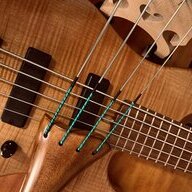
 
When I get to wonky grain in ebony, i will go to a scraper to see if i can smooth it out. CA+ ebony dust isn’t a hack- for bow frog repair, this is common practice, and I have done this on a few fingerboards. if it is non-destructive and it improves the condition of the playing surface, then go for it! When scraped and sanded, the repair blends well with the surrounding wood.
 
I find I get mixed results with CA and ebony dust. It's fantastic for filling small cracks in a board, but a little trickier if you have tear-out. It might require repeated filling and sanding to get right. And sometimes, although the patch looks a lot like solid ebony, you might still be able to see that it has been patched. Dyeing the board in that area might help.

I realized you're not asking about this, but if the fills are small you don't need to have a supply of dust. Just put a bit of CA on top of the crack and sand. You'll end up with a 'slurry' that fills the area really nicely.
 
Moistening any wood makes it easier to shave off thin shavings.

I have been told of fast scroll carvers leaving multiple scroll billets in a bucket of water, and pulling each out in turn to carve a specific step. The lady they were watching was routinely carving eight violin scrolls per day. Her young son worked beside her, just keeping her gouges sharp.
I do well to make one scroll in a day…
 
Last edited:
  • Like
Reactions: Paps
Paps, curious: What would dampening the wood do that would help?
First of all, I'm no luthier and would never try this myself.
When my luthier shoots the fingerboard, he dampens it first.
What he told me (probably at a microscopic level) it that the wet ebony expands slightly, exaggerating the unevenness slightly and also making it softer and easier to shave. What I've been told!
I would guess that being easier to shave would mean less likelihood of tearing..
 
I'll try some moisture if I have more trouble. I used to use that technique when prepping wood for a gloss finish. I never thought to do that for a board, but it makes sense.

I went at a few of the spots with a scraper and then blended with sandpaper. Seems to be working great. I think it'll mostly disappear by the time I'm through fine tuning and polishing.

20240221_134611.jpg

20240221_134601.jpg
 
  • Like
Reactions: BassinCT