Hi there,
I've just finished my first build, started a few months ago. It 's an german FASAN Short Scale inspired bass (quite rare apparently - still searching any info about it). I'm a big fan of these old german basses (Hofner, Klira, Framus,etc.). I wanted to built one for a long time, keeping the overall feeling of these, but with enhanced specs...
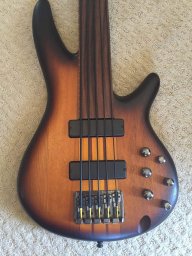
Here's the model :

Here are the specs of my build :
Short scale : 30"
19 + 0 frets
body :basswood + Marshall elephant red tolex covering (!)
neck :maple
fingerboard : rosewood
Neck profile : as close as my 74 4001 Rick
Pickguard : yellowish perloid
pickups : 2 Dearmond Turbo-Jet single coils
Bridge : Gibson 3 points (5' strings spacing).
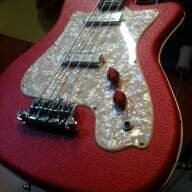
And the result after some months of sweat and doubt (pictures were taken with my old I-Phone, so not top quality...) :
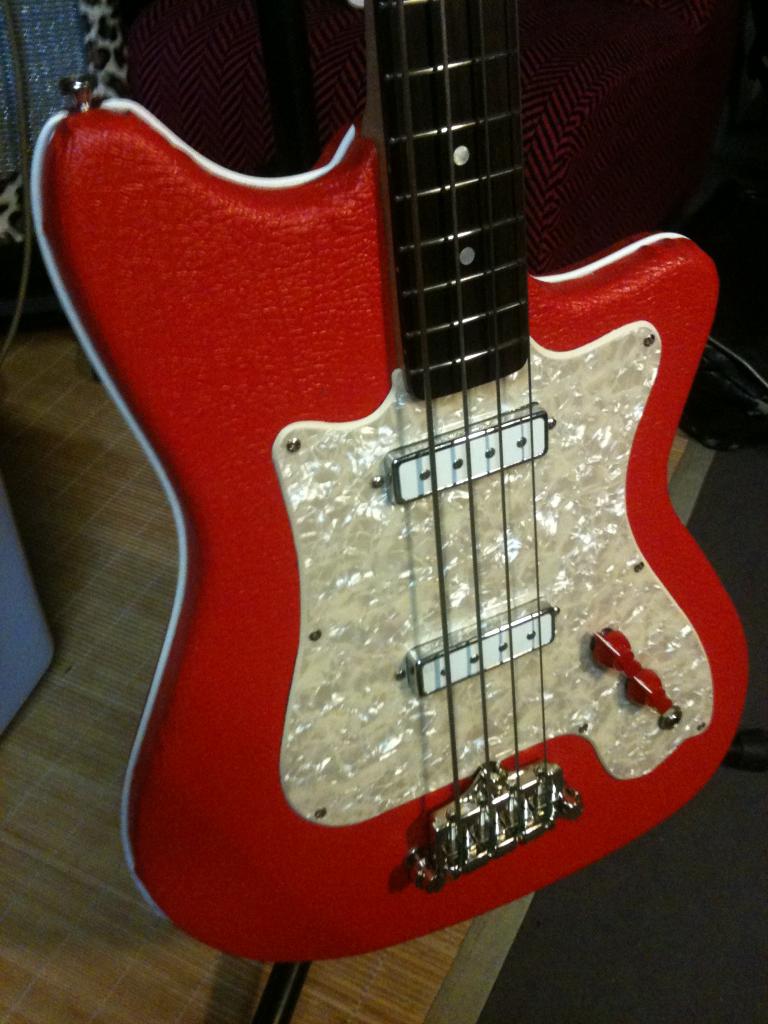
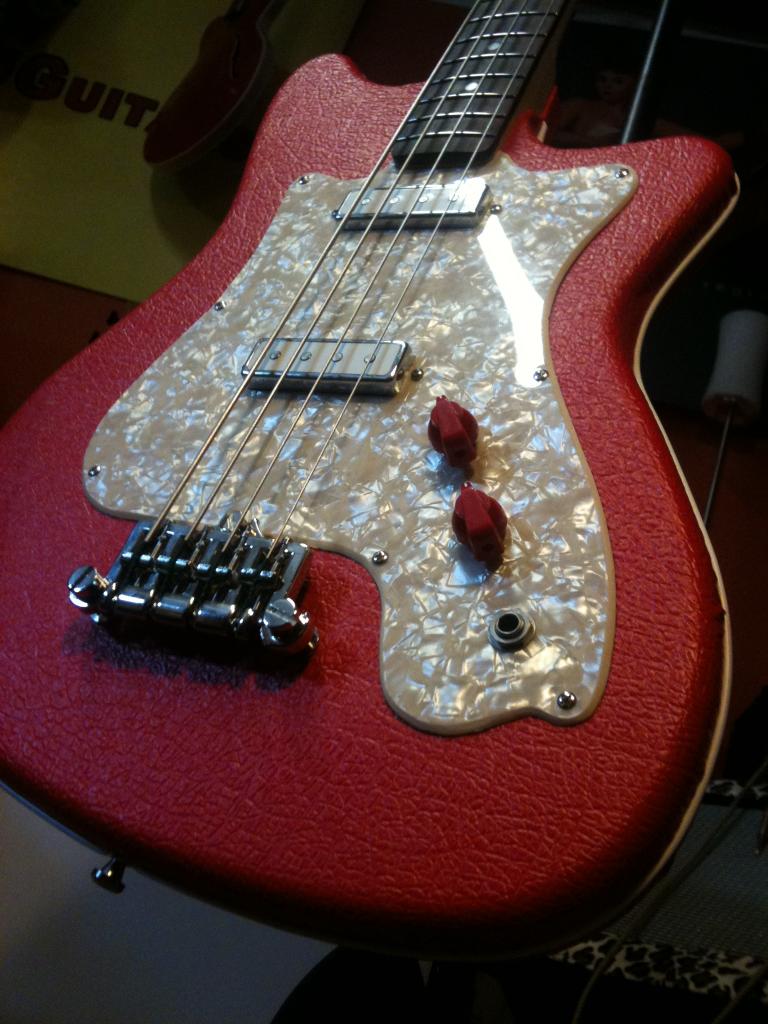
I must admit that the tolex covering was a pain in the ass to put in, and it's not as perfect as expected. But nevermind, I'm quite proud of the job done.

So let's start from the beginning.
I've just finished my first build, started a few months ago. It 's an german FASAN Short Scale inspired bass (quite rare apparently - still searching any info about it). I'm a big fan of these old german basses (Hofner, Klira, Framus,etc.). I wanted to built one for a long time, keeping the overall feeling of these, but with enhanced specs...
Here's the model :
Here are the specs of my build :
Short scale : 30"
19 + 0 frets
body :basswood + Marshall elephant red tolex covering (!)
neck :maple
fingerboard : rosewood
Neck profile : as close as my 74 4001 Rick
Pickguard : yellowish perloid
pickups : 2 Dearmond Turbo-Jet single coils
Bridge : Gibson 3 points (5' strings spacing).
And the result after some months of sweat and doubt (pictures were taken with my old I-Phone, so not top quality...) :
I must admit that the tolex covering was a pain in the ass to put in, and it's not as perfect as expected. But nevermind, I'm quite proud of the job done.
So let's start from the beginning.
Last edited: