• TalkBass has been independent since 1998. Add your voice.
    Create a free account to reply to discussions, view embedded media, and browse with fewer display ads.
    Join freeLog in
    Want zero display ads or expanded classifieds tools? Compare plans.

Fretless bass and putting regular bass strings on it

vulturedog

Guest
Feb 19, 2013
212
119
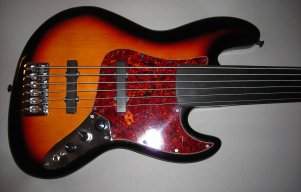
I have a Mexican fender fret less fender jazz bass. I'm thinking of putting regular nickel coated roto sound bass strings on it. Will it damage the neck? Just thinking of trying out what Jaco did with his bass. Any info would be appreciated
 
As opposed to what kind of strings? Nickel round wounds will be less abrasive that stainless steel, but more abrasive than flat wounds or tape wounds. Jaco used Rotosounds, but he also had his fingerboard coated in epoxy to protect the wood.
I've had nickel round wounds on my uncoated, rosewood board for years and it has been fine. However, My fretless does not get that much playing time compared to my others.
 
I use nickel rounds on my fretless as well. Not real damage caused thus far.

DSCN0615.jpg
 
I've used rounds on my Warwick LX5 fretless and they sounded great. The ebony fingerboard has very minor scoring from the wound strings, nothing serious. I have flats on it now because I don't want to coat the fingerboard.

I had a Yamaha fretless that I had coated so I could use roundwounds and it altered the sound of the bass to the point where I didn't like it anymore, so I won't be doing the same to the Warwick. I don't play fretless much at all anyways, I barely take it out of the case a couple of times a year as it is.
 
Round wound strings will create more wear on the fingerboard than flat wounds. But don't be confused by cosmetic concerns over actual "damage". I've played my fretless with round wounds for about a decade now, and there are marks on the fingerboard, but not really any significant wear.

Unless you have an inside track on why Jaco epoxied his fingerboard, it's just a guess that he did it to prevent wear. He may well have done it for the tonal difference. And, you know, if you were playing as much as Jaco, maybe the wear concerns would be significant. I suspect the sound was more important to him. And the sonic differences epoxied vs. not-epoxied are really significant.
 
I've used nickel wound strings for long periods of time in my fretless mim j bass with no pronounced damaged. I would suggest finding a string with fairly low tension and setting you action as low as possible so that you can use a light touch and not have to dig in so much. That will help prevent accelerated wear on the fingerboard.

FWIW, after using rounds on my fretless for a while I switched back to a 4 year old set of Fender Nylon tapewound 9120's and I prefer their sound over rounds on the fretless.
 
Any string, even flats, will eventually wear away even an epoxied board. Who cares? Play the strings that sound the way you want them to and get the fingerboard dressed every now and then. It isn't hard to do and unless you are bending SS strings like a jackass the wear will take a LONG time to occur.

The comments about epoxying the board changing the tone are pretty spot on. Makes about as much a difference as nickel vs SS strings do IME. I used to epoxy my fingerboards myself. Started off as concern about wear and morphed into me doing so out of pursuit of that soudn. I no longer do so. That decision is based on personal tonal preferences. Wear doesn't factor into it.
 
Used nickel wounds on a MIM Fender fretless and also on a Fender Jaco. The Jaco gets played MUCH and the wear is less than I thought it might be. Like others said you'll see the slight string 'impressions' but not to worry in my opinion.
--Play what sounds good--- :bassist:
 
Keep in mind that wear depends a lot on technique and amount of time played. There's no denying that SS strings have the potential to do some damage in the long run. Fingerboards can be replaced if needed.

I think flatwounds and tapewounds have their place. The tone is mellow and sounds great with bare wood fingerboards.

Roundwounds sound fine on bare wood fingerboards. I had an unlined fretless Peavey Cirrus that just sang and I would have kept it if it had 6 strings. I also have a Conklin with a Dymondwood fingerboard and a CB with a polyester coated fingerboard. The polyester coating and Dymondwood fingerboard add an extra brightness and durability. The Dymondwood fingerboard on my Conklin looks brand new despite many years of playing. I once brought it in for some electrical work and the guy in the shop asked me why I didn't play it since the fingerboard looked so pristine. I had to tell him that I played it a lot and it looks new because the fingerboard is extremely tough.
 
Thank you all for your input I'm just going to put the strings on I only paid $250 for bass from caigslist my main stay bass is a Geddy lee fender jazz so if it damages fret board I'm not too concerned but I'll keep my eye on any damage if it shows. It is a beutiful bass sunburst body very little dings on it.

 
Thank you all for your input I'm just going to put the strings on I only paid $250 for bass from caigslist my main stay bass is a Geddy lee fender jazz so if it damages fret board I'm not too concerned but I'll keep my eye on any damage if it shows. It is a beutiful bass sunburst body very little dings on it.


Rounds will damage an uncoated fingerboard. Rounds that came on my Alembic with an Ebony fingerboard immediately started chewing on it! And that sort of freaked me out.

But rounds do sound great on a fretless. My solution is to use ground wounds which is as bright as you can go without chewing the fingerboard. Pressure wounds will chew slightly, but not as much as rounds.

But many people just go for the tone and do rounds like you want to do. It makes a bass that sounds great. But you just have to understand that every so often you'll have to have the fingerboard replaned to take the chews out of it. It won't have to be done often and it isn't that big a deal. It's just a "cost of doing business" if you want that killer tone.